
Leon Trotsky
Leon Trotsky was a Russian revolutionary who organized the Bolshevik seizure of power in 1917 and built the Red Army before Stalin drove him into exile.
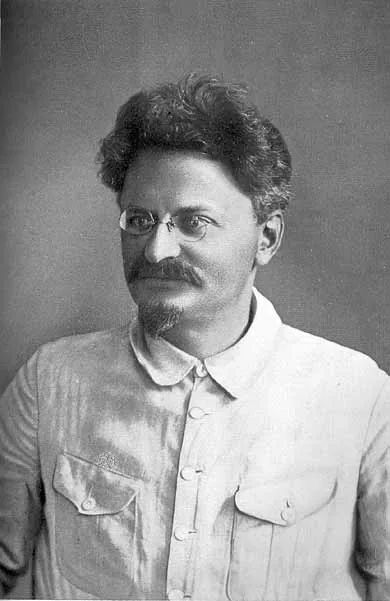
Leon Trotsky was a Russian revolutionary who organized the armed takeover that brought the Bolsheviks to power in October 1917 and then built the Red Army that defended the new state through three years of civil war. Born Lev Davidovich Bronstein in 1879 to a Jewish family of farmers in southern Ukraine, he adopted the name "Trotsky" from a forged passport when he escaped exile in Siberia in 1902. He was a gifted writer and speaker, widely seen as the most talented figure in the revolutionary movement. After Lenin's death in 1924, he lost a power struggle with Joseph Stalin, was expelled from the Soviet Union, and spent eleven years in exile before a Soviet agent killed him in Mexico in 1940.
How Trotsky seized power and won the civil war
Trotsky arrived in Petrograd (now St. Petersburg) in May 1917, months after the revolution that toppled the tsar. By late September he was chairman of the Petrograd Soviet, the city's most powerful political body. In that role he ran the Military Revolutionary Committee that, on the night of October 24–25, seized the capital's bridges, telegraph offices, and railway stations. The Bolsheviks took power with almost no bloodshed.
The harder job came next. Lenin appointed Trotsky commissar of war in March 1918, and the new state was surrounded by enemies. White armies backed by Britain, France, Japan, and other foreign powers attacked from every direction. The old imperial army had dissolved. Trotsky built a new one from nothing, and by 1920 it had nearly five million soldiers. He conscripted former tsarist officers to command units and placed political commissars alongside them to watch for disloyalty. He imposed harsh discipline, including execution for commanders who retreated without orders.
Trotsky spent most of the civil war living aboard an armored train that covered more than 100,000 kilometers between the fronts. The train carried troops, a printing press, and supplies. By 1921 the White forces were beaten, and the Soviet state survived largely because of the army Trotsky had built.
How Stalin pushed Trotsky out
When Lenin died in January 1924, Trotsky was the most famous Bolshevik after Lenin himself. But he was a poor political operator. He had joined the Bolshevik Party only in 1917, and many older members resented him. He preferred writing theory to building alliances inside the party.
Stalin, the party's general secretary, used his control over appointments and promotions to fill local party organizations with his own supporters. Trotsky dismissed him as "the outstanding mediocrity in the party" and underestimated what control of the party's internal structure meant. Stalin also offered a simpler idea: "socialism in one country," the argument that the Soviet Union could build socialism without waiting for revolutions abroad. Trotsky's opposing view, permanent revolution, held that socialism in Russia could survive only if revolution spread to the industrialized West. For party members exhausted by years of war, Stalin's message was easier to accept.
Trotsky lost his government posts, was expelled from the Communist Party in November 1927, and was sent to internal exile in Alma-Ata, Kazakhstan, in January 1928. In February 1929 he was deported from the Soviet Union entirely. Over the next eleven years he lived in Turkey, France, Norway, and then Mexico, writing constantly to expose what he called Stalin's betrayal of the revolution. Stalin's regime erased Trotsky from official photographs and cast him as the hidden villain of the Moscow show trials, in which old Bolsheviks confessed to imaginary crimes they said Trotsky had masterminded.
How did Trotsky die?
Stalin did not stop at erasing Trotsky from history. He went after Trotsky's family. Trotsky's younger son, Sergei Sedov, was arrested in the Soviet Union and executed during the Great Purge in 1937. His older son, Lev Sedov, died in a Paris hospital in February 1938 after an appendix operation. A Soviet agent named Mark Zborowski had infiltrated Trotsky's circle and told the secret police when Sedov entered the hospital. Whether the death was murder has never been settled.
Trotsky himself lived in a fortified house in Coyoacan, a neighborhood in Mexico City, knowing Stalin wanted him dead. On August 20, 1940, a man named Ramon Mercader visited him in his study. Mercader was a Spanish communist working for the Soviet secret police, and he had spent months gaining Trotsky's trust. He carried a shortened ice axe hidden under his coat. While Trotsky read a paper Mercader had brought him, Mercader drove the axe into the back of his skull.
The blow did not kill Trotsky immediately. He fought back, bit Mercader's hand, and when his guards rushed in and began beating the assassin, Trotsky told them to stop so the man could be questioned. Trotsky died the next day, August 21, 1940. He was 60 years old. Mercader served twenty years in a Mexican prison without revealing who had sent him. After his release in 1960, he moved to Cuba and then to the Soviet Union, where the government quietly awarded him the Hero of the Soviet Union medal. Trotsky's defeat by Stalin decided what kind of state the Soviet Union would become for the next sixty years.