Vladimir Lenin
Vladimir Lenin was the Russian revolutionary who led the Bolshevik seizure of power in 1917 and founded the Soviet state.
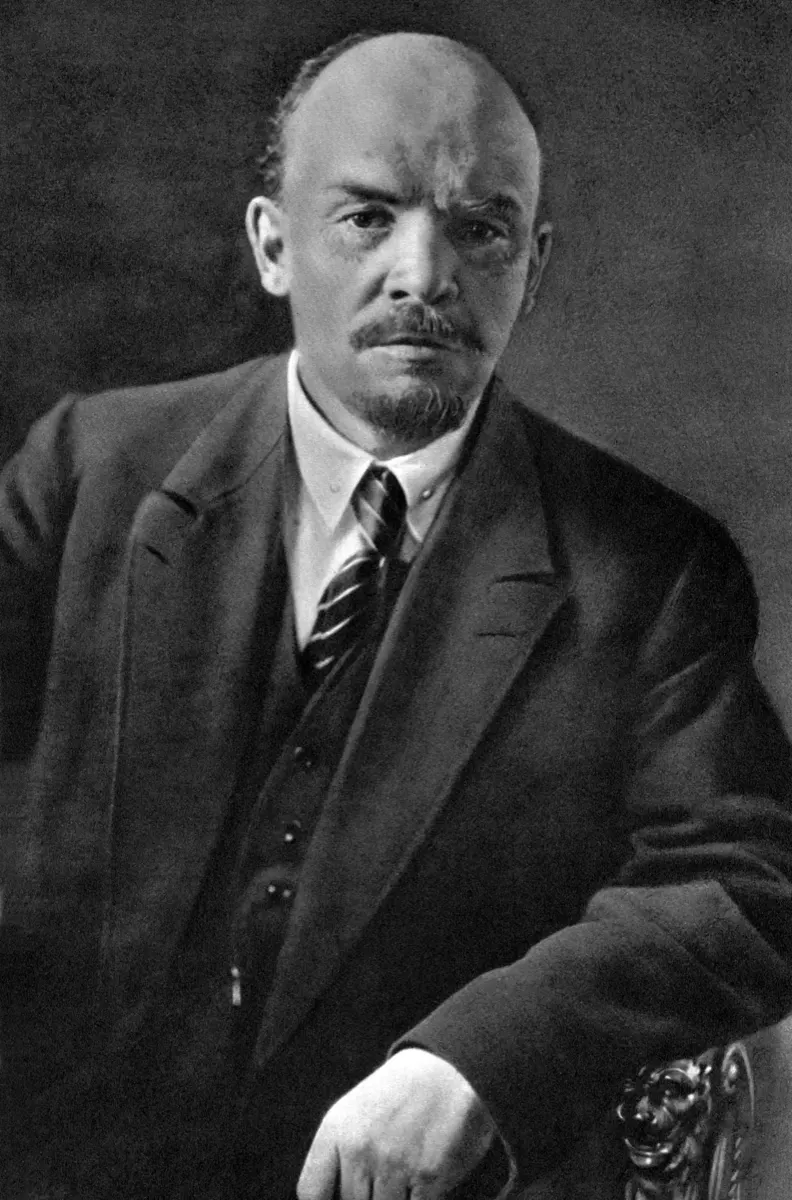
Vladimir Lenin was the Russian revolutionary who led the Bolshevik seizure of power in October 1917 and founded the Soviet state. He was born Vladimir Ilyich Ulyanov in 1870 in the town of Simbirsk, on the Volga River. He spent much of his adult life in exile in Western Europe, writing revolutionary theory and organizing a small, disciplined party built for one purpose: taking power. Lenin returned to Russia at 46, overthrew the provisional government within seven months, and ruled as Chairman of the Council of People's Commissars until strokes left him incapacitated beginning in 1922. He died in January 1924 at 53. The political system he created, a one-party dictatorship enforced by a secret police, outlasted him by nearly seven decades.
How Lenin became a revolutionary
The event that shaped the rest of Lenin's life was the execution of his older brother. In 1887, Alexander Ulyanov, a 21-year-old university student in St. Petersburg, was hanged for helping plot the assassination of Tsar Alexander III. Vladimir was 17. The family was shut out of respectable society overnight.
Lenin had grown up in a comfortable household. His father was a school inspector who had earned a hereditary noble rank through government service. After Alexander's death, Lenin enrolled at Kazan University to study law but was expelled within months for joining a student protest. He finished his degree through self-study and briefly practiced law. But he turned to revolutionary politics full-time.
He read Karl Marx and became convinced that Marx's theory of class revolution applied to Russia, even though Marx had expected revolution to happen in industrialized countries like Britain or Germany. Russia was a vast peasant empire with little industry. In his 1902 pamphlet "What Is to Be Done?", Lenin argued that revolution would not happen on its own. It needed a vanguard party, a small, disciplined group of professional revolutionaries to lead the working class.
In 1895, tsarist police arrested Lenin for organizing workers in St. Petersburg. He spent a year in prison and three years in Siberian exile. After his release in 1900, he left Russia for Western Europe and spent most of the next seventeen years abroad. He lived in Munich, London, Geneva, and Paris, writing and arguing with other Russian exiles. In 1903, at a congress of Russian socialists, his faction won a narrow vote on the party's leadership. Lenin called his side the Bolsheviks, from the Russian word for "majority," and kept the name.
How Lenin took power in 1917
Lenin was in exile in Switzerland when the February Revolution of 1917 overthrew the Tsar. The German government, at war with Russia, arranged for Lenin to cross Germany in a sealed train car. Germany wanted to send the most disruptive revolutionary it could find back into Russia and knock Russia out of the war. Winston Churchill later compared the decision to transporting a plague bacillus.
Lenin arrived at Petrograd's Finland Station in April 1917. The provisional government that had replaced the Tsar planned to keep fighting the war. Lenin called for an immediate end to the war, land for the peasants, and power for the workers' councils called soviets. He reduced it to slogans: "Peace, land, and bread" and "All power to the soviets."
On the night of October 25, the Bolsheviks overthrew the provisional government in a nearly bloodless coup. Lenin became head of government. His first major act was to pull Russia out of World War I. In March 1918, his government signed the Treaty of Brest-Litovsk with Germany, giving up Poland, the Baltic states, Ukraine, and Finland, roughly a third of Russia's population and much of its industry. Many Bolsheviks opposed the treaty, but Lenin argued that the revolution needed peace to survive. The treaty became irrelevant eight months later when Germany surrendered to the Allies.
Lenin's civil war and the Soviet state
Peace with Germany did not bring peace at home. A civil war broke out in 1918 between the Bolsheviks (called the Reds) and a loose coalition of monarchists, anti-Bolshevik socialists, and foreign-backed forces (the Whites). In August 1918, a socialist revolutionary named Fanny Kaplan shot Lenin twice outside a Moscow factory. Lenin survived, but one bullet lodged in his shoulder for the rest of his life.
The Bolsheviks used the attempt on Lenin's life to justify the Red Terror, a campaign of mass arrests and executions carried out by the Cheka, the secret police Lenin had created in December 1917. The Cheka was the first in a line of Soviet security agencies that eventually became the KGB.
The civil war lasted until 1921 and killed an estimated 7 to 10 million people, most of them civilians who died from famine and disease. The Bolsheviks won, but the economy had collapsed. Lenin responded with the New Economic Policy, a retreat that allowed peasants to sell grain and let small businesses operate for profit while the state kept control of heavy industry.
Lenin suffered his first major stroke in May 1922. A second stroke in December paralyzed his right side. In his remaining months of clarity, Lenin grew alarmed about Joseph Stalin, whom he had made General Secretary of the Communist Party earlier that year. Lenin dictated a document later called his Testament. In it, he warned that Stalin held too much power and urged the party to replace him. The party leadership buried the document after Lenin died on January 21, 1924. Stalin kept his position and inherited the system Lenin had built: a disciplined party, a secret police, and a state that treated dissent as treason.
The Soviet government embalmed Lenin's body and put it on permanent display in a mausoleum on Moscow's Red Square, where it still lies in 2026.
What was Lenin's real name?
Lenin was born Vladimir Ilyich Ulyanov on April 22, 1870, in Simbirsk, a town on the Volga River about 700 kilometers east of Moscow. The city was later renamed Ulyanovsk in his honor. He began using the name "Lenin" around 1901 while publishing revolutionary writings in exile. The origin of the pseudonym is uncertain. One common theory connects it to the Lena River in Siberia, but Lenin never explained the choice publicly.
How long was Lenin in power?
Lenin held power for about four and a half years, from the Bolshevik takeover in October 1917 until his first stroke in May 1922. His official title was Chairman of the Council of People's Commissars. A third stroke in March 1923 left him unable to speak. Lenin died in January 1924.
Lenin's time in charge was short, but the state he built lasted until the Soviet Union collapsed in 1991. The one-party system he created, with the Communist Party holding all power and no legal opposition, became the model for communist governments in China, Cuba, Vietnam, and elsewhere.