
Yugoslav Wars
The Yugoslav Wars were a series of conflicts from 1991 to 2001 that broke Yugoslavia apart and killed about 140,000 people.
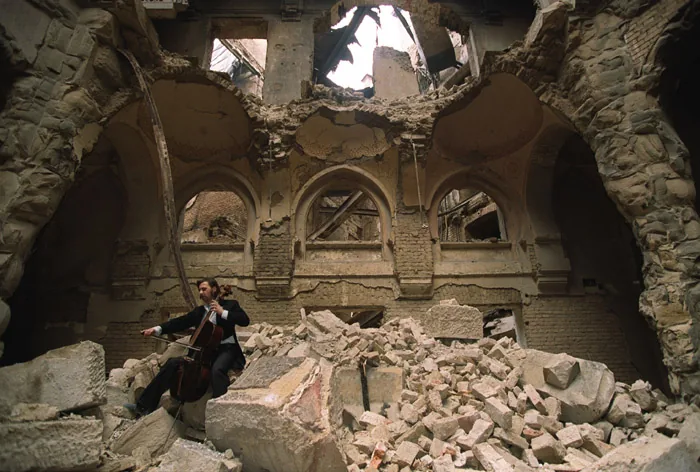
The Yugoslav Wars were a series of conflicts fought between 1991 and 2001 as Yugoslavia, a multiethnic federation in southeastern Europe, broke apart. About 140,000 people died. The wars displaced roughly four million people and included the first act of genocide in Europe since the 1940s. The phrase "ethnic cleansing" entered common use because of what happened here. The worst single atrocity was the Srebrenica massacre in July 1995, when Bosnian Serb forces killed about 8,000 Muslim men and boys in a town under United Nations protection. Western governments intervened to stop the killing, but each time only after long delays. Nearly every later debate about humanitarian intervention, from Libya to Syria, draws on what happened in the Balkans.
How nationalism broke Yugoslavia apart
Yugoslavia was a federation of six republics: Serbia, Croatia, Bosnia and Herzegovina, Slovenia, Macedonia, and Montenegro. Two autonomous provinces, Kosovo and Vojvodina, sat inside Serbia. What kept the country together was a communist party, a common resistance story from World War II, and one man: Josip Broz Tito, who ruled from 1945 until his death in 1980.
Tito left behind a rotating collective presidency designed to keep any one republic from dominating. It broke down after about a decade. The economy collapsed under foreign debt, IMF-imposed austerity, and inflation that reached four digits. Each republic blamed the others for the crisis.
Slobodan Milosevic was a Serbian Communist Party official who had spent most of his career as a business manager and banker. In 1987 he discovered that nationalism was more useful than economics. At a rally in Kosovo Polje, he told a crowd of angry Serbs that no one had the right to beat them, and the moment made him the most powerful politician in Serbia. By 1989 he had revoked the autonomy of Kosovo and Vojvodina and taken control of federal institutions. His message was that Serbs were victims, even as he was the one consolidating power over them.
In Croatia, Franjo Tudjman used the same approach. Tudjman was a former Yugoslav army general who had become a nationalist historian. He founded the Croatian Democratic Union in 1989 and won Croatia's first free election the next year on a platform of independence.
Both men understood a basic problem: if Yugoslavia broke up, the borders of its republics would not match where ethnic groups lived. Roughly two million Serbs lived beyond Serbia's borders, mostly in Croatia and Bosnia. What would happen to those Serbs was the question behind every war that followed.
The wars from Slovenia to Kosovo
Slovenia, with almost no Serb population, declared itself independent in June 1991 and left after a ten-day skirmish with the Yugoslav army. Croatia declared independence the same day, but its case was different. Serbs in the Krajina region, supported by the Yugoslav army, took control of about a third of Croatian territory. The war destroyed the city of Vukovar after a three-month siege and included the shelling of Dubrovnik's medieval old town. Fighting in Croatia lasted four years before a Croatian military offensive retook most of the territory in August 1995, driving out most of the Krajina Serbs.
Bosnia and Herzegovina was the deadliest conflict. The three main groups, Bosniak Muslims, Serbs, and Croats, lived side by side in the same towns, sometimes in the same families. There was no majority. Bosnia voted to leave Yugoslavia in early 1992. Within months, Bosnian Serb forces armed and supplied by the Yugoslav army had seized about 70 percent of the country and were forcing non-Serbs from their homes.
Sarajevo, the Bosnian capital, endured a siege lasting nearly four years, from April 1992 to February 1996. No capital city in modern warfare has been besieged for longer. Snipers shot at civilians crossing the street. More than 11,000 people were killed in the city, including over 1,600 children. In 1992, television footage from detention camps at Omarska and Trnopolje showed emaciated prisoners behind barbed wire. The images reached Western audiences, but years passed before outside powers acted.
The turning point came in July 1995. Bosnian Serb forces under General Ratko Mladic overran Srebrenica, a town that the UN had promised to protect. A lightly armed Dutch peacekeeping battalion could not stop them. Bosnian Serb soldiers separated the men and boys, then killed about 8,000 of them over several days. The International Criminal Tribunal for the former Yugoslavia and the International Court of Justice both ruled the massacre a genocide.
NATO began large-scale bombing of Bosnian Serb positions in August 1995. A combined Croatian and Bosniak ground offensive broke the Bosnian Serb position in western Bosnia. In November, the warring parties were brought to Wright-Patterson Air Force Base in Dayton, Ohio, and kept there until they reached a peace agreement.
The last of the Yugoslav Wars was in Kosovo. In 1998 and 1999, Serbian forces fought the Kosovo Liberation Army and attacked the Albanian civilian population. NATO launched a 78-day bombing campaign against Serbia in March 1999 without authorization from the UN Security Council. Milosevic withdrew his forces. In 2008, Kosovo declared itself independent. Serbia has refused to recognize the declaration, and so have Russia and China.
How many people died in the Yugoslav Wars?
About 140,000 people died across all the Yugoslav Wars. The deadliest conflict was the war in Bosnia, which killed roughly 100,000 people between 1992 and 1995. The single worst atrocity was the Srebrenica massacre, which killed about 8,000. The Croatian war killed an estimated 20,000. The Kosovo conflict and NATO bombing campaign killed about 13,000 more.
About four million people were displaced from their homes across the former Yugoslavia. Many never returned to the places they had lived before the wars.
Who won the Yugoslav wars?
No single side won. Slovenia left quickly and built a stable country. Croatia regained all its territory by 1998 but lost most of its Serb population in the process. Bosnia survived as a single state on paper, but the Dayton Agreement divided it into two entities: one Bosniak-Croat and one Serb. The agreement created three rotating presidents and placed a foreign High Representative above them. Bosnia is still governed under that structure in 2026. Kosovo gained recognition from the United States and most of Europe after its 2008 declaration, but Serbia, Russia, and China reject its statehood.
Slobodan Milosevic, who did more than anyone to start the wars, lost every one of them. He was overthrown in a popular uprising in 2000 and sent to the International Criminal Tribunal for the former Yugoslavia in The Hague. He died in his cell in March 2006 before a verdict was reached. The Bosnian Serb political leader Radovan Karadzic evaded arrest for thirteen years, living in Belgrade disguised as an alternative medicine practitioner. He and the Bosnian Serb military commander Ratko Mladic, captured in Serbia in 2011 after sixteen years on the run, were both found guilty of genocide and sentenced to life in prison. The tribunal indicted 161 people in total and laid the groundwork for the International Criminal Court.
The Rwandan genocide and Srebrenica together led to the Responsibility to Protect, a principle the United Nations adopted in 2005 that says states have an obligation to protect their populations from mass atrocities. The belief that NATO airpower could stop mass killing at low cost, formed in Bosnia and Kosovo, shaped later interventions in Libya and debates over Syria. Russia's president, Vladimir Putin, cited the Kosovo precedent to justify the annexation of Crimea in 2014. The wars that destroyed Yugoslavia still shape how governments decide whether to act when civilians are being killed in another country.