
Annexation of Crimea
Russia seized Ukraine's Crimean peninsula in under a month in 2014, the first forcible annexation of European territory since 1945.
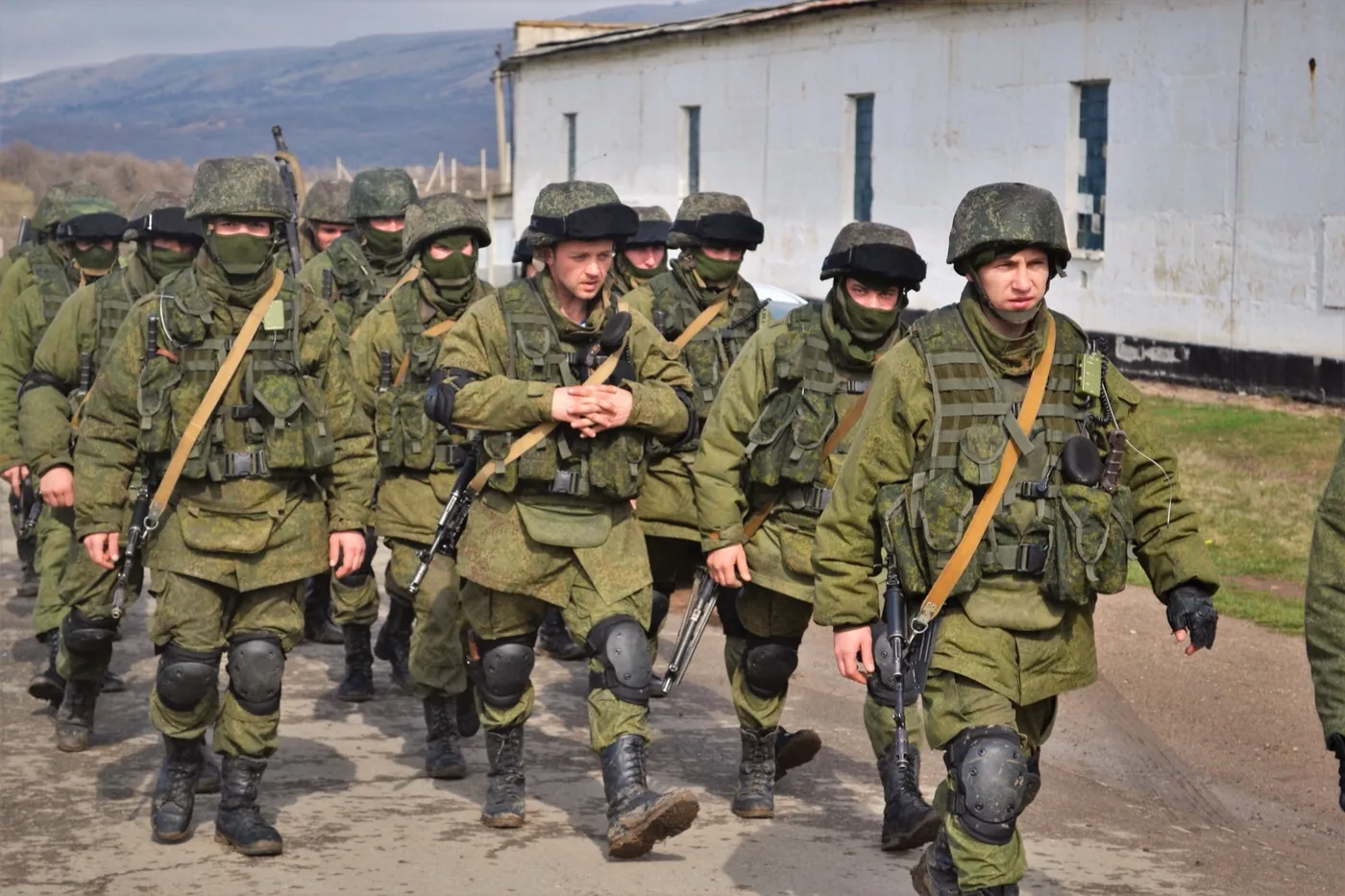
In February and March 2014, Russia took control of Ukraine's Crimean peninsula in less than a month, without a battle. It was the first time a country had annexed part of another European country by force since 1945. Soldiers wearing green uniforms with no insignia appeared at airports, government buildings, and military bases across Crimea. Russian President Vladimir Putin claimed they were local self-defense volunteers. In March 2015, in a state television documentary called "Crimea: The Way Home," Putin acknowledged that they had been Russian soldiers operating under his direct orders. Ukrainians gave them a nickname: the little green men.
How Russia seized Crimea
On February 21, 2014, Ukraine's pro-Russian president, Viktor Yanukovych, fled Kyiv after months of pro-Western street protests known as the Euromaidan. Within days, unmarked soldiers began appearing across Crimea. Russia already had thousands of troops stationed at its naval base in Sevastopol under a lease agreement, so the new arrivals did not immediately look like an invasion.
On February 27, armed men in masks took over the regional parliament building in Simferopol, raising a Russian flag over it. With soldiers surrounding the building, the legislators voted to replace the sitting premier with Sergey Aksyonov, a pro-Moscow politician, and to schedule a referendum on Crimea's status. Over the next several days, Russian troops blockaded Ukrainian military bases, took control of airports, and sealed off the roads connecting the peninsula to the Ukrainian mainland.
Ukraine's new government was only three days old. Fearing a larger war, it ordered its soldiers not to fight back. In the 1990s, Ukraine had surrendered roughly 1,900 strategic nuclear warheads left on its soil after the Soviet collapse. In return, Russia, the United States, and the United Kingdom signed the Budapest Memorandum, promising to respect Ukraine's borders. Russia had now violated that pledge, and Ukraine had no nuclear deterrent. Within a week, Russia controlled the peninsula.
Why Russia wanted Crimea
The central reason was Sevastopol. Russia's Black Sea Fleet had been based there since 1783, and losing access to the port would have crippled Russia's naval power in the region. In 2010, Ukraine's then-president Yanukovych had extended Russia's lease on the base until 2042. But Yanukovych was now gone, and a pro-Western government in Kyiv raised the possibility that Ukraine might eventually join NATO or cancel the lease, cutting Russia off from its most important warm-water naval port.
Crimea also had a history that made it easier for Moscow to claim. The peninsula had belonged to Russia for more than 170 years before Soviet leader Nikita Khrushchev transferred it to Soviet Ukraine in 1954, citing Crimea's close economic ties to Ukraine. In 2014, a majority of Crimea's residents still spoke Russian as their first language. Putin presented the annexation as a rescue of ethnic Russians and a correction of a Soviet-era mistake. Western governments called it an illegal seizure of sovereign territory.
Was the Crimea referendum legitimate?
It was not. On March 16, 2014, Crimea held a vote on its future while Russian soldiers occupied the peninsula. The ballot had two options: join Russia, or restore a 1992 constitution that would have made Crimea almost independent of Ukraine. There was no choice to remain part of Ukraine under the existing arrangement. International monitors were not allowed in.
Moscow announced that 96.77 percent of voters chose to join Russia on a turnout of 83 percent. Independent observers rejected those numbers. A report later attributed to Russia's own presidential human rights council suggested the real turnout may have been 30 to 50 percent, with 50 to 60 percent of those voting in favor.
Two days after the referendum, Putin signed a treaty absorbing Crimea into the Russian Federation. The United Nations General Assembly voted 100 to 11, with 58 abstentions, to declare the referendum invalid. As of 2026, almost no country outside Russia recognizes the annexation.
What happened after Russia annexed Crimea?
The United States, the European Union, and their allies imposed sanctions on Russian officials, banks, and defense companies. The other G8 members suspended Russia from the group, which became the G7 again.
Inside Ukraine, the annexation united public opinion against Russia and accelerated the country's drive toward the European Union and NATO. The outcome was the opposite of what Moscow may have hoped for: rather than pulling Ukraine back into Russia's orbit, the seizure of Crimea pushed it firmly toward the West.
The 2014 operation also set a pattern. Russia used a similar approach, unmarked troops followed by claims of local consent, when it backed separatists in eastern Ukraine's Donbas region later that year. On February 24, 2022, Russia launched a full-scale invasion of Ukraine, starting the biggest ground conflict on the continent since 1945. As of 2026, Crimea remains under Russian occupation, but Ukrainian drone and missile strikes have severely damaged the peninsula's power grid, fuel supply, and ferry connections to the Russian mainland.