
Country profile · Central Europe
 Germany
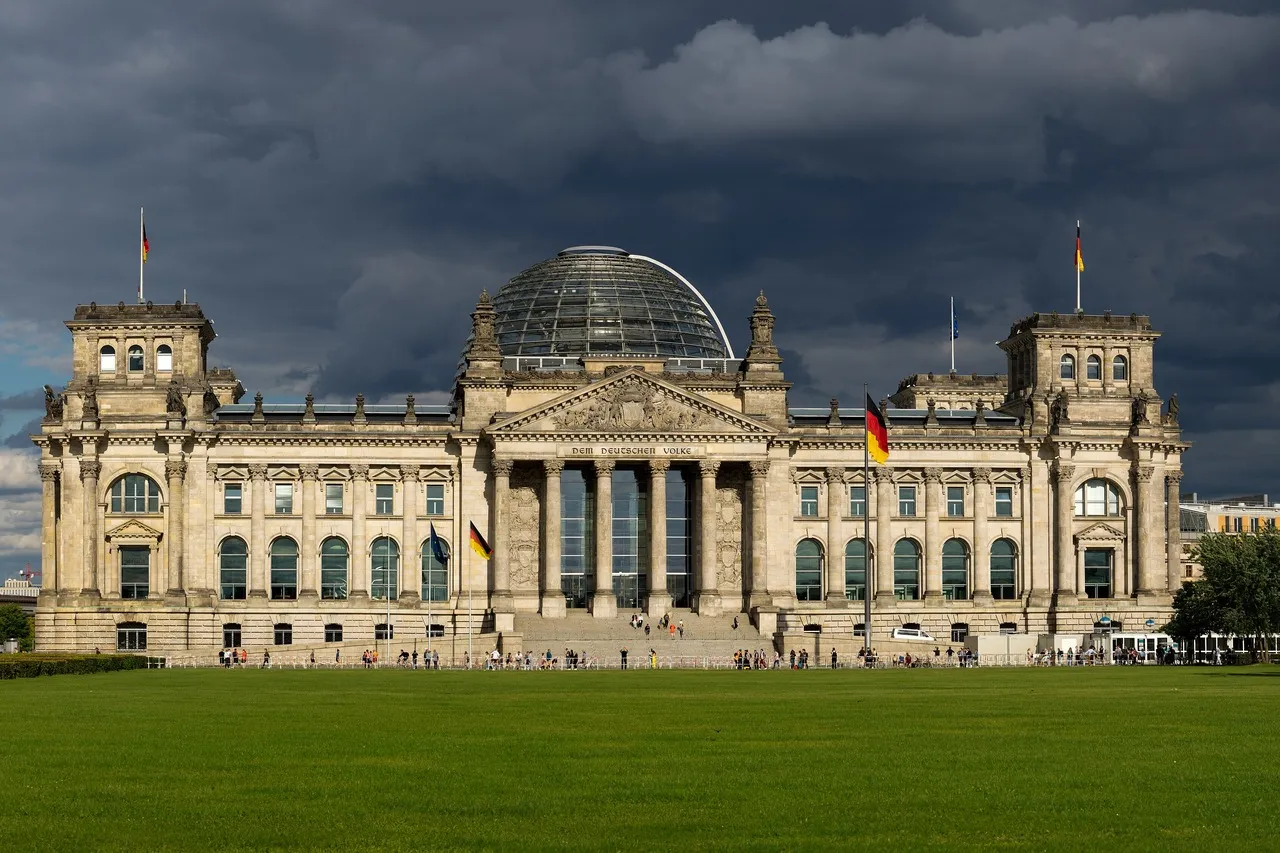
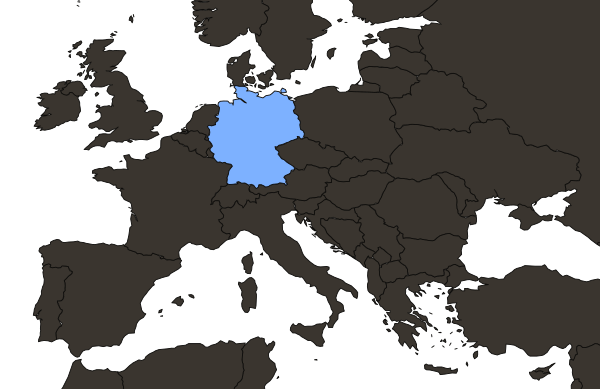
Germany is the world's third-largest economy, worth about $5.05 trillion in 2025, and the largest in Europe. It has about 84.1 million people. It spent $113.6 billion on its military in 2025, fourth in the world and the most in NATO Europe. About 36,400 US troops are stationed in Germany, the most in Europe. It hosted 2.66 million refugees at the end of 2025, the second most in the world.
Where Germany ranks
All rankings →Who runs Germany?
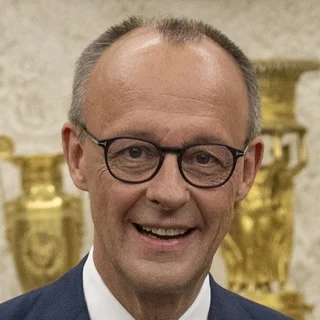
Friedrich Merz has been chancellor since May 6, 2025. He fell six votes short on the first ballot and won on a second that afternoon, a postwar first. His CDU/CSU and SPD coalition holds 328 of 630 Bundestag seats. Merz is a licensed pilot who owns a twin-engine propeller plane. He chaired BlackRock's German supervisory board from 2016 to 2020. The far-right AfD leads national polls at 27% in the ARD September 2026 poll, against 21% for the CDU/CSU. Only 13% were satisfied with Chancellor Merz. On September 6, 2026 the AfD won 43.8% in the state of Saxony-Anhalt, but it governs no state. The next federal election is due by March 2029.
- CDU/CSU 208
- SPD 120
- Opposition (AfD 150, Greens 85, Left 64, others 3) 302
Portrait (2025): The White House, public domain
Who are Germany's allies and rivals?
Germany's security rests on NATO and the EU. The 2019 Aachen Treaty commits France and Germany to mutual defense. In July 2025 Britain and Germany signed the Kensington Treaty, pledging mutual military assistance. In May 2026 the Pentagon announced about 5,000 US troops would leave Germany. Germany gave Ukraine 9 billion euros of military aid in 2025, the most of any donor. In 2025 Germany began stationing an armored brigade in Lithuania, the first Bundeswehr brigade based permanently abroad. In August 2026 a drone with an explosive hit a Ukrainian plane at Leipzig/Halle airport. Germany blamed Russia and closed Russia's last consulate in September 2026.
Allies and partners
 FranceMutual defense under 2019 Aachen Treaty
 United StatesAbout 36,400 troops, most in Europe
 United KingdomMutual defense treaty signed July 2025
 PolandDefense agreement signed June 2026
 LithuaniaHosts German armored brigade since 2025
 UkraineLargest military aid donor in 2025

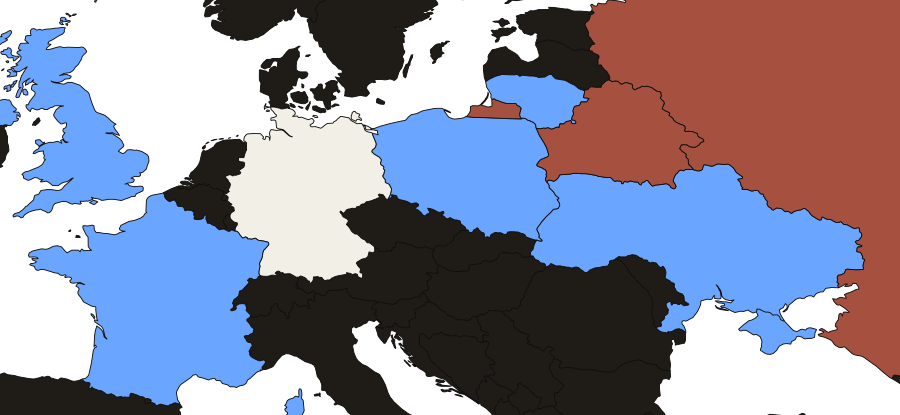
- Panzerbrigade 45 German brigade, first permanently stationed abroad. Building to about 4,800 soldiers by the end of 2027.
- Nord Stream Gas pipelines from Russia, sabotaged in September 2022. A Ukrainian suspect's trial opens in Hamburg on October 14, 2026.
- Germany
- Partner
- Rival
Who does Germany trade with?
Germany exported 1,562.9 billion euros of goods in 2025 and imported 1,362.5 billion euros. China was again its largest trading partner by total trade, after the United States held that spot in 2024. The United States was the largest export market at 146.2 billion euros, down 9.4% in a year when the US put tariffs of 15% on most EU goods. Car exports to the United States fell 17.8%. Imports from China rose 8.8% to 170.6 billion euros. Exports to China fell 9.7%. Cars and parts made up 16.2% of exports and machinery 13.8%. Norway supplied 44% of gas imports in 2025. No Russian pipeline gas has arrived since September 2022.
Sells to
Share of Germany's exports
- United States9.4%
- France7.5%
 Netherlands7.2%
- Poland6.4%
 Italy5.3%
Buys from
Share of Germany's imports
 China12.5%
- Netherlands7.1%
- United States6.9%
- Poland5.9%
- Italy5.3%
Goods trade, 2025. Shares of Germany's exports (by country of destination) and imports (by country of origin), from the preliminary ranking of trading partners published by Destatis, the Federal Statistical Office, in February 2026.
How strong is Germany's military?
SIPRI estimates Germany spent $113.6 billion on its military in 2025, fourth in the world and the most in NATO Europe. That was 2.3% of GDP, above 2% for the first time since 1990. In March 2025 the Bundestag exempted defense spending above 1% of GDP from the debt brake. The 2027 draft has 139.6 billion euros for defense. The government aims for 3.5% of GDP by 2029. The Bundeswehr had about 186,400 active soldiers on August 31, 2026 and aims for about 260,000 by 2035. Since January 2026 every man born from 2008 must fill in a military service questionnaire. Service stays voluntary. Germany has ordered 35 F-35A fighters.
Military spending, 2025
Full ranking →- United States$954bn
- China est.$336bn
 Russia est.$190bn
- Germany$114bn
- United Kingdom$89.0bn
- France$68.0bn
SIPRI Military Expenditure Database, 2026 edition
Does Germany have nuclear weapons?
No. Germany signed the Non-Proliferation Treaty in 1969 and renounced nuclear weapons in the 1990 Two Plus Four Treaty. Under NATO nuclear sharing, an estimated 10 to 15 US B61 bombs are at Büchel air base for German Tornado jets. They stay in US custody. F-35As take over from 2029. In February 2026 Chancellor Merz said he does not want Germany to build its own weapons. He and President Macron set up a nuclear steering group on March 2, 2026. In mid-July 2026 French nuclear-capable Rafales landed at the German air base at Nörvenich. Germany plans to join a French nuclear exercise before the end of 2026. The launch decision stays with the French president.
Nuclear warheads, 2026
Full ranking →- Russia5,420
- United States5,042
- France370
- United Kingdom225
Federation of American Scientists, Status of World Nuclear Forces, 2026