The world's alliances
Countries join alliances to defend each other, to trade more freely or to have a bigger say. In NATO, an armed attack on one member counts as an attack on all. The European Union has its own laws, courts and parliament. BRICS, the G7 and the G20 are looser clubs whose leaders meet once a year.
Military and security pacts
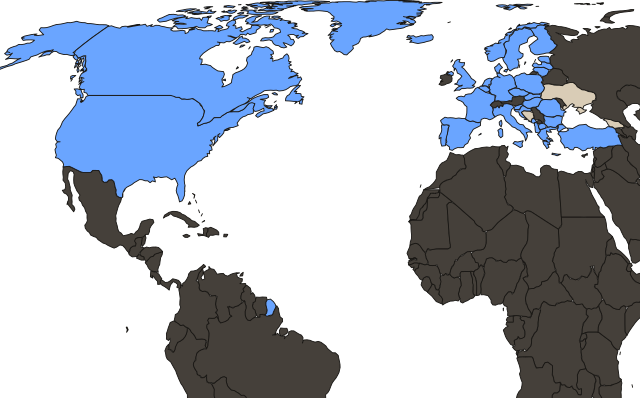 NATO
32 countries in Europe and North America. An attack on one counts as an attack on all.
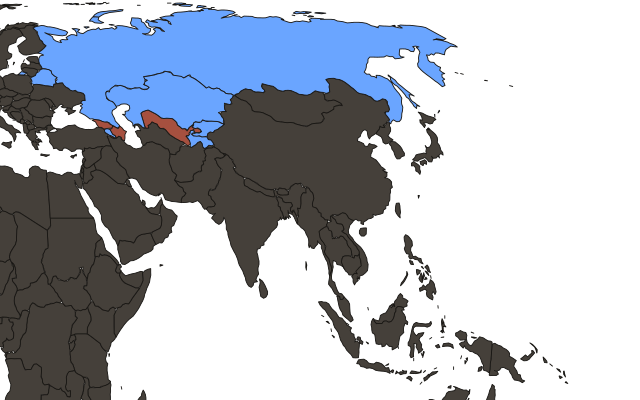 CSTO
Russia and five former Soviet republics. Armenia froze its part in 2024 and lost its vote in 2026.
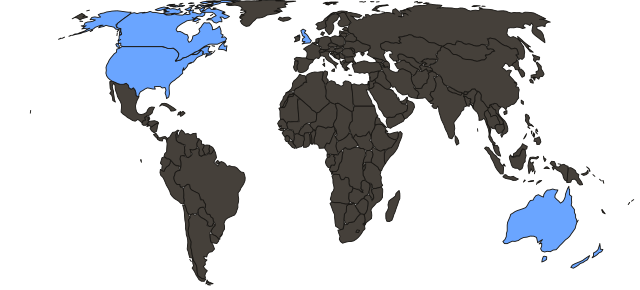 Five Eyes
Five English-speaking countries sharing intelligence since 1946. Its founding documents were secret until 2010.
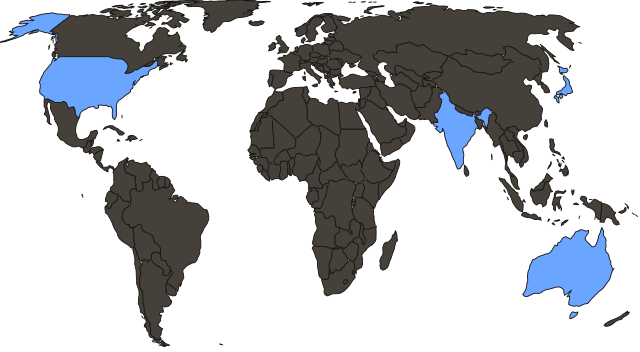 Quad
The United States, Japan, India and Australia. No treaty. Its leaders met in Manila in November 2026, after a two-year gap.
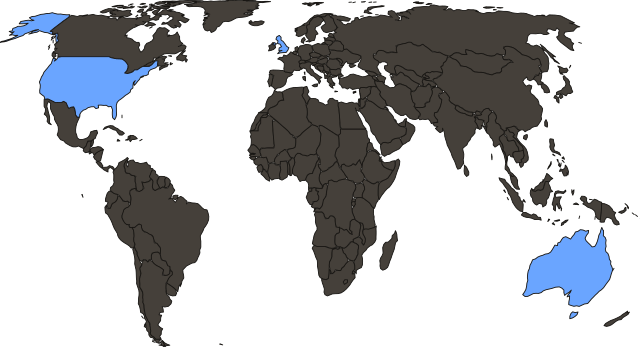 AUKUS
Nuclear-powered submarines for Australia, with Britain and the United States. No mutual-defense promise.
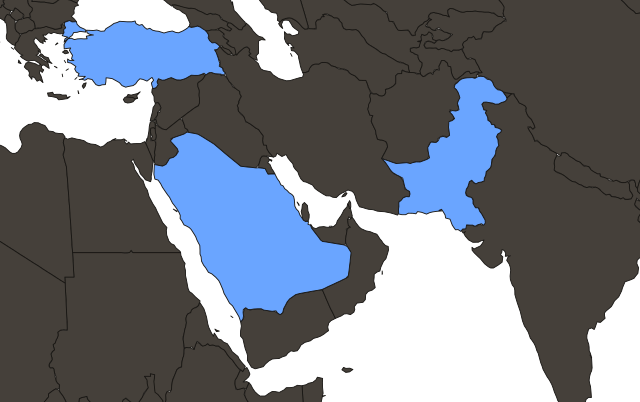 Mecca pact
Saudi Arabia, Turkey and Pakistan, since August 2026. An attack on one counts as an attack on all.
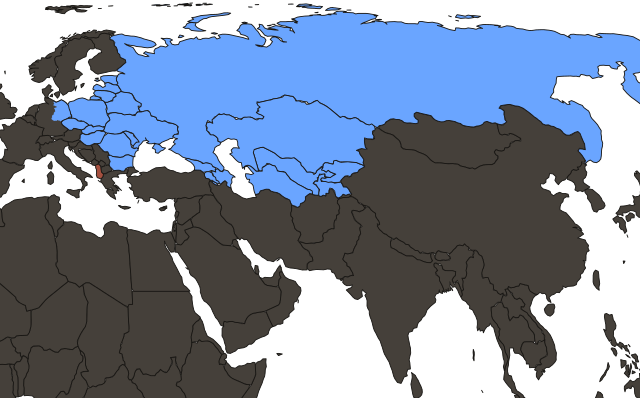 Warsaw Pact
The Soviet Union and seven allies, 1955 to 1991. All non-Soviet members are now in NATO.
Unions of neighbors
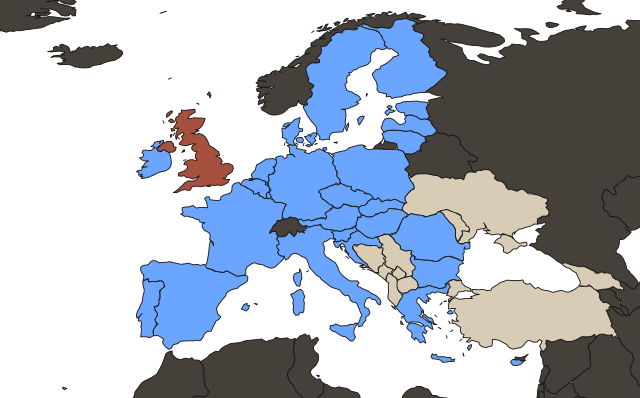 European Union
Shared laws, one market and, for 21 members, the euro. Nine countries want to join.
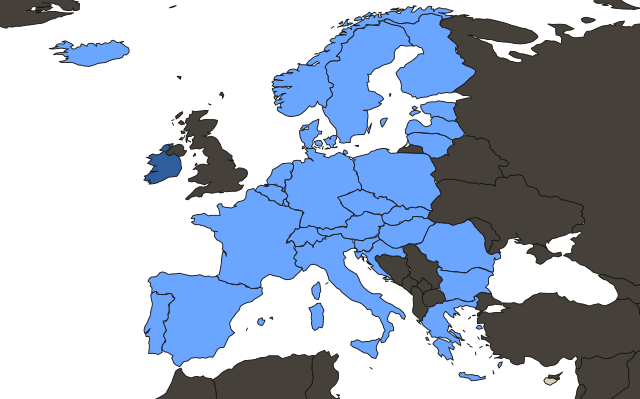 Schengen Area
29 European countries with no passport checks at their shared borders.
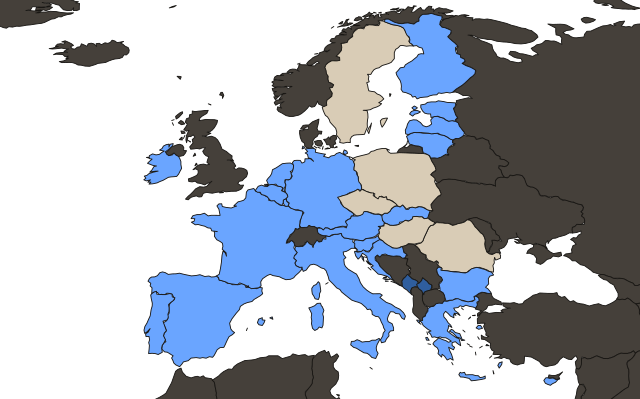 Eurozone
21 EU countries sharing the euro. Bulgaria joined on January 1, 2026.
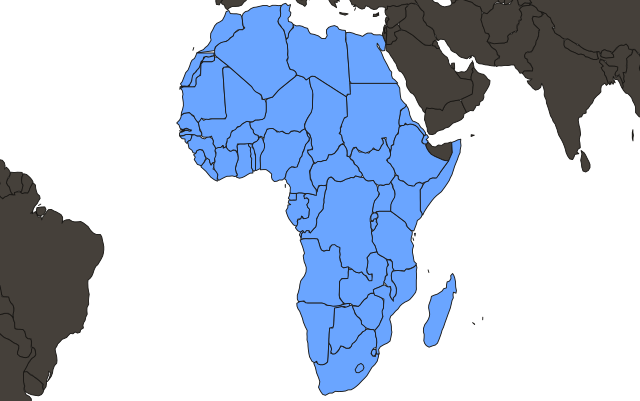 African Union
Every African state, 55 in all. Six are suspended after coups.
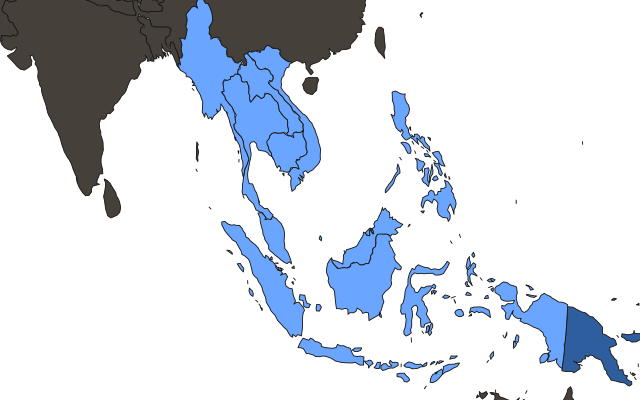 ASEAN
Eleven Southeast Asian countries. Timor-Leste joined in 2025.
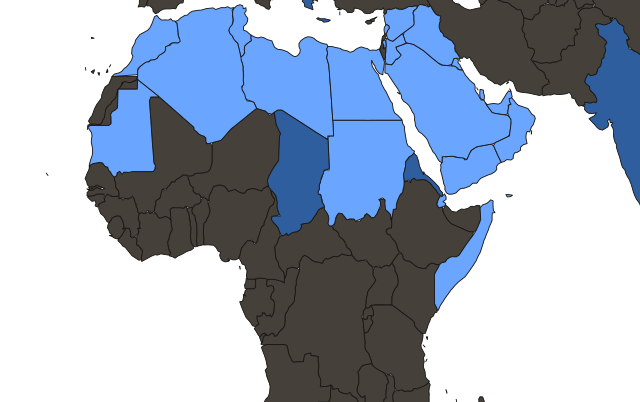 Arab League
22 Arab states, founded in Cairo in 1945. No member has ever left.
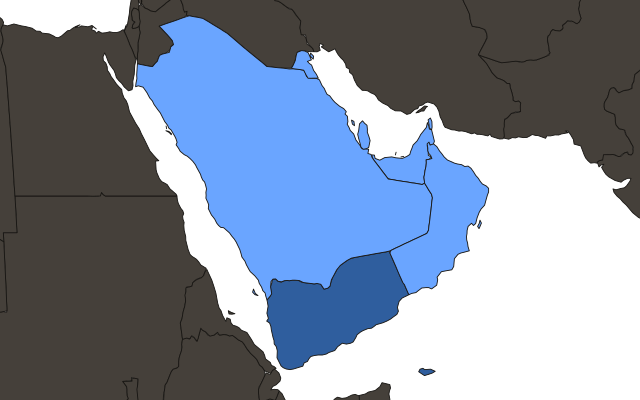 GCC
Six Gulf monarchies with a fifth of the world's oil. Iran struck all six in 2026.
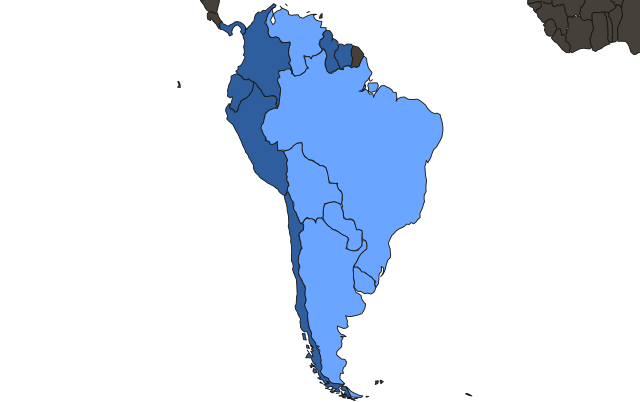 Mercosur
South America's trade bloc: five members, a suspended Venezuela and an EU trade deal provisionally applied since May 2026.
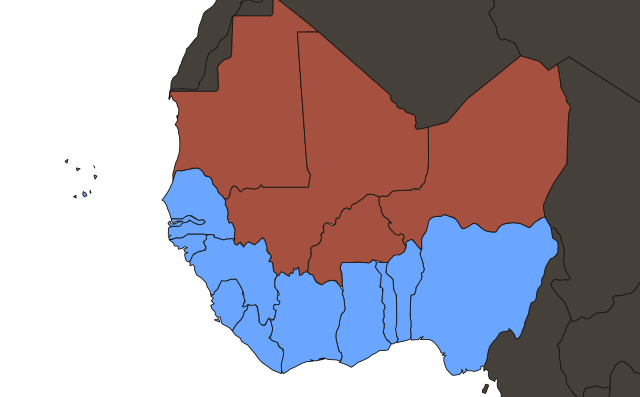 ECOWAS
12 West African countries. Mali, Burkina Faso and Niger left in 2025.
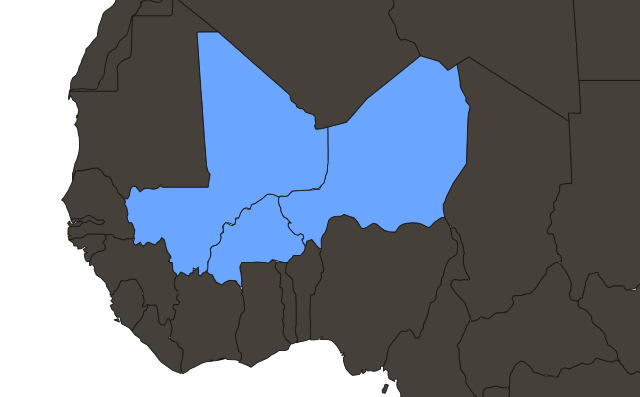 Alliance of Sahel States
Mali, Burkina Faso and Niger, three military-led states that left ECOWAS in 2025.
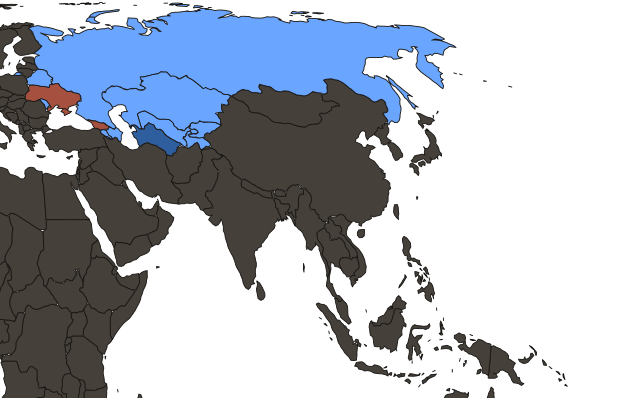 CIS
Nine former Soviet republics plus Turkmenistan as associate. Moldova leaving in 2027.
Clubs and blocs
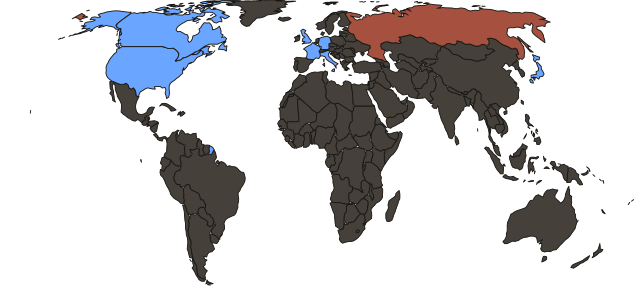 G7
Seven rich democracies with 45% of the world's economy. Russia was in it from 1998 to 2014.
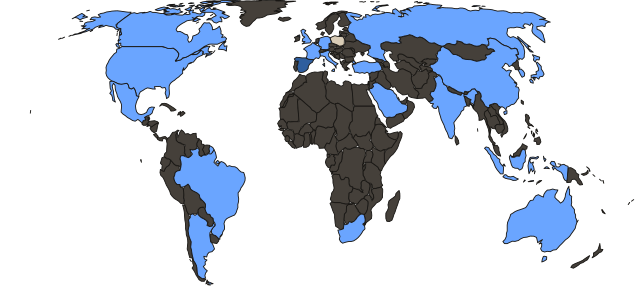 G20
19 big economies, the EU and the African Union, with 78% of the world's economy.
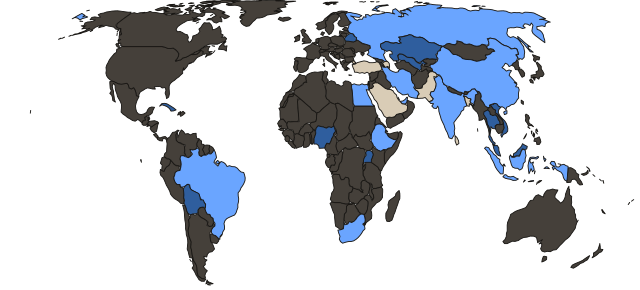 BRICS
Ten emerging economies with 48% of the world's people. Ten more are partners.
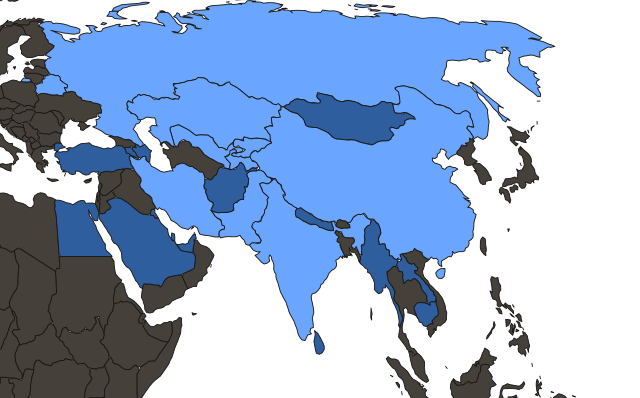 SCO
China, Russia, India and seven more, with 42% of the world's people. No promise to defend each other.
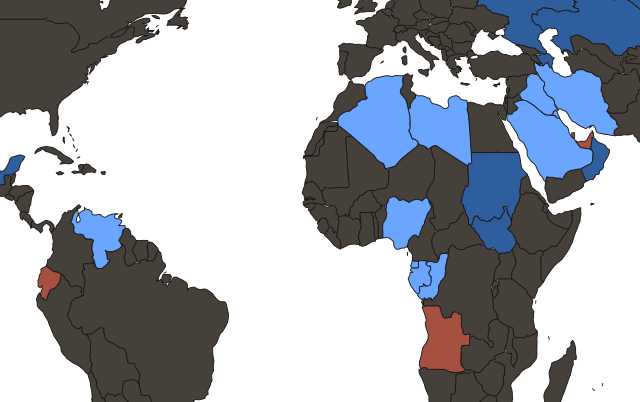 OPEC
Eleven oil exporters that set output together. The UAE left in May 2026.
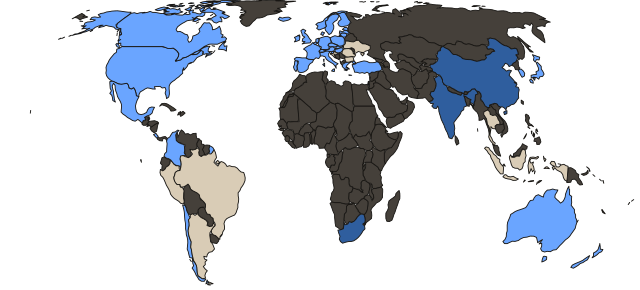 OECD
38 mostly rich democracies with about 60% of the world's economy. Eight more want to join.
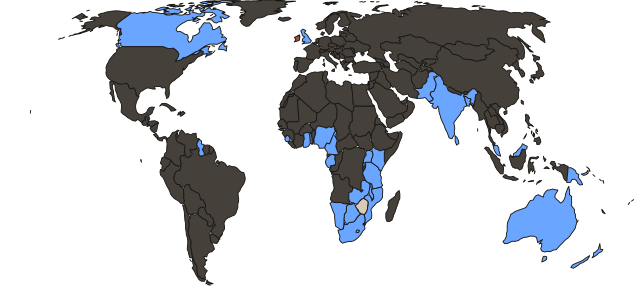 The Commonwealth
 has 56 member countries, most formerly British, with 2.7 billion people. It has no treaty and no military role.
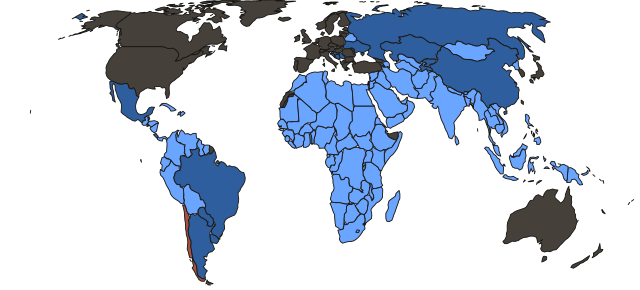 Non-Aligned Movement
120 countries from the Global South, founded in 1961. Chile left in August 2026.
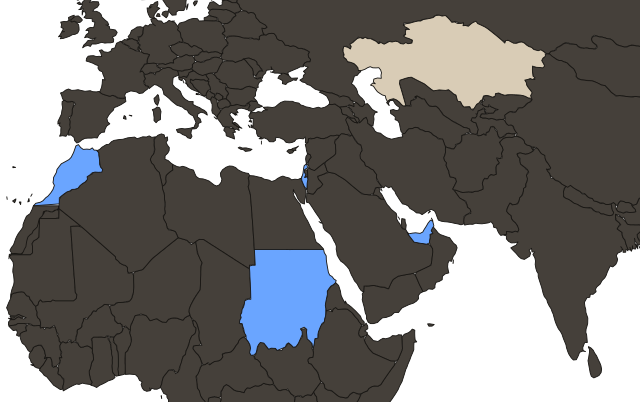 Abraham Accords
Israel and four Arab states signed US-brokered peace deals starting in 2020.
- Member
- Partner
- Wants to join
- Left
Which alliances is each country in?
Most large countries belong to several. Turkey is the only country that is in NATO, wants to join the EU and has applied to BRICS.


 Andorra

 Antigua and Barbuda


 Bahamas


 Barbados


 Benin


 Burundi


 Cape Verde


 Comoros


 Czechoslovakia


 Dominica


 East Germany


 Equatorial Guinea


 Eswatini

 Fiji

 Gabon
 Gambia


 Grenada


 Guinea-Bissau


 Kiribati


 Lesotho
 Liberia

 Liechtenstein

 Luxembourg


 Marshall Islands
 Mauritania


 Micronesia

 Monaco


 Namibia
 Nauru


 Palau
 Palestine


 Republic of the Congo


 Saint Kitts and Nevis
 Saint Lucia
 Saint Vincent and the Grenadines
 Samoa
 San Marino
 São Tomé and Príncipe


 Seychelles
 Sierra Leone


 Soviet Union


 Togo
 Tonga


 Tuvalu


 Vanuatu
 Vatican City


 Yugoslavia


- Member
- Wants to join
- Partner
- Left or suspended
Members as of November 2026. The G20 also includes the European Union and the African Union.
Which alliance is the biggest?
It depends on what you count. The 19 countries of the G20 have 58% of the world's people and 78% of its economy. NATO has only 12% of the people but 50% of the economy.
BRICS is the reverse. Its members have 48% of the world's people but 27% of its economy. The African Union has 19% of the people and 2.7% of the economy.
Share of the world, 2025
- People
- Economy
- G2058%78%
- NATO12%50%
- G79.6%45%
- BRICS48%27%
- SCO42%23%
- European Union5.5%18%
- ASEAN8.5%3.6%
- African Union19%2.7%
- OPEC6.2%2.4%