
Could China Have Colonized the World Before Europe?
Ming China had the world's largest ocean-going fleet in 1405, sixty years before Europe's voyages of discovery began, and never used it to build an empire.
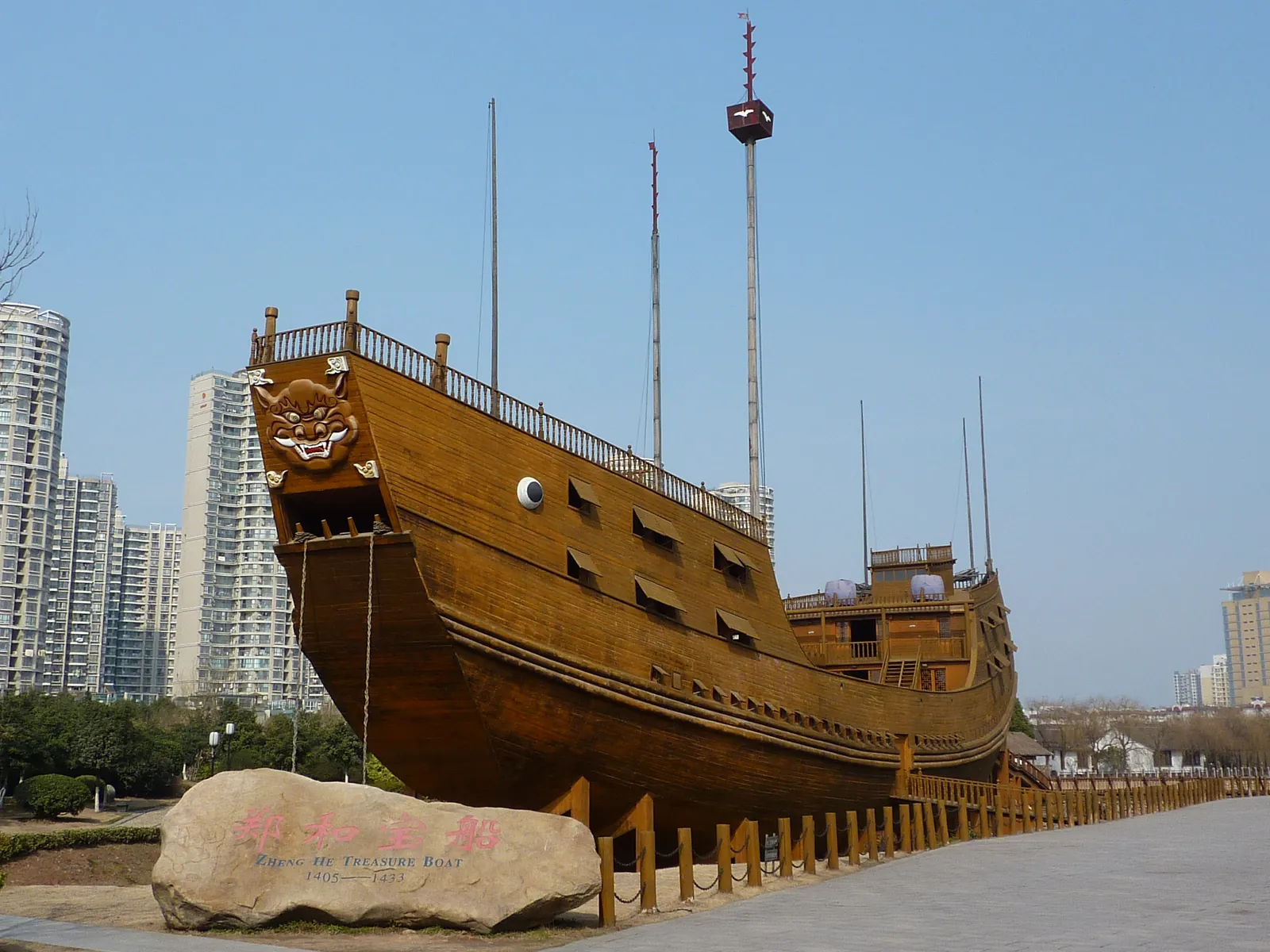
In 1405, a fleet of more than three hundred ships sailed out of China with nearly twenty-eight thousand men aboard, the largest fleet ever sent on a voyage of that distance. Eighty-seven years later, Columbus crossed the Atlantic with three ships and about ninety men. The Chinese fleet could have reached the Cape of Good Hope decades before any European did. It never tried. The reason has nothing to do with the ships, and everything to do with who was paying for them, and why.
A fleet no European power could match
The man who commanded that fleet was born Ma He, around 1371, to a Muslim family in Yunnan, in China's far southwest. When he was about ten, Ming armies conquered the region, killed his father, and took the boy prisoner. He was castrated and sent into palace service, given to a prince named Zhu Di. Over the next two decades he became one of the prince's most trusted men, fighting alongside him when Zhu Di seized the throne in 1402 as the Yongle Emperor. The emperor renamed him Zheng He and, in 1405, put him in command of a fleet built to show the world what Ming China could do.
The flagships, known as treasure ships, were the largest wooden ships afloat anywhere in the world at the time. Ming records put the biggest at over 120 meters long, a figure many historians think is exaggerated, but even conservative estimates, closer to 60 or 70 meters, dwarf anything sailing in Europe at the time. Around them sailed supply ships, water tankers, and warships, a floating city that outclassed every other navy on Earth.
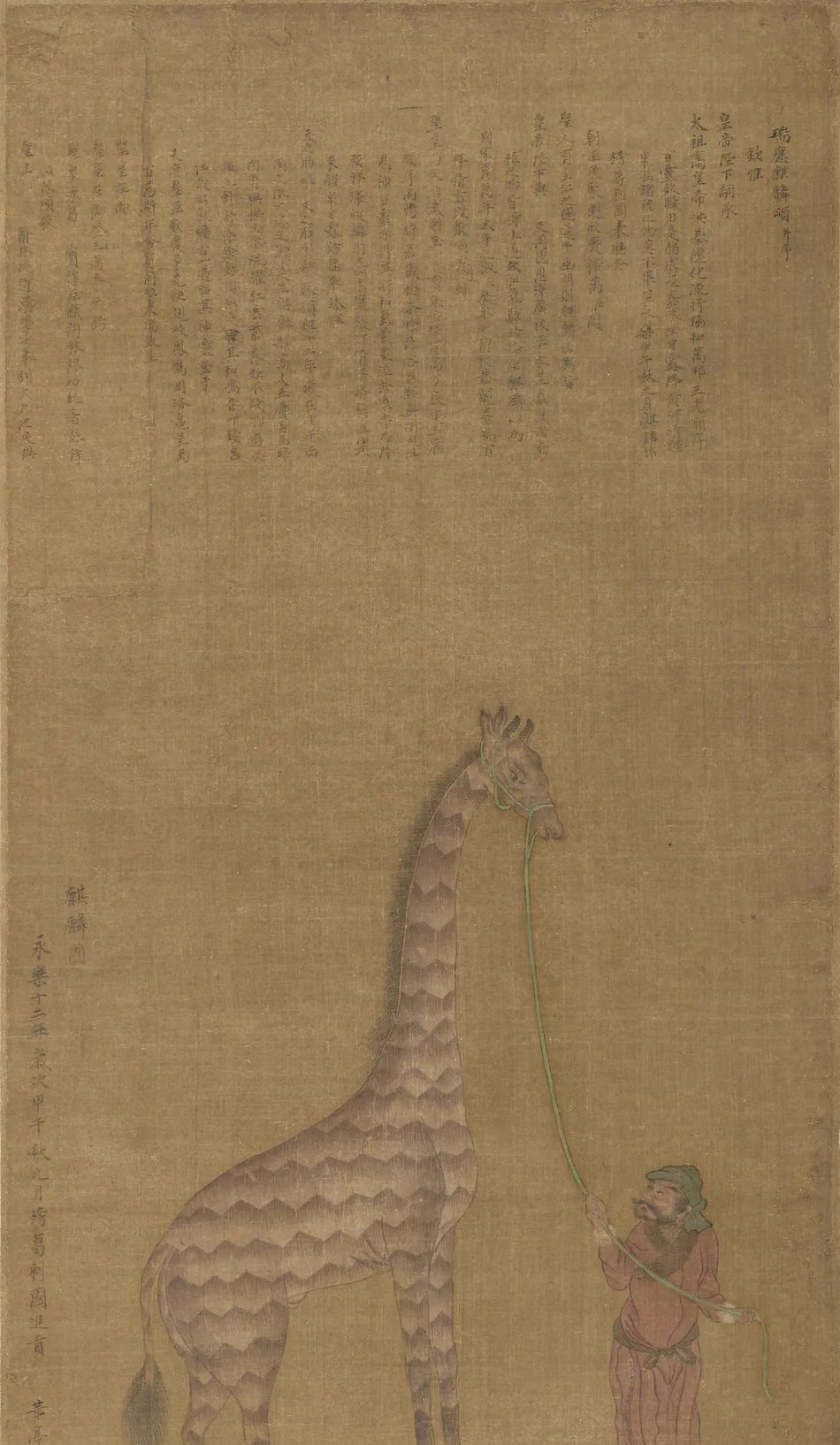
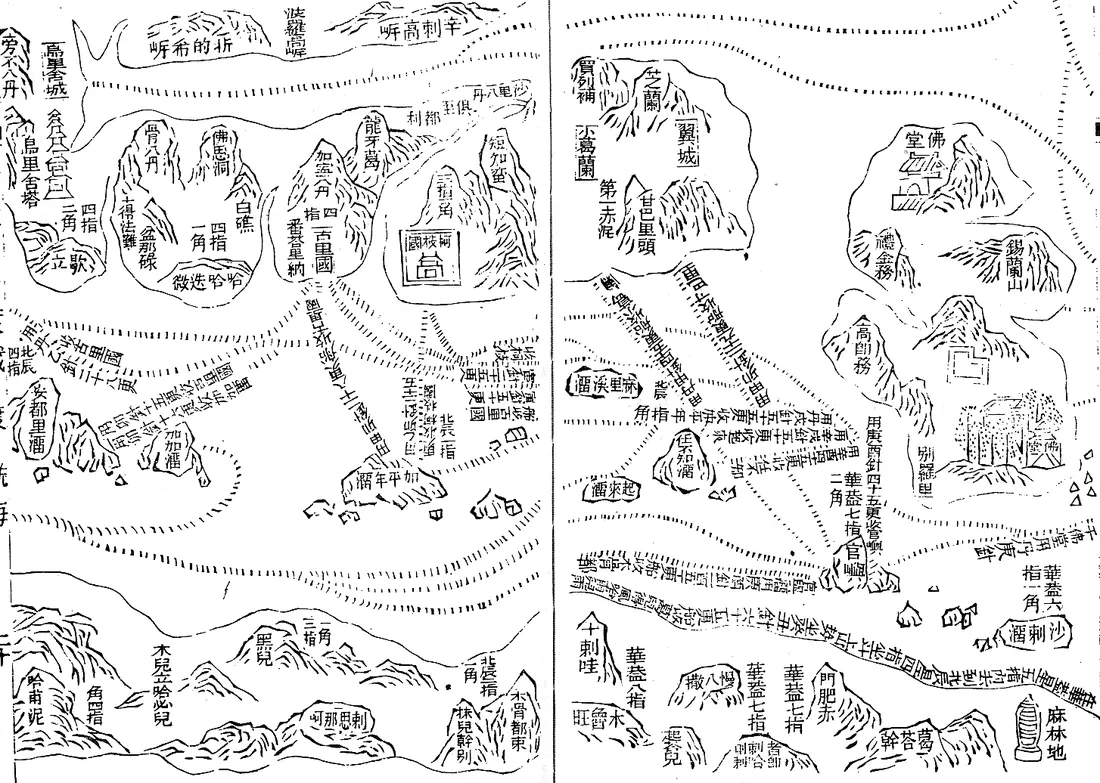
Between 1405 and 1433, Zheng He led seven of these voyages across the Indian Ocean, calling at ports across Southeast Asia, reaching Calicut on India's west coast, sailing up the Persian Gulf to Hormuz, and touching the East African coast near Malindi and Mogadishu. On one voyage the fleet brought home a giraffe, an animal no one at the Ming court had ever seen. Officials studied it and pronounced it a qilin, a mythical beast said to appear only when a wise ruler sat on the throne, and the emperor had it painted for the occasion. An African animal on a leash before a Chinese court says a great deal about how far Zheng He's ships had gone.
A fleet built to impress, not to conquer
What the fleet did with all that power is the part that surprises most people. Zheng He did not plant colonies or set up trading posts, the way Portugal and the Dutch East India Company later would. He sailed to display Ming power and pull foreign rulers into China's tribute system, the arrangement in which distant kings sent gifts and ceremonial submission to the emperor in exchange for trade rights and protection. He installed a friendly king in Malacca, fought off pirates in the strait there, and once captured a Ceylonese king who had attacked his men, bringing him back to Nanjing to answer for it. But he left no garrisons and took no territory. The fleet was there to be seen, not to rule.
That is the opposite of what European navies did once they reached the Indian Ocean. The Portuguese arrived at Calicut in 1498 and within a few years were seizing ports and fighting naval battles to control the spice trade by force. Spain colonized the Americas outright. A century later, the English and Dutch built companies whose entire purpose was to seize territory and extract profit, the East India Company being the starkest example, a private firm that eventually ruled a subcontinent with its own army. Zheng He had bigger ships and got there first. He simply was not trying to do what they did.
Why there was no Chinese version of the East India Company
Zheng He's fleet was entirely a state project, built with the emperor's silver. There was no independent merchant class free to keep going once the throne lost interest, because there was nothing legal to sail on. Since 1371, decades before Zheng He's first voyage, the Ming founder had banned private citizens from building oceangoing ships or trading abroad on their own account, funneling all foreign contact through the state's tribute missions. Chinese merchants who wanted to trade overseas had to do it in defiance of the law, and many did, but none could build a rival fleet openly.
Portugal was different. Prince Henry the Navigator's voyages down the African coast were backed by the crown, but merchants and investors chasing a direct route to the spice trade carried the exploration forward on their own money, and kept going even when a particular king lost interest or died. Vasco da Gama sailed into Calicut just 65 years after Zheng He's last voyage, for a crown that had spent nearly a century cultivating exactly that kind of merchant class. China had built the opposite. When its emperor said stop, no one was left to keep sailing.
Why the voyages actually stopped
The immediate cause was politics at court. Confucian officials, who ran China's civil bureaucracy, had opposed the voyages from the start: the ships were commanded by eunuchs, palace servants the bureaucrats distrusted, and the voyages were staggeringly expensive. To Confucian officials they looked like exactly the kind of foreign entanglement their philosophy warned against, a wasteful distraction for an empire that already considered itself the center of the civilized world.
Money and attention were also pulling toward a real threat. Mongol armies still massed on China's northern border, and the Yongle Emperor himself died in 1424 on campaign against them. His successors judged that the border, not the ocean, was where the empire's survival was at stake. A judgment proven right in 1449, when Mongol forces captured a later Ming emperor in battle. Zheng He died at sea around 1433, and with the fleet's strongest advocate gone, the court let the voyages end. One official is said to have destroyed the fleet's records so no one could revive them. Over the following century the sea ban tightened further, and in 1525 the government ordered coastal officials to destroy oceangoing ships outright. China had not lost the ability to build ships like Zheng He's. It had simply decided, more than once, that it did not want to.
The technology was never the obstacle
Zheng He's China had the capability to colonize the world, at least for a moment. In the 1420s it had the ships, the sailors, and a sixty-year head start on the empires that went on to do exactly that. If the emperor had ordered his captains to seize Calicut or Hormuz instead of just visiting them, nothing in the Indian Ocean could have stopped him. But China could never have done what Europe did, because nothing about the fleet was built to outlast the man who paid for it. The voyages were never designed to seize territory in the first place, because the people paying for them had no reason to want territory: prestige and tribute were the point. Once the court changed its mind, there was no merchant class and no private fleet to pick up where the state left off. Europe's colonization of the world was not just a story of better ships. It was a story of profit-seeking institutions that could outlive any single ruler's change of heart, something Ming China had made illegal to build.
Why China still invokes Zheng He
China has not forgotten what those fleets meant. In 2005 the government made July 11, the anniversary of Zheng He's first departure, into National Maritime Day. In 2017, opening the first Belt and Road forum in Beijing, Xi Jinping invoked Zheng He by name, telling the assembled world leaders that the admiral's fleets "won their place in history not as conquerors with warships, guns or swords" but as "friendly emissaries." The line answers a real accusation: that China's Belt and Road Initiative is colonialism with better financing. China has done this before, the argument goes, and it was peaceful. Whether that framing survives contact with the ports, loans, and naval bases China has since built along those same sea lanes is a live question. But the choice of symbol was no accident. Six centuries later, the treasure fleet is still doing exactly what it was built to do: making the case for Chinese power without firing a shot.
Test what you learned
6 questions on this article. About two minutes, no signup.