
Nixon Shock
The Nixon Shock was President Richard Nixon's 1971 decision to end the dollar's convertibility into gold, ending the Bretton Woods system.
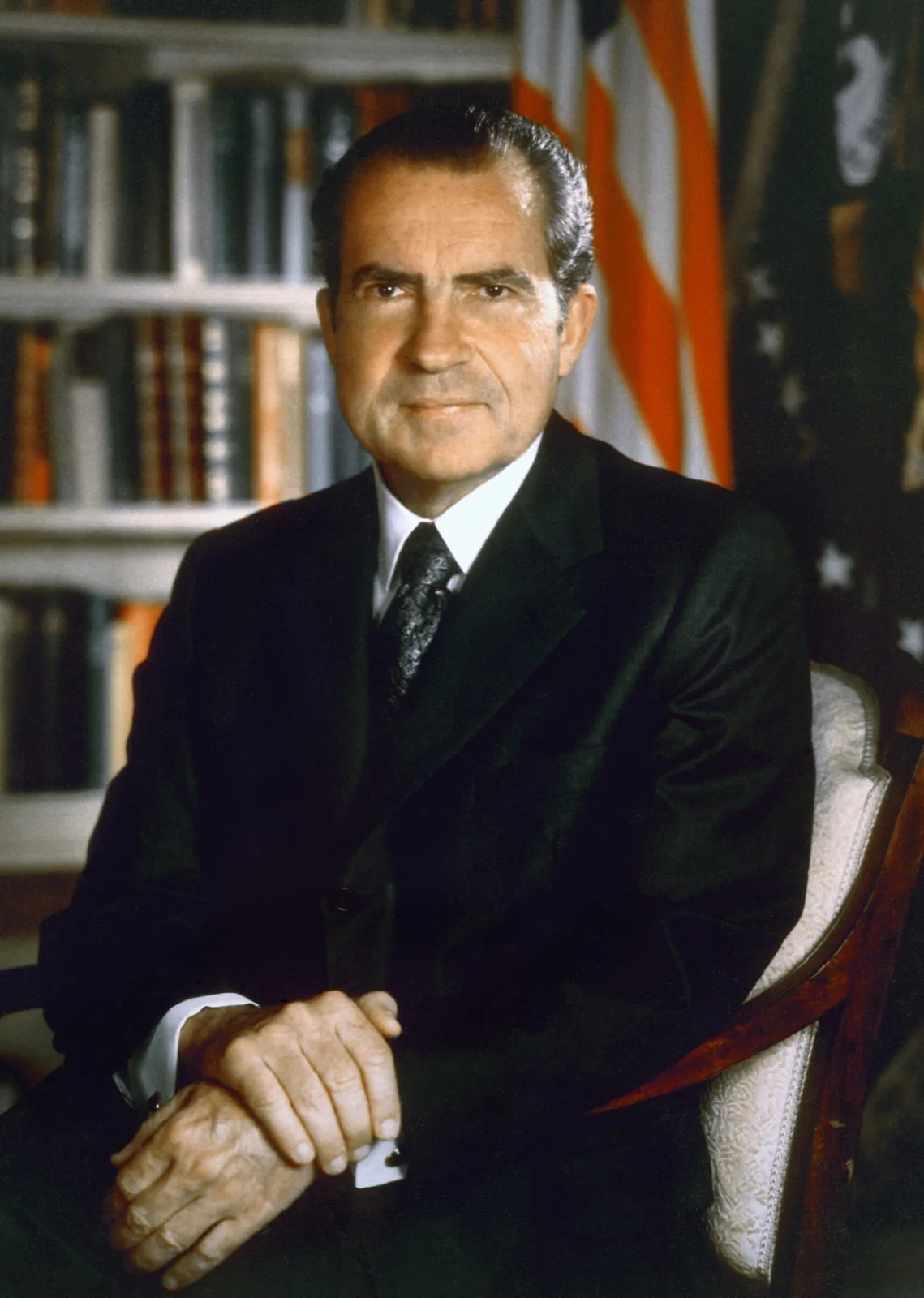
The Nixon Shock was President Richard Nixon's decision on August 15, 1971, to stop exchanging dollars for gold. The announcement brought down Bretton Woods, the set of fixed exchange rates that had organized international finance since 1944, and created the floating-currency world that still exists. Under Bretton Woods, governments set exchange rates by agreement and kept them stable. After the Nixon Shock, currency values were set by the market and could change every day. Nixon delivered the news in a Sunday evening television address that preempted the popular western Bonanza. He did not describe the change as permanent. He called it a temporary suspension of gold convertibility. It was never reversed.
Why the United States could no longer pay in gold
Under Bretton Woods, one ounce of gold was worth exactly $35, and every other major currency was tied to the dollar at a fixed rate. The system was designed at a conference in New Hampshire in 1944, near the end of World War II, to prevent the competitive devaluations and trade wars that had worsened the Great Depression. Any foreign government could present its dollars to the United States and receive gold in return. The arrangement worked as long as the United States held enough gold to back the dollars it sent abroad.
By the late 1960s, it no longer did. Spending on the Vietnam War and President Lyndon Johnson's Great Society programs sent large numbers of dollars overseas. Foreign governments accumulated more dollar claims than the United States had gold to cover. Economists call this the Triffin dilemma: to supply the world with enough dollars to use as a reserve currency, the United States had to run deficits, but those deficits undermined confidence in the promise to pay gold.
France's president, Charles de Gaulle, was the first to act. Starting in January 1965, France began sending dollars to the United States and demanding gold in return. In 1965, de Gaulle publicly called the dollar's privileged status unfair. Between 1963 and 1966, France moved more than three thousand tonnes of gold from the vaults of New York and London back to Paris, using 44 boat trips and 129 flights. By 1966, foreign governments held $14 billion in dollar claims while the United States had only $13.2 billion in gold reserves, and only $3.2 billion of that was available to cover foreign holdings. In the second week of August 1971, Britain reportedly asked to convert $3 billion into gold. Paul Volcker, then the Treasury's undersecretary for monetary affairs, later said that if the British were going to take gold for their dollars, "it was clear the game was indeed over."
The Camp David weekend
Nixon acted within days. On Friday, August 13, 1971, he gathered fifteen advisers at Camp David for a secret weekend meeting. The two most important were Treasury Secretary John Connally and Paul Volcker, the undersecretary for monetary affairs. Connally had been governor of Texas and was sitting in front of President Kennedy when Kennedy was assassinated in Dallas in 1963. Connally was wounded in the same shooting but survived. He told Nixon the gold situation was unsustainable and that unilateral action was the only realistic option. Volcker, who was 43 and would later become chairman of the Federal Reserve, agreed that something had to be done but worried about the reaction abroad. Federal Reserve Chairman Arthur Burns argued for restraint. Nixon sided with Connally.
The package they announced on Sunday evening had three main parts. The United States would stop exchanging dollars for gold. All wages and prices in the country would be frozen for 90 days, something no president had done outside of wartime. And imports would face a new 10 percent tax until America's trading partners agreed to adjust their exchange rates.
At home, the plan was popular. Seventy-five percent of Americans backed it in polls, and markets rose the next day. Abroad, finance ministers treated it as a betrayal. The United States had broken the central promise of the postwar monetary order without consulting anyone.
What happened after the Nixon Shock
The Smithsonian Agreement of December 1971 tried to save fixed exchange rates without gold backing. The dollar was devalued, other currencies were adjusted, and new exchange-rate bands were set. Nixon called it "the most significant monetary agreement in the history of the world." It lasted less than fifteen months. In February 1973 the United States devalued the dollar again by 10 percent, and within weeks every major currency was floating on its own, priced by traders rather than by international agreement.
The consequences reshaped global finance. Exchange rates began changing daily, and a currency-trading industry grew up to manage the swings. That market now handles over $9 trillion a day. Central banks were no longer bound by a gold standard and could set their own monetary policy. The world moved fully into the age of fiat money, where currencies are backed by government authority rather than by a physical commodity.
The dollar kept its place as the world's dominant reserve currency, but it was no longer backed by gold or anything physical. Its value rested on confidence in the American economy. In 1971 an ounce of gold officially cost $35. In September 2026 it costs about $4,300, a measure of how much the dollar's value in gold has changed since Nixon's announcement. The dollar still accounts for about 57 percent of global foreign exchange reserves, down from roughly 71 percent in 2000. Whether that share will keep falling is one of the central questions in international finance today. The system Nixon created on a single weekend at Camp David, presented as a temporary measure, is the system the world still uses.