
What Mao's Cultural Revolution did to China
In 1966, Mao Zedong turned China's teenagers against their own teachers, leaders, and parents. Over the next decade, at least a million people died.
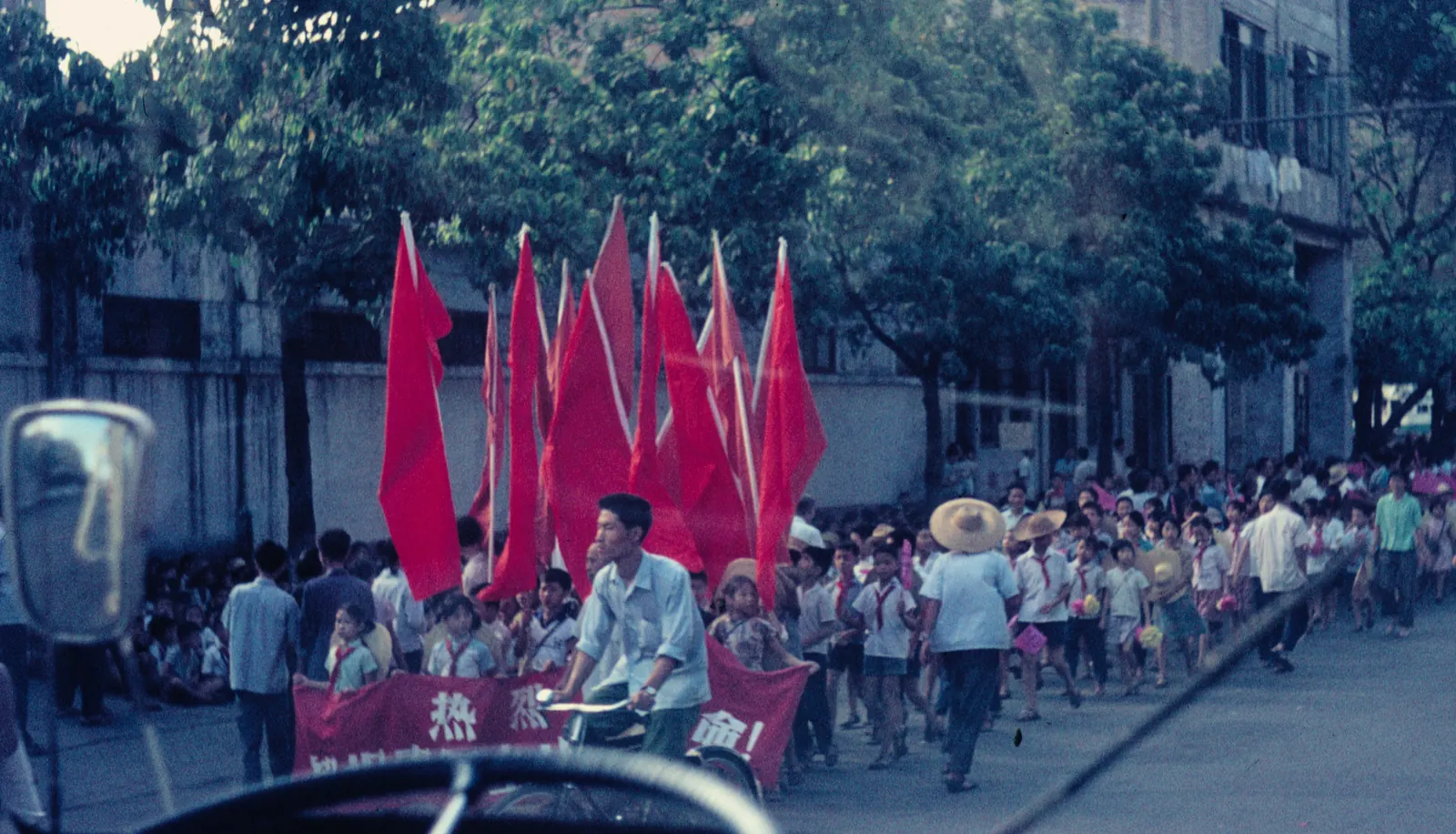
On August 5, 1966, the vice-principal of an elite girls' school in Beijing was beaten to death by her own students. Bian Zhongyun was 50 years old. The students used nail-spiked clubs and boiling water, and the attack lasted three hours. Her crime was being an authority figure at a school where the chairman of the Communist Party, Mao Zedong, had just told the country's teenagers that their teachers were enemies of the revolution. What happened at that school happened across China for the next ten years. Mao called it the Great Proletarian Cultural Revolution. Scholars estimate it killed between one and two million people, destroyed much of China's pre-communist cultural heritage, and turned a generation of students into instruments of political violence.
Why Mao turned against his own government
The Cultural Revolution was not a popular uprising. It was a purge, launched from the top by a leader who had lost power and wanted it back.
In the late 1950s, Mao had pushed China into the Great Leap Forward, a campaign to industrialize the country overnight by collectivizing agriculture and ordering peasants to smelt steel in backyard furnaces. The furnaces produced useless metal. The collectivized farms produced a famine that killed an estimated 15 to 30 million people between 1959 and 1961, the deadliest famine in recorded history.
The catastrophe forced Mao to step back. Two pragmatists, Liu Shaoqi, China's head of state, and Deng Xiaoping, the Party's general secretary, took over the country's day-to-day management and quietly reversed Mao's policies. Farm output recovered. Mao kept his title as Party chairman, but the men running the country were the men who had cleaned up his disaster.
Mao did not accept being sidelined. He watched the Soviet Union after Stalin's death evolve into what he considered a cautious, bureaucratic state, and he believed the same thing was happening in China. His own Party, he decided, was being taken over by "capitalist-roaders," officials who would turn China into another Soviet Union. His solution was to go around the Party entirely and appeal directly to the group most likely to obey him without question: teenagers.
The Red Guards
On August 18, 1966, Mao stood atop Tiananmen Gate and reviewed roughly a million Red Guards in the square below. He wore a military uniform and a Red Guard armband. Over the next three months he held eight such rallies, and an estimated 11 to 13 million young people traveled to Beijing to see him. The little red book of Mao's quotations, compiled by his designated successor Marshal Lin Biao, was printed by the hundreds of millions and carried like scripture.
Mao's instructions were vague enough to be lethal. He told the Red Guards to destroy the "Four Olds": old customs, old culture, old habits, old ideas. The students decided what counted. They smashed Buddhist temples and Confucian shrines. In November 1966, Red Guards from Beijing traveled to Qufu, the hometown of Confucius, and attacked the temple complex that had stood there for over two thousand years. They smashed statues, burned manuscripts, and dug up the grave of the 76th-generation descendant of Confucius and hung his corpse from a tree. Across China, libraries were burned, historical sites were vandalized, and anyone connected to the old society, teachers, intellectuals, monks, landlords, was dragged before public humiliation sessions, beaten, forced to wear placards listing invented crimes, and made to confess in front of screaming crowds.
The violence turned on the Party itself. Liu Shaoqi, China's head of state and the country's second most powerful leader, was denounced as the "number one capitalist-roader." Red Guards beat him, stripped him of office, and denied him treatment for his diabetes. He died alone in a prison cell in November 1969. His own children did not learn he was dead until 1972. Deng Xiaoping was purged and sent to work in a tractor factory. His eldest son, Deng Pufang, was tortured by Red Guards at Peking University and fell from a building. He was paralyzed from the waist down. When his family got him to a hospital, the hospital refused to admit him because he was the son of a "capitalist." By the time specialists examined him years later, the paralysis was permanent.
A country devours itself
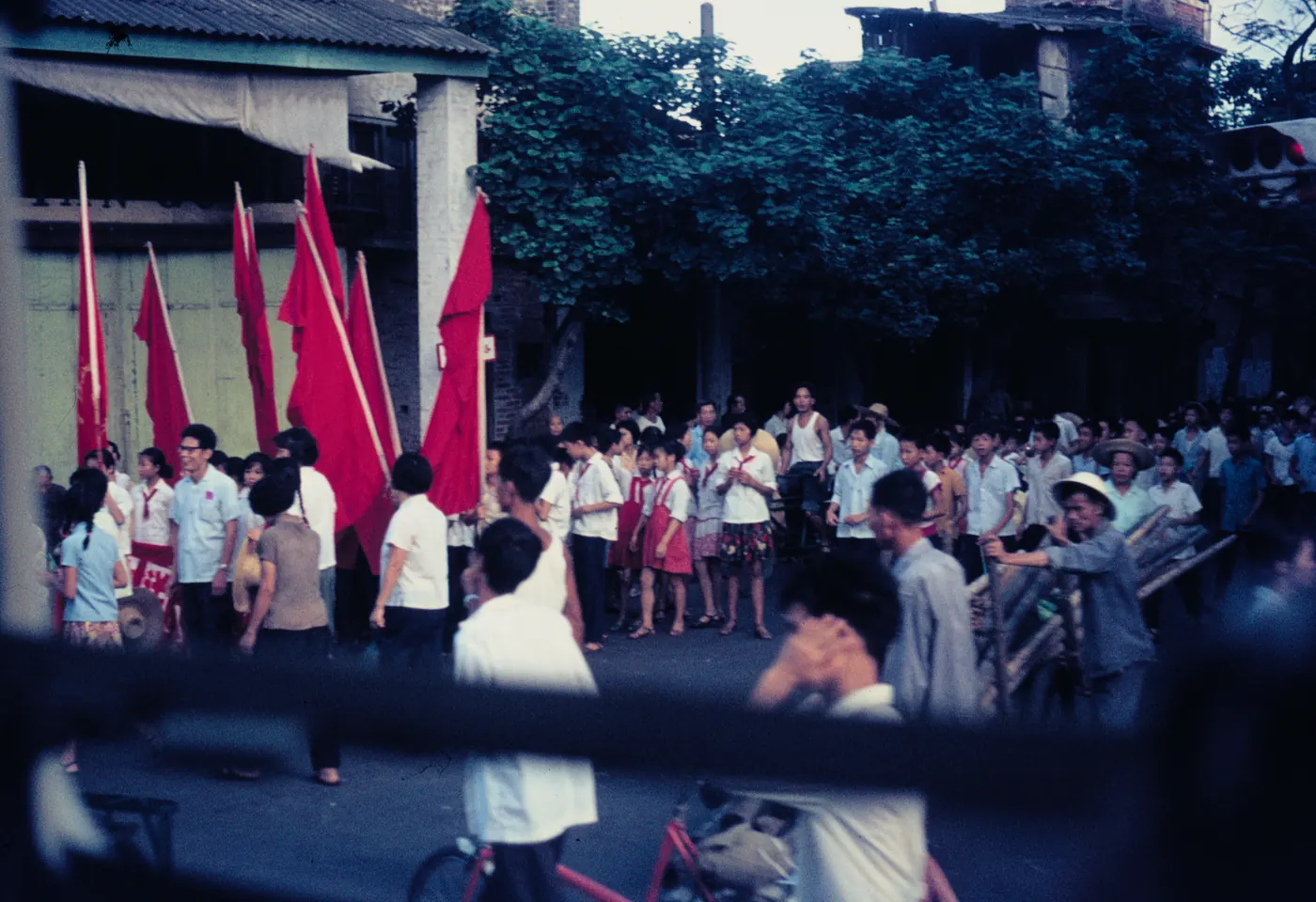
By 1967 the Red Guards had splintered into factions that fought each other as bitterly as they fought their supposed enemies. Different groups, all claiming to be the truest followers of Mao, battled with homemade weapons and, in some provinces, stolen military equipment. In Guangxi, the factional violence escalated into something close to civil war. Across the country, the army eventually stepped in to restore order, but soldiers often picked sides rather than stopping the fighting.
Mao's own inner circle was not safe. Marshal Lin Biao, the defense minister who had built the Mao personality cult and compiled the little red book, was officially named Mao's successor in 1969. By 1971 the relationship had collapsed. On September 13, 1971, Lin died when his plane crashed in Mongolia. The official story was that he had been fleeing toward the Soviet Union after a failed coup attempt. The crash has never been fully explained. The shock rippled across China: if Mao's own chosen successor was a traitor, ordinary people began to wonder what any of the previous five years had been for.
Starting in 1968, Mao ordered roughly 17 million urban teenagers sent to the countryside to "learn from the peasants." In practice it meant shipping an entire generation of educated young people to remote villages where they did manual labor for years. Xi Jinping, China's current leader, was among them. He was sent to a cave village in Shaanxi province at fifteen and stayed seven years.
How it ended, and why China still controls what is said about it
Mao died on September 9, 1976. Within a month, a coalition of Party and military leaders arrested Mao's widow Jiang Qing and three of her allies, a group the Chinese call the Gang of Four, and declared the Cultural Revolution over. Deng Xiaoping, the man Mao had purged twice, returned to power and led China into the period of economic reform that produced the country it is today.
In 1981, the Party issued an official verdict. The resolution called the Cultural Revolution "the most severe setback and the heaviest losses suffered by the Party, the state, and the people since the founding of the People's Republic." The same resolution called Mao's leadership "70 percent correct and 30 percent wrong," a formula designed to close the discussion rather than open it. That formula still holds as official policy.
Chinese textbooks mention the Cultural Revolution briefly. The details, the factional wars, the deaths, the betrayals, are not taught. Online discussion is censored. When the 50th anniversary came in 2016, Chinese state media carried no commemorations. The survivors are aging, and many have never told their children what they did or what was done to them. Nobody was ever prosecuted for Bian Zhongyun's murder.
Xi Jinping's own family was destroyed by the Cultural Revolution. His father was beaten and imprisoned for sixteen years. His half-sister died. Xi himself was publicly humiliated at thirteen and sent to the countryside at fifteen. He has never used that experience to open a public discussion about what happened. Instead he has used it to argue that China must never fall into that kind of disorder again, and that only a unified Party under a strong leader can prevent it. The lesson Xi took from the Cultural Revolution was not that one man had too much power. It was that the system around that man was too weak to hold together. Whether that reading protects China from a repetition or sets the conditions for one is a question his government does not allow anyone in China to ask.
Test what you learned
5 questions on this article. About two minutes, no signup.