
Who controls the Panama Canal in 2026?
Panama owns the canal and an agency in Panama City runs it. The 2026 fight is over the ports at each end, the flag on the sterns, and the water in the lake.
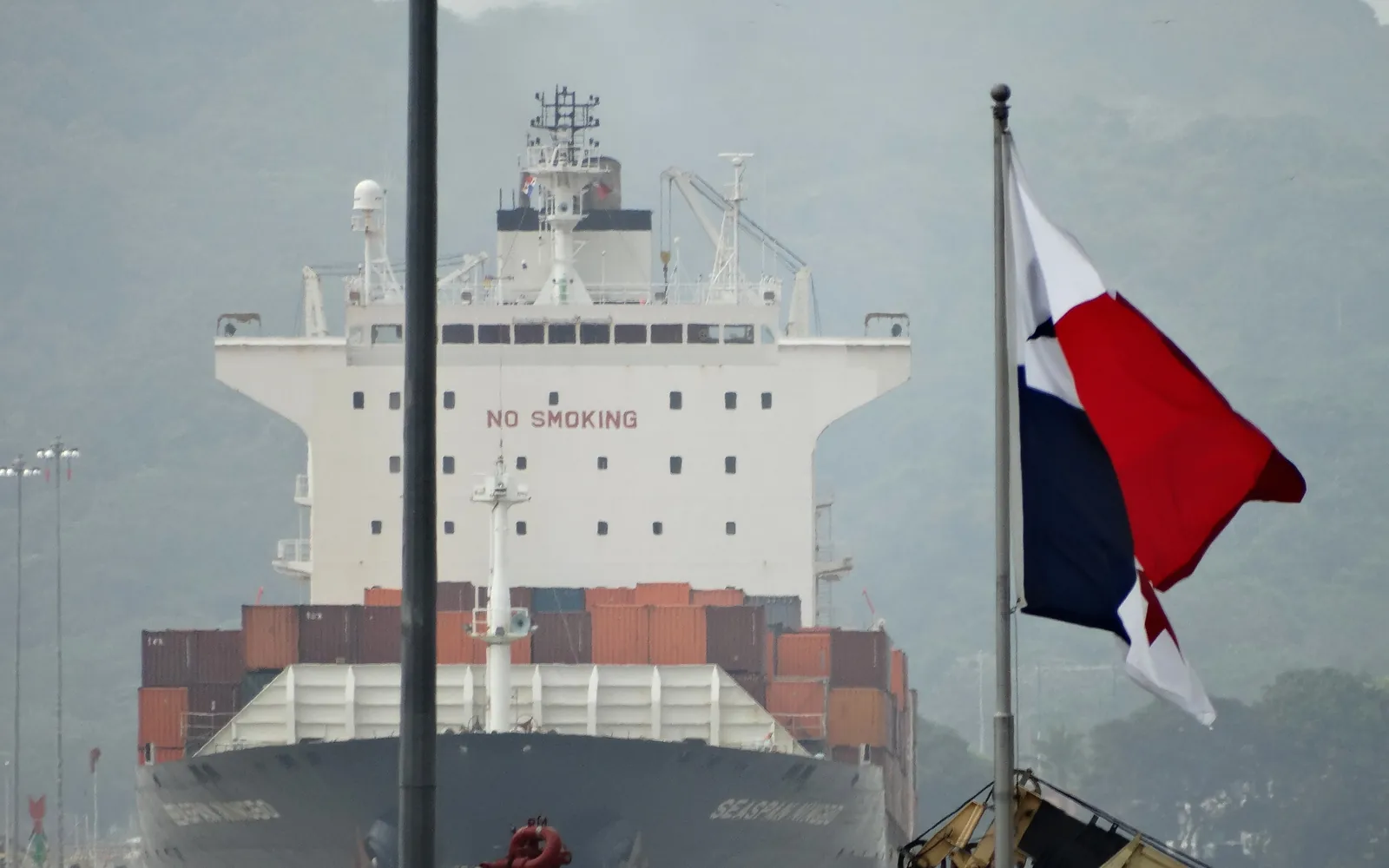
Every ship that enters the Panama Canal gives up its own captain. A Panamanian pilot climbs aboard before the first lock, and from that moment the pilot, not the ship's master, has legal control of how the vessel moves. Article 92 of the canal's navigation rules says so in one sentence. No other major waterway works this way: at the Suez Canal the pilot advises and the captain still commands.
That is the most literal answer, and it has been true since noon on December 31, 1999, when the United States handed the canal to Panama. The argument Donald Trump revived in December 2024 is about everything around the canal: the ports at either end, the flag on the sterns, one sentence in a treaty that never expires, and the rain.
How the United States made Panama a country
There was no country called Panama in 1903. The land was the northern edge of Colombia, a strip about 50 miles across with the Caribbean on one side and the Pacific on the other. A narrow neck of land like that is an isthmus, and this was the shortest one between the two oceans in the Americas.
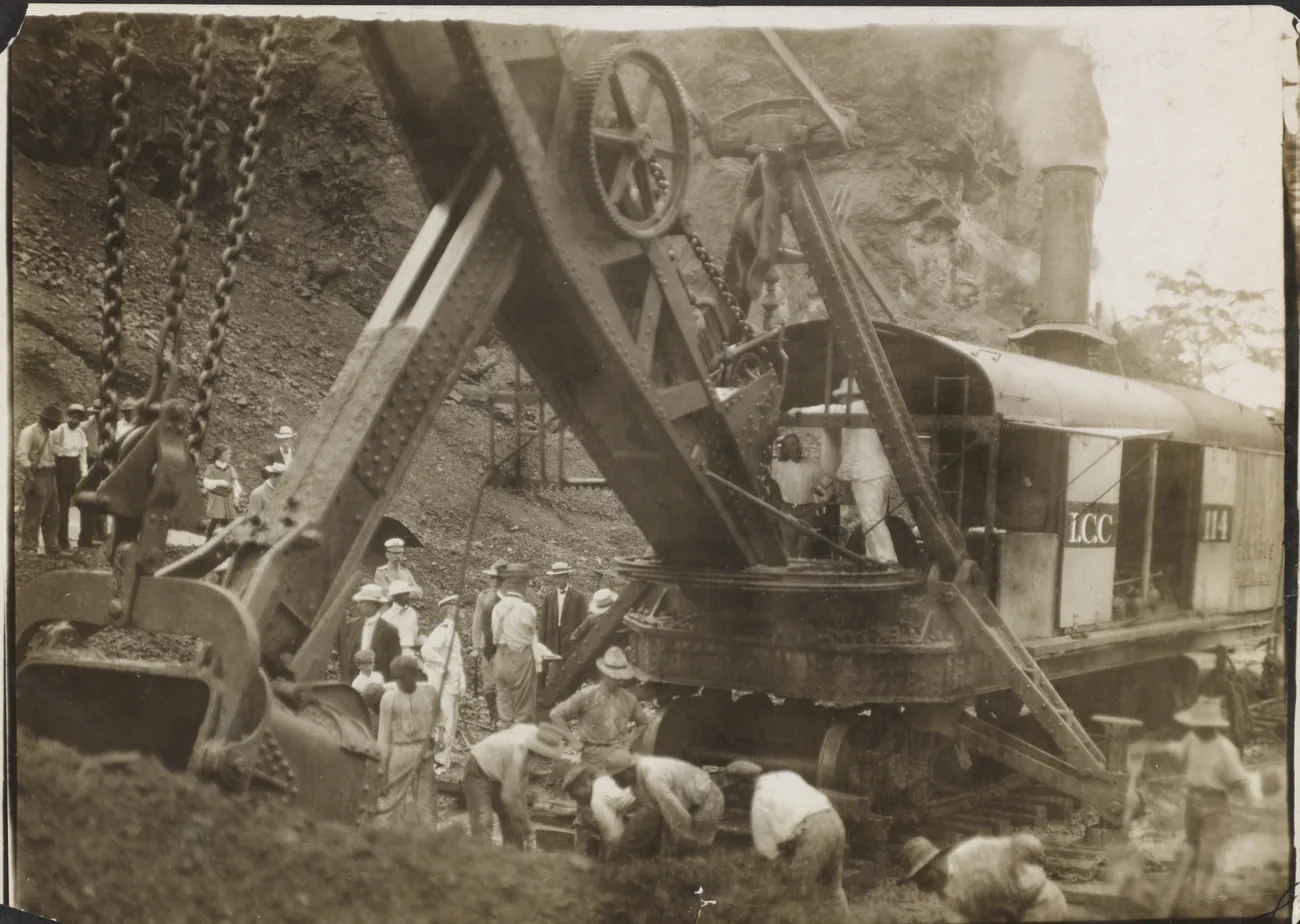
The French tried first and failed. Ferdinand de Lesseps, who had built Suez, started digging in 1881 and lost around 22,000 workers to disease and accidents before going bankrupt in 1889. Washington wanted to finish the job, which meant dealing with Colombia. In January 1903 the two governments signed a deal for a canal zone: $10 million down and $250,000 a year. Colombia's senate rejected it unanimously that August, too little money and too much sovereignty given away.
Theodore Roosevelt went around them. Separatists in the province had wanted out of Colombia for decades, and they now had a promoter: Philippe Bunau-Varilla, a French engineer from the bankrupt company who would be paid if the Americans bought its assets. On November 2, 1903, an American warship anchored off the province's Caribbean coast. Panama declared independence the next day.
Colombia's response failed on a detail. The only railroad across the province had been built and was still run by an American company, whose superintendent sided with the rebels. When Colombian troops landed to put the rebellion down, he sent their generals ahead to the Pacific side by train and told the soldiers to wait for more carriages. The generals were arrested on arrival, the carriages never came, and the troops were left stranded on the wrong coast without officers. The only casualty of Panamanian independence was Wong Kong Yee, a Chinese shopkeeper killed by a shell fired into Panama City from a Colombian gunboat. Washington recognized the new republic within three days.
Two weeks later Bunau-Varilla signed the canal treaty in Washington as Panama's envoy, hours before Panama's own delegation got there. He handed over a strip of the new country ten miles wide, American for good, on the terms Colombia had refused, and took his cut of the $40 million Washington paid his old company. Roosevelt summed it up in a speech in 1911: "I took the Isthmus, started the canal and then left Congress not to debate the canal, but to debate me."
Why the United States gave the canal back
The Canal Zone was American ground cutting Panama in half, with its own police, courts, and schools, and Panamanians came to hate it. On January 9, 1964, students carrying the Panamanian flag into the Zone were turned back, and the fighting that followed killed about twenty Panamanians and four American soldiers. Panama broke off relations with Washington. The Joint Chiefs of Staff later told Jimmy Carter what the riots implied: a canal ringed by a hostile country is much harder to keep open than one handed over by agreement.
Carter and Panama's leader, General Omar Torrijos, signed two treaties on September 7, 1977, and the Senate ratified them with one vote to spare. The first transferred the canal at the end of 1999 and then expired. The second, the Neutrality Treaty, has no end date: the canal must stay open to the ships of all nations on equal terms, and both countries may defend that neutrality. That is the clause Washington points to today.
Who owns the canal now, and what it is worth
Beyond that clause, everything is Panamanian. The canal is written into Panama's constitution as public property that cannot be sold, and it is run by the Panama Canal Authority, an agency that reports to no ministry. Panama's president appoints its 11-member board, and no foreign government has a seat, a share, or a vote. On October 1, 2026, Ilya Espino de Marotta takes over as administrator, the first woman to run the canal in its history.
For Panama, the canal is public revenue: $5.7 billion earned in the 2025 financial year on 13,404 transits, nearly $3 billion of it paid into the treasury. It now earns in about twenty minutes what the 1903 treaty paid the country for a year. For Washington and Beijing the money is beside the point. Roughly 5 percent of world seaborne trade goes through the canal, and about 40 percent of American container traffic, and there is no other short route between the two oceans.
Why "China runs the canal" was wrong, and why the ports mattered anyway
In his inaugural address on January 20, 2025, Trump said: "China is operating the Panama Canal... and we're taking it back."
China was not operating the canal. CK Hutchison, a Hong Kong conglomerate, held the concession for the container terminals at each end, Balboa on the Pacific and Cristóbal on the Atlantic, which it had run since 1997. Those terminals sit beside the canal, not in it. The company never ran a lock, employed a pilot, or set a toll.
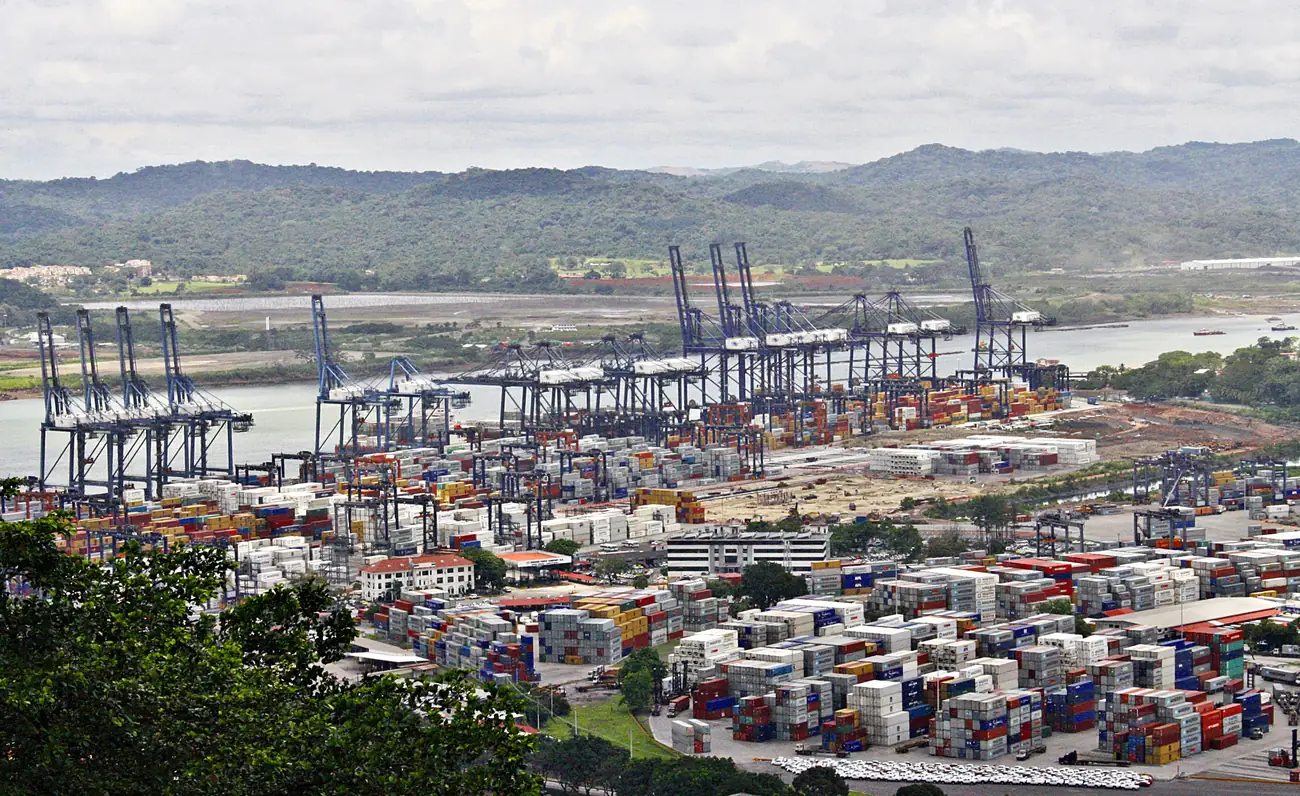
The pressure worked anyway. Panama quit China's Belt and Road Initiative in February 2025, the first Latin American country to leave it, and that April it let American forces rotate through three former Canal Zone bases. Then Panama's own courts finished the job. In January 2026 the Supreme Court ruled the concession unconstitutional, because the 2021 extension had been granted without open bidding, and in February the government handed the terminals to Maersk and MSC. Hutchison is suing for more than $2 billion.
In the end the company Washington wanted gone was removed by Panamanian judges applying Panamanian law, not by anything Washington did.
Where Panama is actually vulnerable
Beijing's answer was not to fight for the canal but to squeeze Panama's other maritime business. Panama runs the largest ship registry in the world: more than 8,000 vessels fly its flag, about 16 percent of global merchant tonnage, most owned by people with no other tie to the country.
From March 2026, Chinese ports began holding Panama-flagged ships at rates nobody had seen before. Beijing called the inspections routine safety checks; Washington and five Latin American governments called them retaliation for the ports. Shipowners drew their own conclusions: through 2025 an average of 55 ships a month left the Panamanian registry, and in May 2026 the figure hit 150. The canal sits on Panamanian soil and cannot be taken away. The registry is a piece of paper Panama's ships carry into foreign harbors, and that is what Panama cannot protect.
The other thing it cannot control is rain. Ships do not cross Panama at sea level: they are lifted 26 meters into Gatún Lake, which is fed by rainfall alone, and every crossing flushes roughly 190 million liters of it into the sea. This year the rain has not come. El Niño, the Pacific warming pattern that dries out Central America, has left the watershed about a third short of its usual rainfall since May, so the canal has twice cut how deep a ship may sit in the water. The same number of ships sail, carrying less.
What control of the canal looks like now
Panama holds the title and runs the locks. The United States holds a defense clause it reads more broadly than Panama does, plus troops rotating through three bases it used to own. China holds nothing at the canal and pressures Panamanian ships in Chinese ports instead. The rain decides how much cargo moves.
The next test is already scheduled. Panama is taking bids for two new container terminals, Corozal and Telfers, a $2.6 billion project due to be awarded before the year ends. Chinese companies sat in the bidders' meetings alongside Maersk and Hapag-Lloyd, and Panama cannot rule them out for being Chinese, because the 1977 treaty obliges it to treat all nations equally.
The treaty cuts both ways. The clause the United States cites as its right to defend the canal is the clause that stops Panama from shutting China out of it. Neutrality is the condition on which Panama was allowed to keep the canal, and a small country that owns a chokepoint has to apply it to its friends as strictly as to its rivals.
Test what you learned
6 questions on this article. About two minutes, no signup.