
Abu Bakr
Abu Bakr was Muhammad's closest companion and the first caliph, who held Islam together after Muhammad's death and launched its expansion.
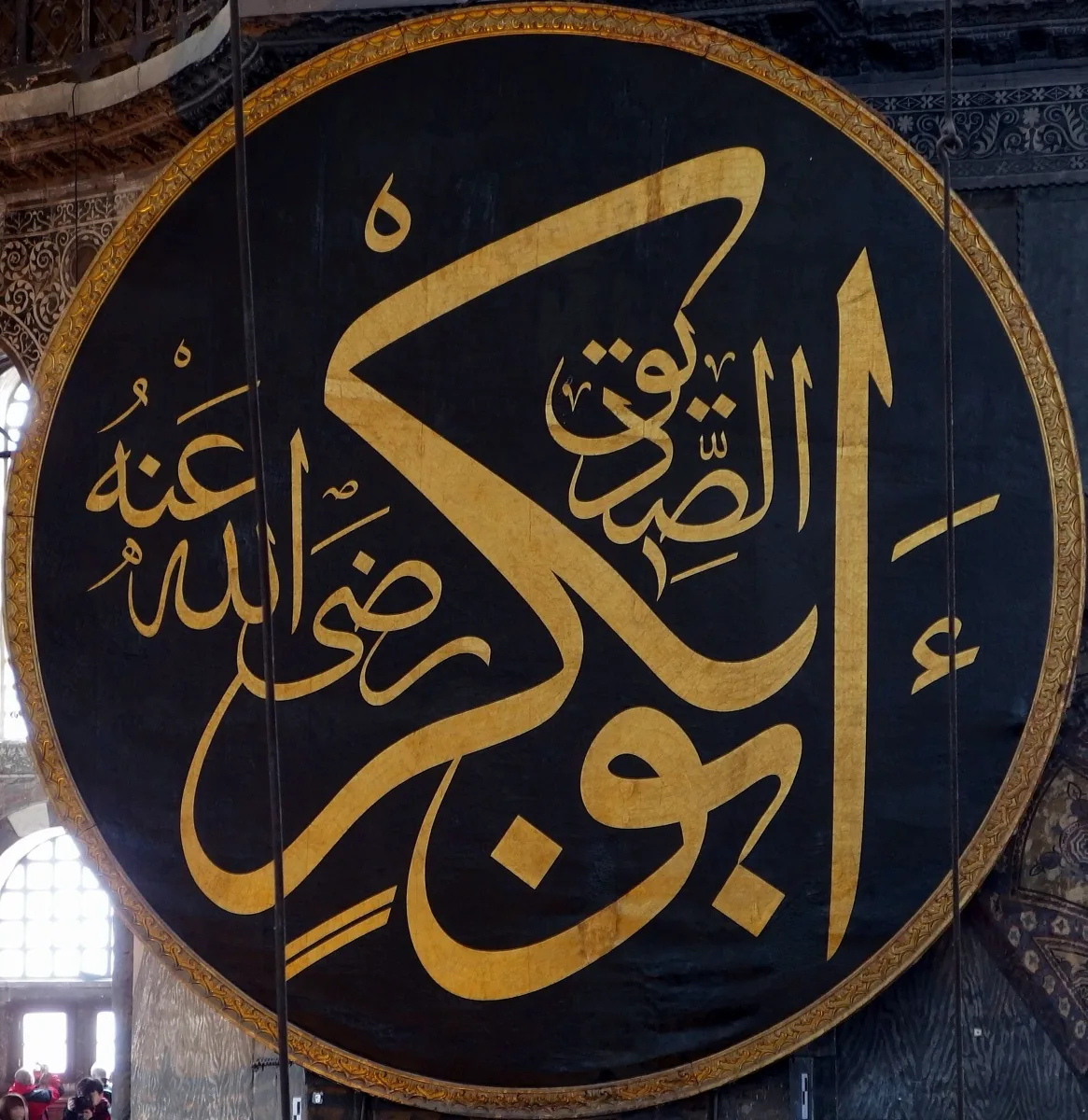
Abu Bakr (c. 573–634) was a Meccan merchant, the closest companion of the Prophet Muhammad, and the first caliph of Islam. When Muhammad died in June 632 without naming a successor, the Muslim community chose Abu Bakr as its leader within forty-eight hours. He ruled for only two years. In that time he crushed a revolt across the Arabian Peninsula and unified it under one ruler for the first time. He ordered the first written collection of the Quran and launched the conquests that would take the Sasanian Empire and half the Byzantine East. His selection over Muhammad's cousin Ali is the origin of the Sunni-Shia split, a division that still shapes the Middle East fourteen centuries later.
How Abu Bakr became Muhammad's closest companion
Abu Bakr was born Abdullah ibn Abi Quhafa around 573 in Mecca, about three years after Muhammad. He belonged to a respected Quraysh clan and made his living as a cloth merchant. By most accounts, he was the first adult male outside Muhammad's household to accept Islam. His early loyalty earned him the title al-Siddiq, "the truthful one."
He spent much of his personal wealth to buy the freedom of enslaved converts who were being tortured for accepting the new faith. The most famous was Bilal ibn Rabah, an Abyssinian slave whose master pinned him under a heavy stone in the desert sun to force him to renounce Islam. Abu Bakr bought his freedom. Bilal later became the first muezzin, the person who calls Muslims to prayer.
Abu Bakr's daughter Aisha became one of Muhammad's wives. In 622, when Muhammad fled Mecca for Medina in the migration known as the hijra, Abu Bakr was his sole companion. Rather than heading north toward Medina, the two went south to confuse their pursuers and hid for three days in a cave on Mount Thawr while Quraysh search parties passed nearby. Abu Bakr's son Abdullah brought them news of what the search parties were doing, and his daughter Asma brought food. During Muhammad's final illness, ten years later, Muhammad asked Abu Bakr to lead the communal prayers in his place.
How Abu Bakr became the first caliph
Muhammad died in Medina in June 632. He left no son and no successor that everyone agreed on. The Muslim political community was barely a decade old.
Ali ibn Abi Talib, who had married Muhammad's daughter Fatima, was preparing the body for burial, the Medinan clans gathered at a roofed meeting place called the Saqifa Bani Saida to choose a leader from among themselves. When Abu Bakr and his ally Umar learned what was happening, they went to the Saqifa and argued that leadership had to remain with the Meccan emigrants, the original followers of the Prophet. Those gathered chose Abu Bakr, who took the title "khalifat rasul Allah," which translates to successor of God's messenger. This title became the word "caliph," and Abu Bakr was the first person to hold it.
Ali was not there. Some Muslims believed that Muhammad had chosen Ali to lead after him, pointing to a gathering at Ghadir Khumm as proof. Sunni Muslims consider Abu Bakr the first of the four Rightly Guided Caliphs. Shia Muslims see his selection as a usurpation of Ali's right. The full story of how this dispute divided Islam is told in The Sunni-Shia split.
How Abu Bakr held the community together
After Muhammad's death, many Arabian tribes considered their allegiance ended. They had sworn loyalty to Muhammad personally, not to a successor they had no part in choosing. Some stopped paying the zakat, the alms tax that funded the community. Others followed new men who claimed to be prophets. Abu Bakr would not negotiate. He declared that any tribe withholding the zakat had left the faith and would be treated as an enemy.
The resulting conflicts, called the Ridda wars or wars of apostasy, lasted through 632 and into 633. Abu Bakr's main commander was Khalid ibn al-Walid, whom Muhammad had called the Sword of God. The bloodiest battle came at Yamama in central Arabia, where Khalid's forces defeated the army of a rival prophet named Musaylima. The fighting was so severe that hundreds of men who had memorized the Quran were killed. The loss alarmed Umar, who persuaded Abu Bakr to order the revelations collected in written form for the first time. Abu Bakr assigned the task to Zayd ibn Thabit, one of Muhammad's former scribes. This compilation was the beginning of the process that would produce the standardized Quran.
By mid-633 the wars were over. For the first time, the entire Arabian Peninsula answered to a single government. Abu Bakr then sent the armies east into Sasanian-held Iraq and north into Syria, then part of the Byzantine Empire, campaigns that his successors would finish.
Abu Bakr died on August 23, 634, at about sixty years old. He was the only one of the four early caliphs to die of natural causes. Before his death he named Umar as his successor. He was buried beside Muhammad in Medina.