
Amritsar Massacre
The Amritsar massacre was the 1919 killing of hundreds of unarmed Indians by British troops in a walled garden in Amritsar, Punjab.
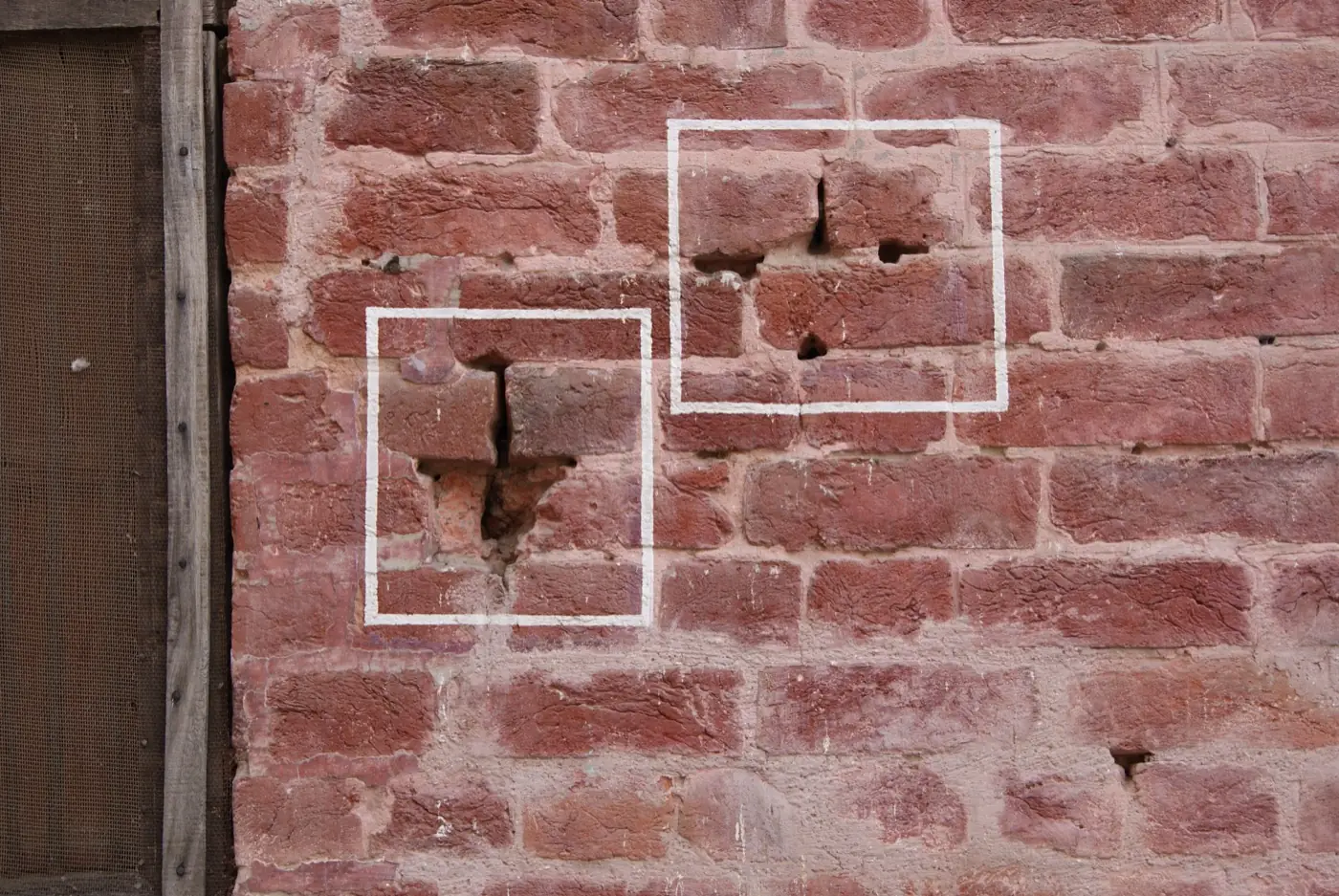
On April 13, 1919, British soldiers opened fire on a crowd of thousands of unarmed Indians in the Jallianwala Bagh, a walled public garden in Amritsar, Punjab. The troops fired for about ten minutes, aiming at the densest parts of the crowd and at the exits where people tried to escape. British authorities reported 379 killed and roughly 1,200 wounded. Some Indian counts put the death toll above a thousand. The commander, Brigadier-General Reginald Dyer, told a British inquiry afterward that he had fired not just to break up the gathering but to produce a "moral effect" across the Punjab. After the massacre, millions of Indians, including Gandhi, stopped believing that British rule could be reformed from within.
Why the Amritsar massacre happened
In March 1919 the British colonial government in India passed the Rowlatt Act. The act allowed the government to arrest and hold anyone suspected of sedition without a trial. Every Indian member of the legislative council voted against it. The British passed it anyway.
Protests broke out across the Punjab. In Amritsar, crowds attacked European residents and burned government buildings on April 10. That morning British authorities had arrested two local leaders, Saifuddin Kitchlew and Satya Pal, which set off more unrest. On April 10 the army moved into Amritsar. The next day Brigadier-General Dyer arrived to take command and banned all public gatherings.
On April 13, several thousand people gathered in the Jallianwala Bagh. Many of them were not protesters. April 13 was Baisakhi, one of the most important festivals in the Punjab, and pilgrims from surrounding villages had come to Amritsar for the celebration. Some did not know about Dyer's order.
The shooting at Jallianwala Bagh
The Jallianwala Bagh was a patch of open ground enclosed by the walls of buildings on nearly every side. It had only a few narrow exits. Dyer arrived at the main entrance at about 5:15 in the afternoon with roughly fifty armed soldiers, mostly from Gurkha and Baluchi regiments. He also brought two armored cars fitted with machine guns, but they could not fit through the narrow passageway into the garden.
Dyer gave no warning. He did not ask the crowd to leave. He ordered his soldiers to fire, and they aimed where the crowd was thickest and at the exits people were running toward. People running away were shot from behind. Others could not find a way out and jumped into a large open well inside the garden. Rescuers later pulled about 120 bodies from that well. The soldiers fired roughly 1,650 rounds over about ten minutes. Dyer stopped only when ammunition was running low, then turned and left.
The wounded were left where they fell. Dyer had imposed a curfew on Amritsar, and anyone found outside risked being shot. Many families could not reach the garden to help the wounded or recover the dead until the next morning.
How many people died in the Amritsar massacre?
According to the British government's report, 379 people were killed and roughly 1,200 were wounded. That figure and has been disputed since the day it was published. The Indian National Congress put the dead at closer to 1,000. Historian V.N. Datta, who wrote a major study of the massacre in 1969, estimated about 700. A later study by the Partition Museum Trust counted 547 victims. The true count is uncertain because many families carried away their dead before any official count was made, and some of the dead were visitors from nearby villages who were never reported.
How Britain reacted to the Amritsar massacre
The British government appointed the Hunter Commission to investigate. In 1920 the commission condemned the shooting and found that Dyer had committed a grave error. Winston Churchill, then Secretary of State for War, called it "an extraordinary event, a monstrous event" in a speech to the House of Commons on July 8, 1920. The House of Commons voted 247 to 37 to support the government's decision to remove Dyer from his command.
But Britain was divided. A majority in the House of Lords sided with Dyer. The Morning Post, a conservative newspaper, launched a public fund for Dyer and raised about £26,000, roughly £1 million in today's money. The fund described him as "the man who saved India." Rudyard Kipling donated. Rabindranath Tagore, the first non-European to win the Nobel Prize in Literature, renounced the knighthood the British crown had given him in 1915.
For many Indians, the public fund for Dyer mattered more than the official condemnation. The British government called the massacre wrong, but a large part of the British public treated Dyer as a hero. Dyer never expressed regret. He died in 1927.
How the Amritsar massacre changed India
Before April 1919, Gandhi had supported Britain during the First World War. He had helped recruit Indian soldiers for the British Indian Army, believing that loyal service would persuade Britain to grant Indians greater self-government. The Rowlatt Act, passed just months after the war ended, was the opposite of that reward. After the massacre, Gandhi called the system "satanic."
In August 1920, Gandhi organized the Non-Cooperation Movement, India's first mass campaign for self-rule. The movement asked Indians to give up British titles, pull their children from British schools, boycott British courts and goods, and refuse to serve in the colonial administration. It was the beginning of a struggle that lasted twenty-seven years, until India's partition and independence in 1947.
The Jallianwala Bagh is now a national memorial. The walls still bear the marks of the bullets fired on April 13, 1919.