
Winston Churchill
Winston Churchill was the British prime minister who led the country through World War II, a Nobel Prize-winning writer and a lifelong imperialist.
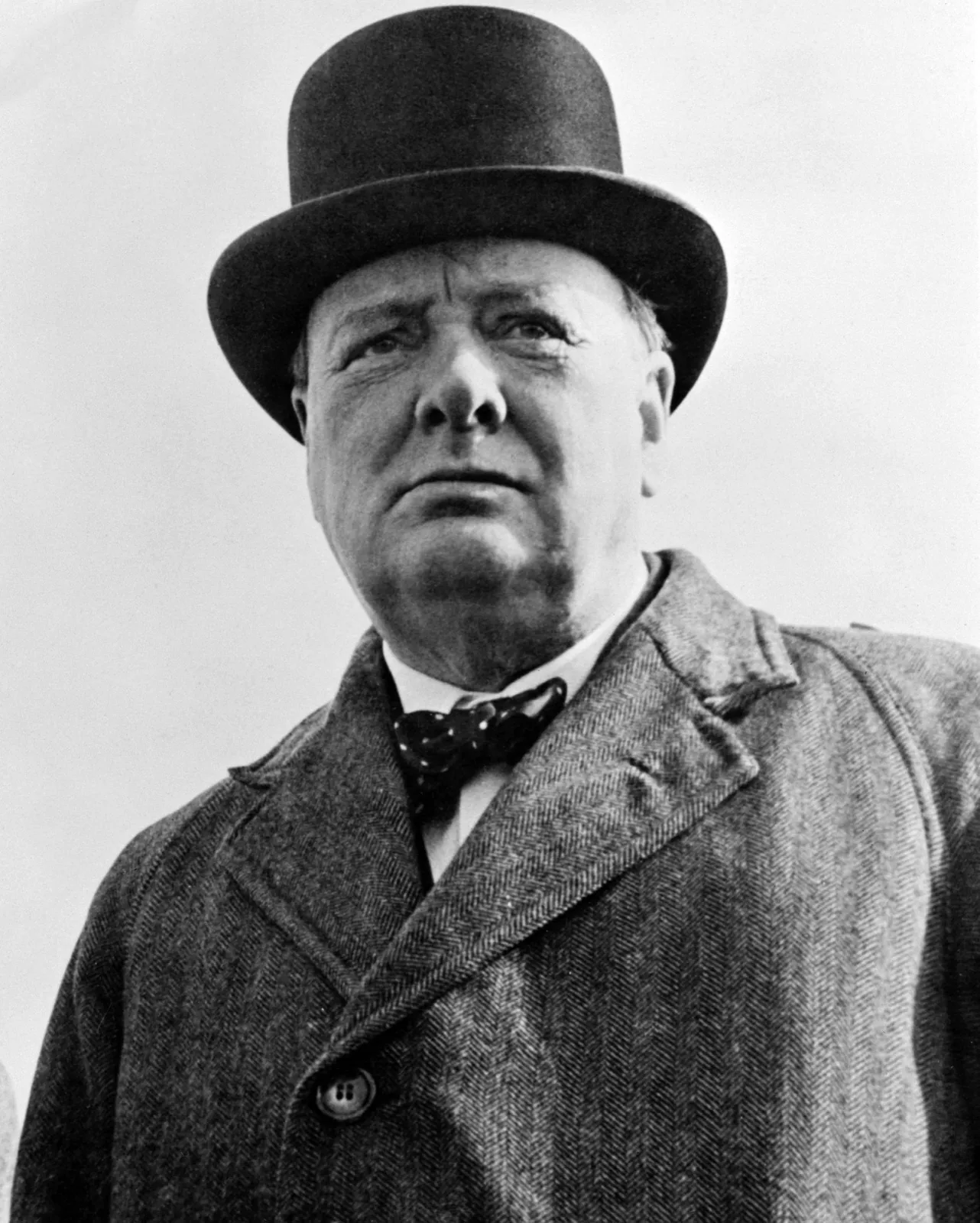
Winston Churchill was a British statesman who served as prime minister during World War II and led the country's fight against Nazi Germany. He was born in 1874 at Blenheim Palace, the grandson of a duke. His mother, Jennie Jerome, was American, the daughter of a New York financier. Churchill held the office twice: from 1940 to 1945 and from 1951 to 1955. He won the Nobel Prize in Literature in 1953 for his historical writing. In the year after France fell in June 1940, Britain fought largely alone. Churchill refused to seek any deal with Nazi Germany, and that refusal is the act he is most remembered for. He was also a committed imperialist who opposed Indian independence. He was in power during the 1943 Bengal famine, which killed an estimated two to three million people.
How Churchill reached Downing Street
Churchill began his career as an army officer and war reporter. He fought on the northwest frontier of India and at the Battle of Omdurman in Sudan, and covered the Second Boer War in South Africa as a correspondent. During the Boer War he was captured and escaped from a prison camp, a story that made him a national celebrity at 25. He won a seat in Parliament in 1900 and rose quickly. By 1911 he was First Lord of the Admiralty, responsible for the Royal Navy.
His career nearly ended in 1915 when the Gallipoli landings, which he had championed, killed tens of thousands of Allied soldiers and achieved nothing. Churchill left government and served as an infantry officer on the Western Front. He returned to government in 1917 and became Chancellor of the Exchequer in 1924, but his decision to return Britain to the gold standard at too high a rate damaged the economy and cost him credibility.
Through the 1930s Churchill was out of office and distrusted by his own Conservative Party. He warned repeatedly that Adolf Hitler was rearming Germany and that Britain's policy of appeasement would fail. Most of his colleagues dismissed the warnings. When war broke out in September 1939, Churchill returned to the Admiralty. Eight months later, after the failure of Britain's campaign in Norway, Prime Minister Neville Chamberlain resigned. Churchill became prime minister on May 10, 1940. He was 65 years old.
How Churchill led Britain through World War II
Churchill took office on May 10, 1940, the same day Germany invaded France and the Low Countries. In his first address to Parliament, he said he could promise only "blood, toil, tears and sweat." The British army was pushed back to the coast and evacuated from Dunkirk, losing most of its equipment. As the evacuation ended, Churchill told Parliament that Britain would fight on the beaches and would never surrender. France fell in late June. Britain stood alone, and Churchill rejected peace feelers from Germany.
Churchill led the country through the Battle of Britain in the summer of 1940 and the Blitz that followed. He built a working alliance with Franklin Roosevelt, who provided weapons and supplies before the United States entered the war. After Hitler invaded the Soviet Union in June 1941, Churchill allied with Josef Stalin, despite a lifetime of opposing communism. He sat with Roosevelt and Stalin at the Yalta Conference in February 1945 to negotiate the postwar order.
Churchill's war leadership depended on his ability to inspire the public and to maintain the alliance with the United States. His generals overruled many of his battlefield proposals, and he was a better leader than strategist. But his central decision, to refuse any deal with Nazi Germany when Britain's position looked hopeless, kept the war going until the United States and the Soviet Union joined it.
Why did Churchill lose the 1945 election?
British voters removed Churchill from office in July 1945, just weeks after victory in Europe. The Labour Party, led by Clement Attlee, won a landslide with a majority of 146 seats.
The result shocked Churchill, but the reasons were straightforward. Voters wanted a government focused on jobs, housing, and health care after six years of war. Labour promised a national health service, public housing, and full employment. Churchill ran mainly on his war record and offered little on domestic policy. He also hurt his campaign by claiming in a radio broadcast that Labour's program would require "some form of Gestapo" to enforce. Voters found the comparison absurd when applied to Attlee, who had served loyally in Churchill's own War Cabinet. Churchill won easily in his own constituency, but his party lost the country. He won the 1951 election and came back as prime minister, serving until 1955, when declining health forced him to resign.
Did Churchill cause the Bengal famine?
Churchill was a lifelong imperialist who saw the British Empire as the source of Britain's greatness. He opposed Indian self-rule throughout his career and called Mohandas Gandhi a half-naked fakir. In private, Churchill spoke about Indians in openly racist terms.
The most serious charge against Churchill concerns the Bengal famine of 1943. Between two and three million people died of hunger and disease in Bengal while India was under British rule. The causes included wartime disruption, crop disease, hoarding, and rising food prices. Churchill's War Cabinet made the disaster worse. It continued to export rice from India, prioritized military shipments over famine relief, and turned down urgent requests from India's viceroy for grain imports. Historians disagree about how much personal blame Churchill bears. Some argue that wartime shipping shortages limited what London could do. Others point to Churchill's dismissive private comments about the crisis as evidence that he did not treat Indian lives as a priority.
Churchill died on January 24, 1965, at the age of 90. Queen Elizabeth II gave him a state funeral. His leadership in 1940 is widely regarded as decisive. The Bengal famine and his defense of empire are the part of his record that people still argue over.