
Antonine Plague
The Antonine Plague was a pandemic that killed millions in the Roman Empire from 165 to 180 AD, when the empire was at its most powerful.
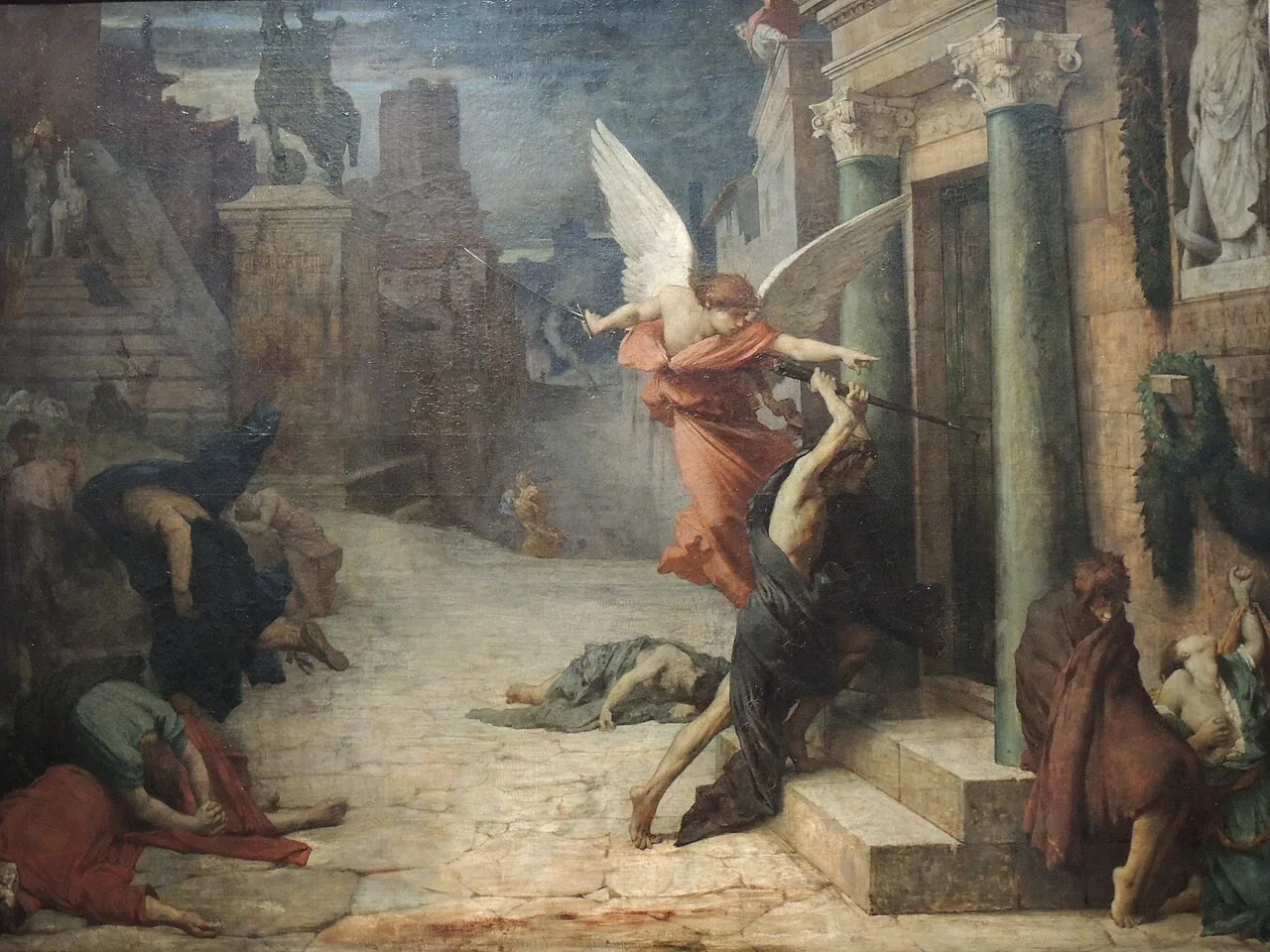
The Antonine Plague was a pandemic that swept through the Roman Empire from 165 to around 180 AD, killing an estimated five to ten million people, perhaps a tenth of the empire's total population. It is named after the Antonine dynasty, which ruled Rome at the time, and is also known as the Plague of Galen, named for the physician whose clinical observations are the main surviving record of the disease. The disease broke out among Roman soldiers fighting in Mesopotamia and traveled home with them, spreading along the same roads and shipping routes that connected the empire. It struck during the Pax Romana, when the empire was at the height of its power, and the damage it did to the army, the economy, and the tax base weakened Rome in ways that lasted for centuries.
How the Antonine Plague reached Rome
In 165 AD, Roman legions under the co-emperor Lucius Verus were finishing a campaign against the Parthian Empire in Mesopotamia. After sacking the city of Seleucia on the Tigris, the troops began falling sick. When the army marched west, the disease went with it. Roman soldiers moved constantly between frontiers, from the Rhine to the Danube to the Euphrates, and the infection traveled the same routes.
By the mid-100s, Rome was more connected to the rest of the known world than any previous empire had been. Roman ships sailed the Indian Ocean. Caravans crossed the Silk Road. The empire's road network moved goods and mail between Britain and Syria. Those same networks moved the disease. Cities and army camps, where people lived packed together, suffered the worst. Mortality was far higher there than in the countryside. Rather than killing once and disappearing, the plague recurred over years, and it returned again in 189 AD. During that recurrence, according to the historian Cassius Dio, Rome was losing as many as two thousand people a day.
How the plague weakened the Roman Empire
The army was hit hardest. Soldiers lived in close quarters and moved constantly, making them both carriers and victims. Marcus Aurelius, who wrote the philosophical Meditations during these years, was fighting the Marcomannic Wars against Germanic tribes on the Danube frontier with a shrinking army. The plague left him critically short of men. He was forced to recruit from unusual sources: gladiators, bandits, and entire groups of Germanic tribesmen. He also began settling barbarian groups inside the Roman frontier on condition that they fight for Rome, a precedent that two centuries later contributed to the collapse of Rome's western provinces.
The plague reduced the number of taxpayers across the empire, cutting government revenue while Rome's wars demanded more spending. Farms and mines lost workers. Some agricultural land apparently fell out of use and never recovered.
Another pandemic, known as the Plague of Cyprian, swept through the empire from about 249 to 262 AD. It arrived during the Crisis of the Third Century, when Rome was already breaking apart under invasion, civil war, and currency debasement. Together, the two pandemics helped transform Rome from the relatively prosperous state of Marcus Aurelius's era into something harder and more coercive. The Roman Empire of 300 AD taxed more, regulated more, and trusted its own population less than the one Marcus Aurelius had governed.
What were the symptoms of the Antonine Plague?
Galen, a Greek physician from Pergamon who had become the personal doctor to the imperial family, observed the disease firsthand and left the most detailed clinical description that survives. He recorded fever, diarrhea, and inflammation of the throat. Around the ninth day of illness, a skin eruption appeared: black pustules that scabbed over and eventually fell away. Galen himself left Rome for his home city during the outbreak and returned only when Marcus Aurelius ordered him back to attend the army.
Most modern epidemiologists who have studied Galen's description believe the disease was smallpox, which would make the Antonine Plague one of the earliest recorded smallpox outbreaks. The identification is not certain. Some researchers have argued for measles, and recent genetic studies suggest that the most severe strain of smallpox may not have existed in Europe that early. Without DNA from victims, the question remains open.
Did the Antonine Plague help Christianity spread?
Traditional Roman religion offered no convincing explanation for why a disease would kill indiscriminately. Christianity did: it taught that suffering had meaning and promised an afterlife. Early Christians stayed in cities to nurse the infected while others left. The sociologist Rodney Stark has argued that communities where Christians nursed the ill had lower death rates, and that the people they saved often converted.
The Antonine Plague and the Plague of Cyprian together span the second and third centuries, the period of Christianity's fastest early growth. Mystery cults and other new religions also grew during this period, but Christianity's organized care for the sick gave it a reputation that outlasted the crisis. Historians disagree about how much weight to give the plagues in explaining Christianity's rise, but the correlation is real.