
Article 370
Article 370 was the provision in India's constitution that gave Jammu and Kashmir special autonomy from 1949 until India revoked it in 2019.
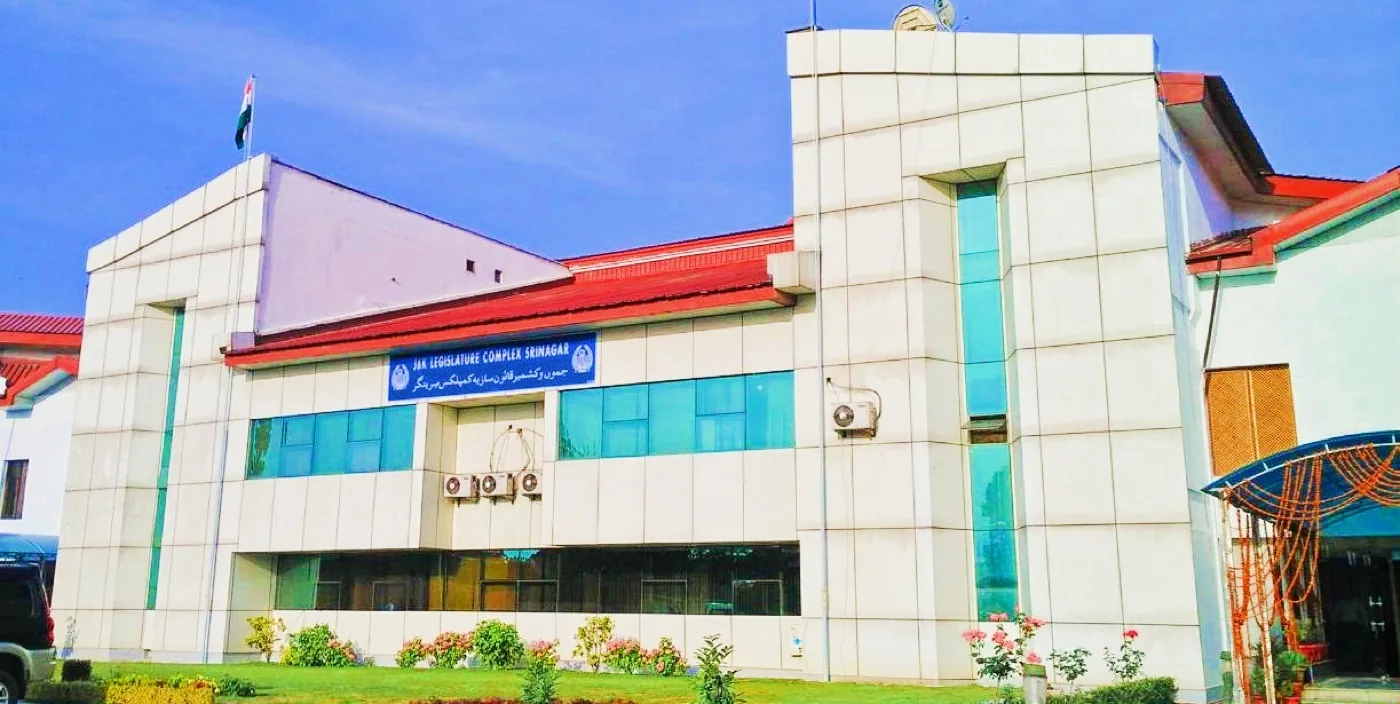
Article 370 was a provision in India's constitution that gave the state of Jammu and Kashmir special autonomy from 1949 to 2019. Under it, Kashmir had a separate constitution and flew a separate flag. The central government in New Delhi could legislate for the state only in a few areas, mainly defense, foreign affairs, and communications. India added a companion provision, Article 35A, by presidential order in 1954. It gave the state's permanent residents exclusive rights to own land, hold government jobs, and settle in the territory, so no one from the rest of India could buy property or move in permanently. On August 5, 2019, Prime Minister Narendra Modi's government revoked Article 370 in a single morning, split the state into two union territories, and imposed a communications blackout that lasted months.
How Kashmir joined India on special terms
When India was partitioned in August 1947, hundreds of princely states had to choose whether to join India or Pakistan. Jammu and Kashmir was the hardest case: a Muslim-majority state ruled by a Hindu maharaja, Hari Singh, who wanted to remain independent. In October 1947, thousands of armed tribesmen from Pakistan's northwest crossed into Kashmir and advanced toward the capital, Srinagar. Hari Singh asked India for military help. India's governor-general, Lord Mountbatten, told him troops could come only if Kashmir acceded to India. On October 26, Hari Singh signed the Instrument of Accession, joining India on the condition that New Delhi's authority would cover only defense, foreign affairs, and communications.
Two years later, N. Gopalaswami Ayyangar introduced Article 370 in India's Constituent Assembly. Ayyangar was a natural choice to draft the provision: he had served as prime minister of Jammu and Kashmir under Hari Singh in the late 1930s and early 1940s and knew the state's politics from the inside. He argued that Kashmir's situation was unlike any other state's. A war had just been fought over it, its future was before the United Nations, and its people had not yet decided their political arrangements through a constituent assembly of their own. Jawaharlal Nehru, India's prime minister, backed him. The article was labeled temporary, but no government undid it, and over seventy years it came to seem permanent.
How India revoked Article 370
On the morning of August 5, 2019, Home Minister Amit Shah introduced a resolution in India's upper house of parliament to strip Article 370 of its special provisions. The move had been kept secret. In the days before, the government had sent tens of thousands of additional troops into Kashmir, ordered tourists and pilgrims to leave, and shut down phone and internet service across the valley.
The government did not formally amend the constitution. Instead, it used a presidential order to hollow out Article 370, then passed the Jammu and Kashmir Reorganisation Act, which split the state into two union territories: Jammu and Kashmir, and Ladakh. The BJP held a decisive majority in the lower house, and both houses passed the act within two days. Mainstream Kashmiri politicians were detained alongside separatists. The communications blackout lasted months, longer than any a democracy had previously imposed. There was no sitting Kashmir legislature to consent, because the state was already under direct central rule.
Why was Article 370 revoked?
The Bharatiya Janata Party had called for abolishing Article 370 since its founding. The party argued that the provision was always meant to be temporary, that it kept Kashmir artificially separate from the rest of India, and that it encouraged separatism. Removing it, the BJP said, would bring investment, development, and equal rights to the region.
Most Kashmiri political parties saw the provision differently. For many Kashmiris, Article 370 guaranteed that their land, jobs, and the demographic balance of the Muslim-majority Kashmir Valley would be protected from outside migration. Critics of the revocation said it broke the constitutional promise Kashmir relied on when it joined India, and that imposing the change without a Kashmiri legislature, behind a security lockdown, with elected leaders under detention, was undemocratic. The broader Kashmir conflict runs deeper than any single provision, stretching back to partition and tied to water, geography, and the claims of three nuclear-armed states on the same disputed territory.
Article 370 after the Supreme Court ruling
On December 11, 2023, a five-judge bench of India's Supreme Court unanimously upheld the 2019 revocation. The court ruled that Article 370 was always a temporary provision, that Jammu and Kashmir did not retain sovereignty when it joined India, and that the central government had the authority to remove it. The court also directed that elections be held in the region by September 2024.
Those elections took place in September and October 2024, the first in the region since 2014. The National Conference, a party that had opposed the revocation, won 42 of 90 seats and formed a government with the support of the Indian National Congress. Omar Abdullah became chief minister. But the elected government's powers are limited, because Jammu and Kashmir is still a union territory, not a full state. The lieutenant governor, appointed by New Delhi, controls the police and the bureaucracy. As of 2026, Kashmir's elected leaders and most of its political parties continue to demand the restoration of full statehood. The central government has said statehood will return but has not set a date.