
The Kashmir conflict: three nuclear powers and the world's most dangerous border
In 2025 a massacre of tourists pushed India and Pakistan close to nuclear war. The Kashmir dispute is really about water, geography, and a third nuclear power.
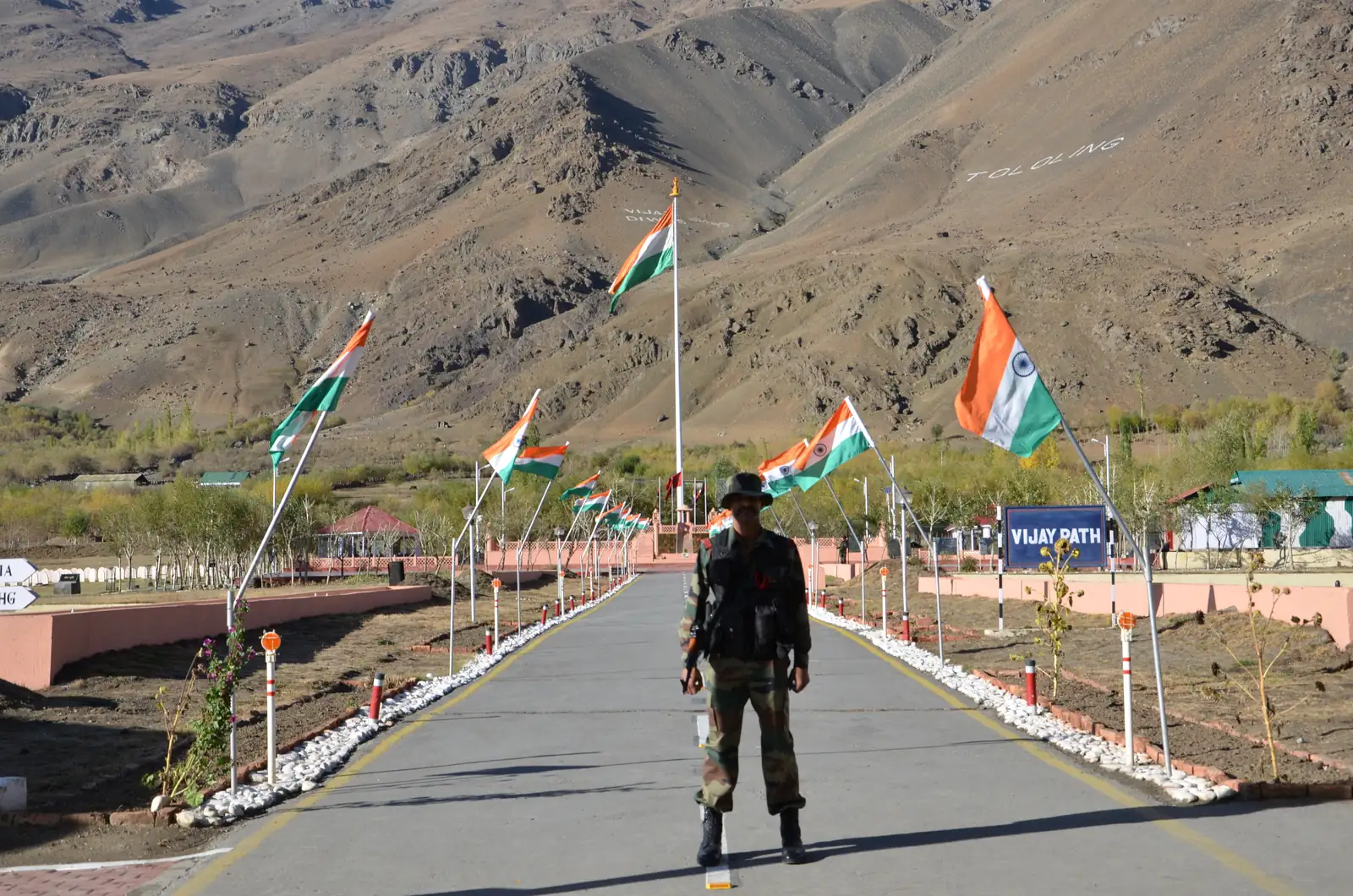
On April 22, 2025, gunmen opened fire on tourists at a scenic mountain spot near the resort town of Pahalgam, in Indian-administered Kashmir, and shot 26 people dead. Almost all of the victims were Hindu. Two weeks later India launched missiles and drones at nine sites inside Pakistan, its deepest strike on Pakistani soil since the 1971 war. Pakistan hit back at Indian airbases. In four days that May, two countries with roughly 350 nuclear warheads between them traded blows on each other's military bases, a line neither had crossed before. After about 88 hours of fighting, a ceasefire brokered by Washington held.
The headlines made this a story about terrorism and religion. It is really about something older and more physical: a single mountain valley that three nuclear-armed states have aimed their armies at for more than seventy-five years. What keeps bringing the world to the edge here is not hatred but geography, water, and a third nuclear power that holds a piece of the ground.
The valley three armies want
Kashmir sits where the three greatest mountain systems on Earth meet: the Himalayas, the Karakoram, and the Hindu Kush. For centuries the passes and river valleys through them carried the Silk Road trade between South Asia, China, and Central Asia, and whoever controlled Kashmir controlled those routes. Today three nuclear-armed states hold parts of it, and none will give up its share.
The valley became a battleground the moment British India was carved up. In 1947, the partition of the subcontinent split it into a Hindu-majority India and a Muslim-majority Pakistan, and left hundreds of princely states to pick a side. Kashmir was the hardest case: a Muslim-majority population ruled by a Hindu maharaja who dithered, then acceded to India just as Pakistani tribesmen invaded. The two countries have fought over the valley ever since, and never agreed on who owns it.
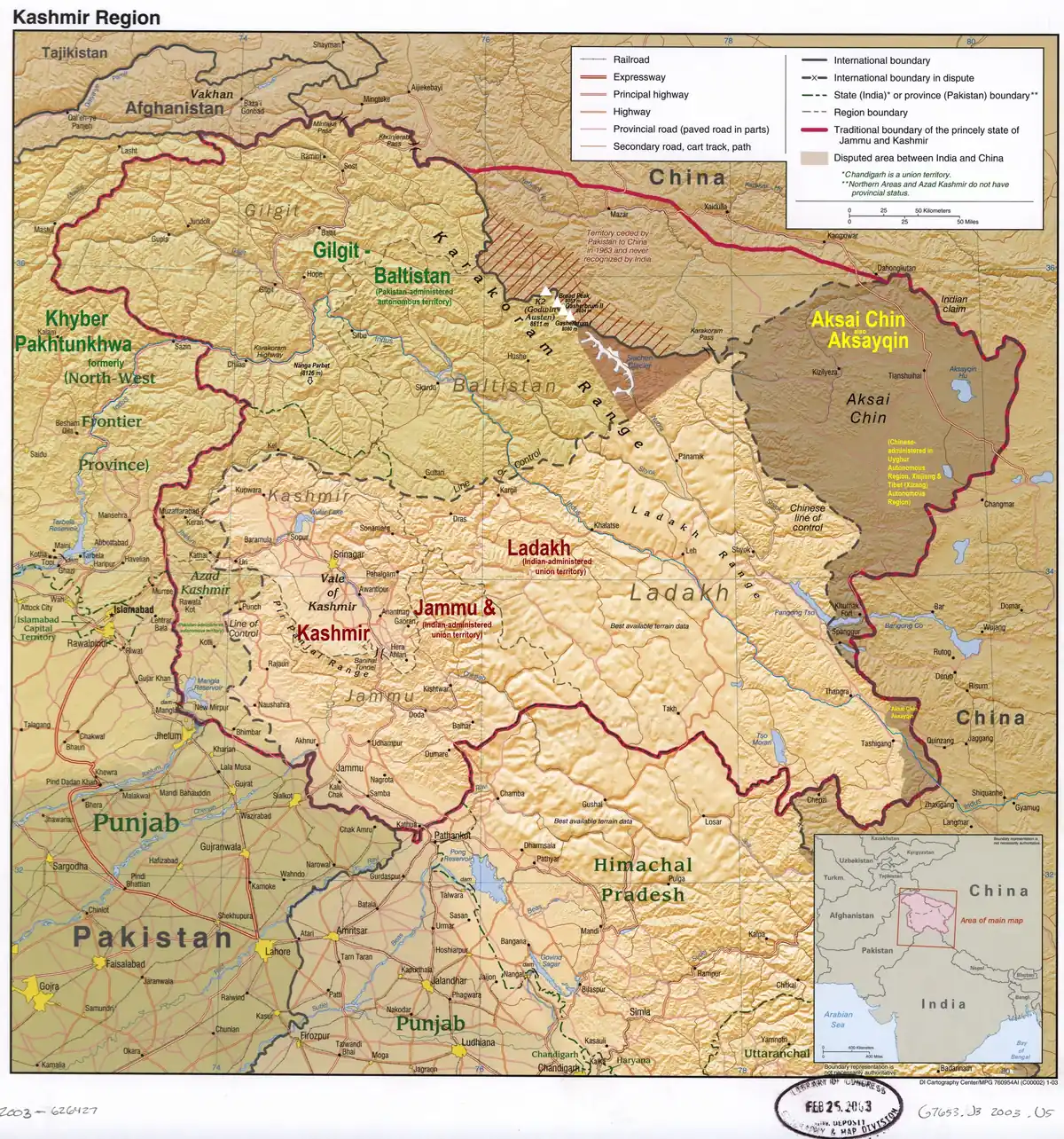
India versus Pakistan is only part of it. India holds the Kashmir Valley, Jammu, and Ladakh, roughly 101,000 square kilometers. Pakistan holds Azad Kashmir and Gilgit-Baltistan. And there is a third claimant: China holds Aksai Chin, a barren plateau at 5,000 meters that India claims but has never controlled. In the 1950s China quietly built a highway across it, the only direct road link between Tibet and Xinjiang, its two most restive regions. India did not notice until the road was finished. Add the $62 billion China-Pakistan Economic Corridor, which runs straight through Pakistani-held Kashmir, and three nuclear powers all hold hard stakes in the same disputed ground. Nowhere else on Earth do three nuclear-armed states claim the same territory.
Why the fight is really about water
Religion is part of the quarrel, but it is not the root of it. Underneath sits something more basic. The Indus River and its tributaries, the rivers that irrigate roughly 80 percent of Pakistan's farmland, rise in or flow through Kashmir before descending into the Pakistani plains. Pakistan is, in hydrological terms, an Indus colony. If the water stops, the country starves.
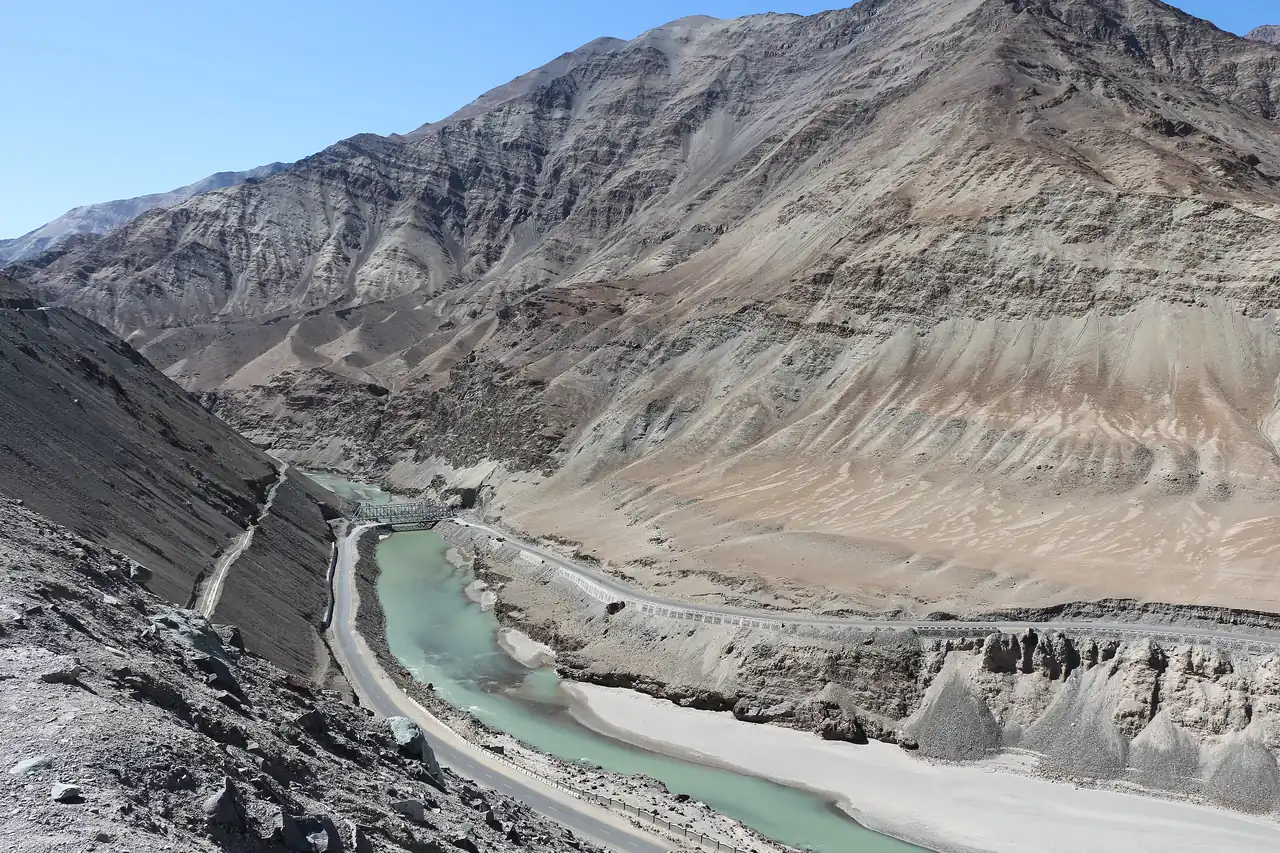
For sixty years, one agreement kept that fear in check. The 1960 Indus Waters Treaty, brokered by the World Bank, split the six rivers between the two countries and survived three wars intact. It was held up as the most successful water-sharing deal ever written. Then, the day after the Pahalgam attack, India put the treaty "in abeyance," a deliberately chosen phrase that is not quite suspension and not quite withdrawal.
And yet India cannot actually turn off Pakistan's water. It lacks the dams and canals to hold back rivers that big. What abeyance really buys is freedom from the treaty's rules: the right to build new dams, to fill and flush reservoirs on its own schedule, and to stop sharing the river data Pakistan uses to plan a growing season and brace for floods. None of that drains the rivers, but it lets India change the timing of the water and leave Pakistan guessing, which hurts most in a drought year, when a few weeks' delay in the flow can ruin a harvest. Pakistan has called any attempt to divert its water an act of war. As of mid-2026 the treaty is still in abeyance, and when an international arbitration court ruled in June that India could not suspend it unilaterally, India dismissed the court as illegal and ignored the ruling. For the first time in sixty years, the water itself has become a bargaining chip, and India holds it because Pakistan's rivers run through the part of Kashmir that India controls.
How nuclear weapons made it more dangerous, not less
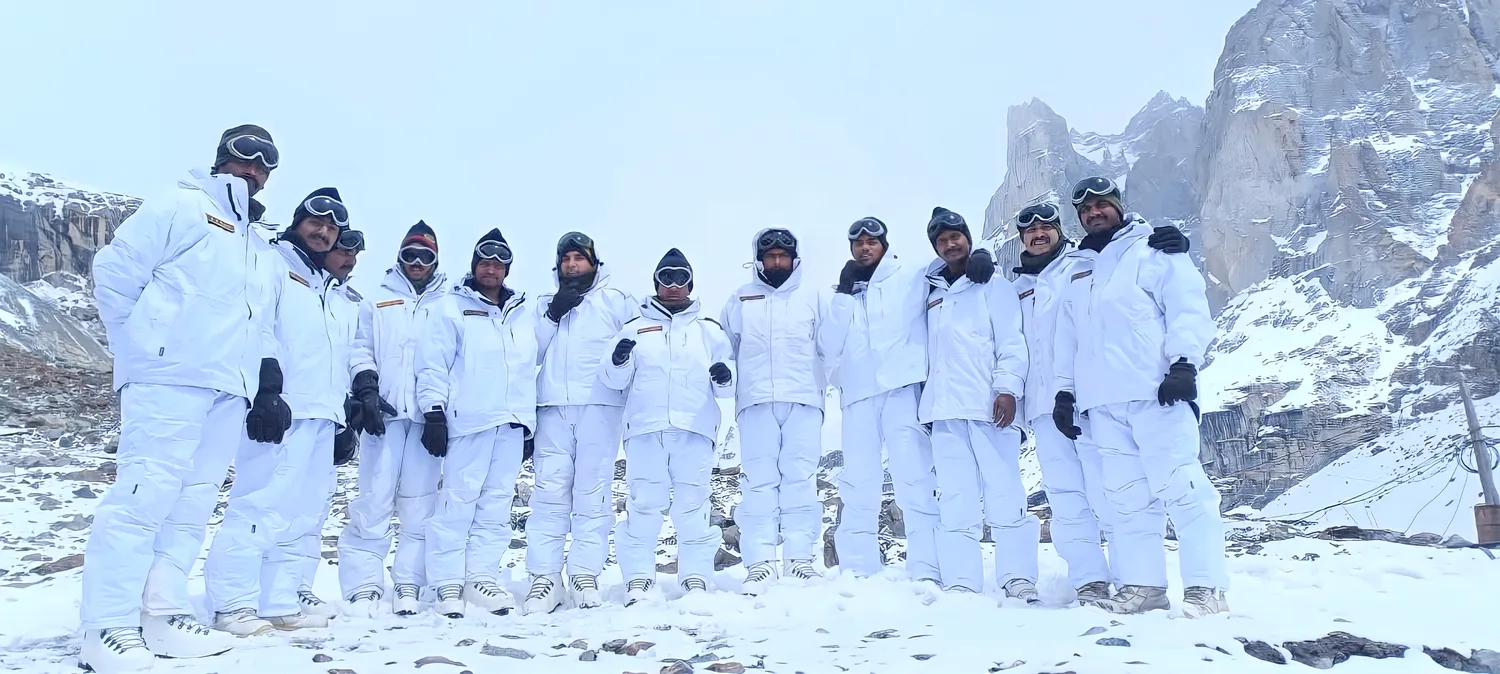
The obvious assumption is that nuclear weapons keep India and Pakistan cautious. The historical record says the opposite. In May 1998 both countries tested warheads and became declared nuclear powers. Barely a year later, Pakistani soldiers slipped across the Line of Control and seized the heights above the town of Kargil. The confrontation runs even higher up. On the Siachen Glacier in the Karakoram, Indian and Pakistani troops have faced each other since 1984 at over 5,700 meters, where more men die of the cold than of enemy fire.
The timing was deliberate. Pakistan's planners had reasoned that their new bomb would stop India from escalating to all-out war, which made a limited grab safer rather than riskier. Scholars call it the stability-instability paradox: because neither side wants an all-out nuclear war, each feels freer to risk a smaller conventional one. India fought the intruders off in brutal high-altitude combat that killed 527 of its soldiers, but refused to cross the Line of Control. What actually ended the war was not deterrence but a phone call from Washington. President Bill Clinton summoned Pakistan's prime minister to Washington, confronted him with CIA intelligence that Pakistan was readying its nuclear weapons, and demanded a withdrawal.
That set the template for every crisis since. Pakistan-linked militants strike; India retaliates; the two climb toward the nuclear threshold; and Washington talks them down. The trouble is that each rung has been higher than the last. In 2019 India bombed a target inside Pakistan proper for the first time since 1971. In 2025 both sides hit each other's military bases. The rungs between a conventional clash and a nuclear one are running out, and the brake has never been the bomb itself. It has been an American president willing to pick up the phone at the right moment, which is a thin thing to hang the world on. It is also why strategists keep ranking Kashmir, not Taiwan or Ukraine, as the likeliest place a nuclear war actually starts.
The gamble that was supposed to end it
India thought it had a way out. On August 5, 2019, Narendra Modi's government revoked Article 370, the constitutional provision that had given Kashmir its own flag, its own constitution, and broad autonomy since 1947. Delhi split the state into two territories run more directly from the capital, detained the entire mainstream Kashmiri political leadership, and imposed an internet blackout that lasted 552 days, the longest ever in a democracy. The argument was that autonomy was the root of the violence, and that integration would finally bring normalcy.
Six years on, the verdict is mixed at best. Tourism did boom; some 23 million people visited in 2024. But youth unemployment sits near 32 percent, double India's national rate, and the promised return to full statehood has not come. Then came Pahalgam, the deadliest attack on civilians in India since Mumbai in 2008, in the same valley Modi had declared at peace. It shattered the tourism season in weeks and triggered the largest India-Pakistan military crisis in a generation. Integration on paper did not deliver quiet on the ground.
Why the danger is still rising
Everything that once restrained Kashmir is weakening at once. The Indus treaty is in abeyance and the two sides no longer talk. India and China still face off across an undemarcated Himalayan border where their soldiers killed each other with rocks and clubs at Galwan in 2020. In January 2026 the Bulletin of the Atomic Scientists set its Doomsday Clock to 85 seconds to midnight, the closest in its history, and named the 2025 India-Pakistan crisis as a reason. Underneath it all, the Himalayan glaciers that feed the Indus are melting, tightening the water squeeze on a Pakistan of 240 million people.
The instability is not only between the two countries. Through the summer of 2026, Pakistani-administered Kashmir erupted in its own revolt: weeks of protests over prices and political rights, a curfew in Rawalakot, and clashes that killed at least nineteen people before staggered elections went ahead under heavy guard. Both sides rule their share of Kashmir through the military, and neither has won its people over.
That is the real shape of the Kashmir conflict. Not a border argument that flares and fades, but a system with every stabilizer failing and every accelerant strengthening: three nuclear arsenals, a shrinking river, hardening nationalism on all sides, and no court, treaty, or hotline with the authority to settle it. The 2025 ceasefire held because an American president made a call. The next crisis will test whether that is still enough, and it is the only safety catch the world has.
Test what you learned
5 quick questions on this article. No signup, just you against the text.