
Instrument of Accession
The Instrument of Accession is the 1947 document that made Jammu and Kashmir part of India, sparking one of the world's longest territorial disputes.
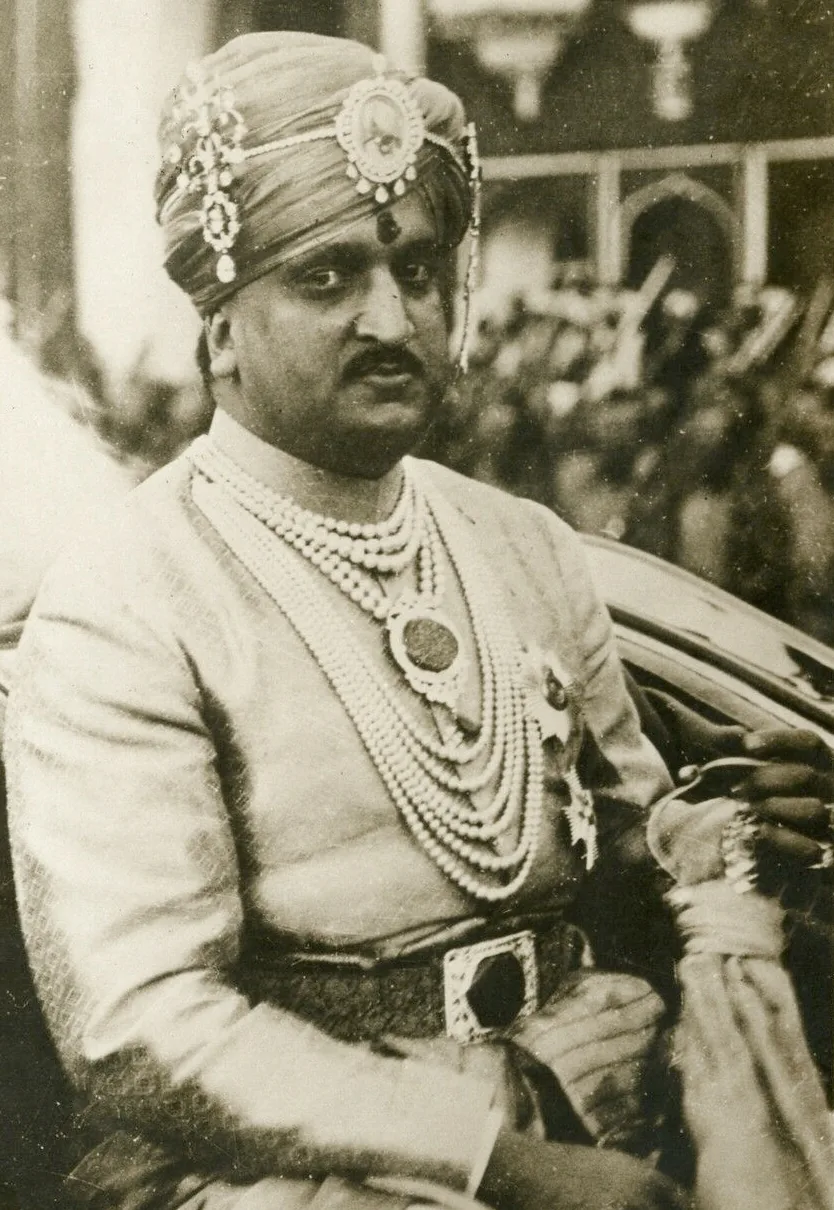
The Instrument of Accession is a legal document signed on October 26, 1947, by Maharaja Hari Singh. Hari Singh was Hindu. The princely state he ruled, Jammu and Kashmir, was majority Muslim. By signing it, Hari Singh handed India control over Kashmir's defense, foreign affairs, and communications, making the state part of the new Dominion of India. India and Pakistan have fought three wars over the territory since then, and the question of whether the document was valid remains at the center of the Kashmir conflict.
How Kashmir's maharaja was forced to choose
When Britain partitioned India in August 1947, roughly 565 princely states lost the protection of the British Raj. Each ruler had to decide whether to join India or Pakistan. Geography and the religion of the population were the expected guides. Most rulers signed quickly. Hari Singh did not.
Kashmir was a problem from the start. Its population was majority Muslim, which pointed toward Pakistan. Its maharaja was Hindu, from the Dogra dynasty that had ruled since the 1840s. And the state bordered both new countries. Hari Singh wanted neither option. He signed a standstill agreement with Pakistan to keep trade and communications running while he stalled, hoping to keep Kashmir independent.
Hari Singh was 52 years old, wealthy even by the standards of Indian royalty. In his younger years he had been the subject of a blackmail scandal in Paris, caught in a hotel with a jockey's wife. The case was so public that newspapers across Europe covered it, concealing his identity only as "Mr. A." He paid what was then the equivalent of hundreds of thousands of dollars to the conspirators before the scheme was exposed. By 1947, he was more comfortable with polo ponies than with the politics closing in on him.
On October 22, 1947, thousands of Pashtun tribesmen from Pakistan's northwest frontier crossed into Kashmir and advanced toward Srinagar, the capital. They looted and killed as they went, spending days in the town of Baramulla rather than pressing on. The delay gave India time to act. Hari Singh had asked India for troops. India's government, led by Prime Minister Jawaharlal Nehru, told him that Indian soldiers could not enter a state that had not joined India.
India sent V.P. Menon, a senior civil servant, to secure the signature. On October 26, Hari Singh signed the Instrument of Accession. The next morning, Governor-General Lord Mountbatten accepted it, and Indian troops were airlifted into Srinagar.
Why India and Pakistan disagree over the accession
India's position is that the accession was carried out under the Indian Independence Act of 1947, the same law that governed every other princely state's decision. Once Mountbatten accepted it, Kashmir became Indian territory. India's Supreme Court reaffirmed this view in 2023.
Pakistan rejects the accession on several grounds. Pakistan's founder, Muhammad Ali Jinnah, called it fraudulent. Pakistan argues that the signature was obtained under duress, with tribal fighters closing in on the capital. It argues that an unelected Hindu ruler did not represent a Muslim-majority population. And it argues that a standstill agreement between Kashmir and Pakistan was still in force, making accession to India a violation of Kashmir's existing obligations. British government lawyers agreed that the standstill agreement complicated the legal picture.
Mountbatten himself attached a condition. In a letter accepting the accession, he wrote that once order was restored, Kashmir's future should be settled "by a reference to the people," meaning a vote. The United Nations endorsed this idea in 1948 with Resolution 47, which called for Pakistan to withdraw its fighters, India to reduce its forces, and a plebiscite to be held under UN supervision. Pakistan did not fully withdraw. India did not reduce its forces. No plebiscite has taken place in the more than 78 years since.
Kashmir after the Instrument of Accession
The first India-Pakistan war ended with a ceasefire in January 1949. The ceasefire line, later renamed the Line of Control, divided Kashmir roughly in two. India held the valley and Jammu. Pakistan held what it calls Azad Kashmir and the northern areas. That line has barely moved since.
India granted Kashmir special autonomy under Article 370 of its constitution, allowing the state its own constitution and flag. In August 2019, the Indian government revoked Article 370, abolished Kashmir's statehood, and placed it under direct federal administration. India's Supreme Court upheld the revocation in December 2023. Pakistan condemned the move as illegal.
India and Pakistan fought again over Kashmir in 1965 and in 1999 at Kargil. The 1971 war was fought mainly over Bangladesh, but Kashmir remained a source of tension. Both countries have been nuclear-armed since 1998.
Hari Singh did not keep his throne. India's government pushed him out in 1949, replacing him with his 18-year-old son Karan Singh as regent. Hari Singh spent his remaining years in Bombay, breeding polo ponies far from the kingdom he had lost. He died in 1961. The document he signed on October 26, 1947, still defines the borders, the wars, and the argument over who Kashmir belongs to.