
Fidel Castro
Fidel Castro was a Cuban revolutionary who overthrew Batista in 1959 and ruled Cuba as a communist state for nearly fifty years.
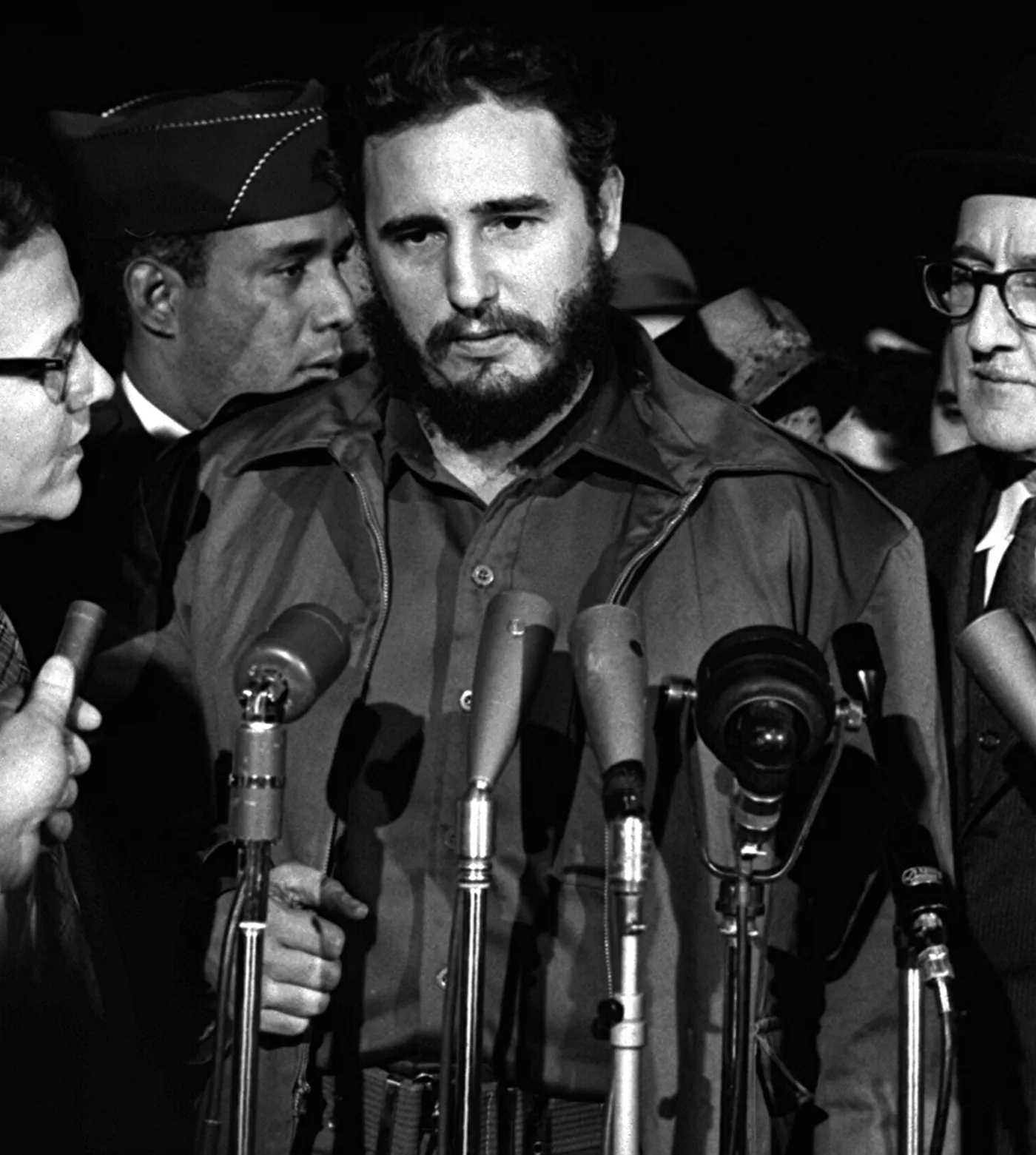
Fidel Castro was a Cuban revolutionary who overthrew the dictator Fulgencio Batista in 1959 and ruled Cuba as a one-party communist state for nearly fifty years. He was born on August 13, 1926, near Biran in eastern Cuba, the son of a Spanish immigrant who had grown wealthy farming sugarcane. He died on November 25, 2016, at age 90.
Castro aligned Cuba with the Soviet Union, survived the Bay of Pigs invasion and the Cuban Missile Crisis, and outlasted ten American presidents. His government taught almost every Cuban to read and built a healthcare system that matched wealthy countries in life expectancy. It also jailed political prisoners, banned independent newspapers, and pushed hundreds of thousands of Cubans to leave the country.
How Castro overthrew Batista
Castro studied law at the University of Havana and graduated in 1950. He had been named Havana's top schoolboy sportsman in 1944, and he later became famous for speeches that could run four or five hours without notes. His revolution began with an armed attack.
On July 26, 1953, the 26-year-old Castro led more than 130 fighters in an assault on the Moncada military barracks in Santiago de Cuba. The attack failed in less than an hour, and most of his men were killed or captured. At his trial, Castro acted as his own lawyer and delivered a speech that ended with the line "History will absolve me." The court sentenced him to fifteen years in prison. Batista granted an amnesty, and Castro walked free in May 1955 after less than two years.
Castro went to Mexico, where he recruited fighters including the Argentine doctor Ernesto "Che" Guevara. On November 25, 1956, eighty-two of them set sail for Cuba on a battered yacht called the Granma. The boat arrived two days late, and Batista's army was waiting. Only about nineteen men regrouped after the initial fighting. They retreated into the Sierra Maestra mountains and spent two years fighting a guerrilla war, winning support from farmers while Batista's corrupt, American-backed government lost it.
On January 1, 1959, Batista fled Cuba. A week later, Castro rode into Havana to cheering crowds.
Castro, the Soviet Union, and the Cold War
Once in power, Castro nationalized American-owned sugar mills, oil refineries, and banks. The United States imposed a full trade embargo in February 1962. In December 1961, Castro declared himself a Marxist-Leninist in a televised address and tied Cuba's economy and military to the Soviet Union.
Cuba sits ninety miles from Florida, and under Castro it became one of the Cold War's most dangerous pressure points. In April 1961, about 1,400 Cuban exiles trained and armed by the CIA landed at the Bay of Pigs on Cuba's southern coast. Castro's forces defeated them in three days. The failed invasion embarrassed the Kennedy administration and strengthened Castro at home.
The following year brought a far more dangerous confrontation. In October 1962, American spy planes found that the Soviet Union was installing nuclear missiles in Cuba. For thirteen days the world stood at the edge of nuclear war. Soviet leader Nikita Khrushchev agreed to remove the missiles in exchange for an American promise not to invade Cuba and a secret deal to pull American missiles out of Turkey.
Castro's intelligence chief, Fabian Escalante, later claimed the CIA had devised 634 schemes to kill Castro over the decades. Some were real operations, among them poisoned cigars. Others never left the drawing board, among them an exploding seashell.
What did Fidel Castro do for Cuba?
Castro's government produced results that supporters and critics both acknowledge, though they weigh them differently.
In 1961, the government launched a nationwide literacy campaign. More than 250,000 volunteers, many of them teenagers, went into the countryside to teach adults to read and write. By the end of the year, Cuba declared itself free of illiteracy. The official illiteracy rate dropped from about 24 percent to under 4 percent. The government also built a free public healthcare system. By the 2000s, Cuban life expectancy was comparable to that of the United States, an unusual achievement for a country with Cuba's income level.
These achievements existed inside a one-party state. Cuba under Castro held no free elections. There was no independent press and no legal opposition. The government imprisoned dissidents and tightly restricted travel. Hundreds of thousands of Cubans left over the decades. In 1980, about 125,000 crossed to Florida in the Mariel boatlift. Others risked their lives on homemade rafts in the Florida Straits.
Castro's last years and Cuba after his death
When the Soviet Union collapsed in 1991, Cuba lost its main source of trade, oil, and financial support. The economy shrank by roughly a third. Cubans called the years that followed the "Special Period." Food was rationed, power went out for hours each day, and public transportation nearly stopped. Many outside observers expected Castro's government to fall. It did not.
Castro held on through the crisis and into the 2000s. In July 2006, at age 79, he fell seriously ill and temporarily handed power to his brother Raul Castro. In February 2008, Raul officially replaced him as president. Fidel Castro spent his final years writing columns for state newspapers. He died on November 25, 2016, at age 90.
In Miami, Cuban exiles celebrated in the streets. In Havana, the government ordered nine days of mourning. Cuba is now led by Miguel Diaz-Canel, the first president born after the revolution. The country faces its worst economic crisis since the Special Period, with blackouts lasting as long as twenty hours a day in parts of the island. Castro reshaped Cuba more than any other person in its modern history. The one-party state he built, the American trade embargo, and the large Cuban exile community in the United States all remain.