
Iran-Contra Affair
The Iran-Contra affair was a 1980s scandal in which the Reagan administration sold weapons to Iran and sent the profits to Nicaraguan rebels.
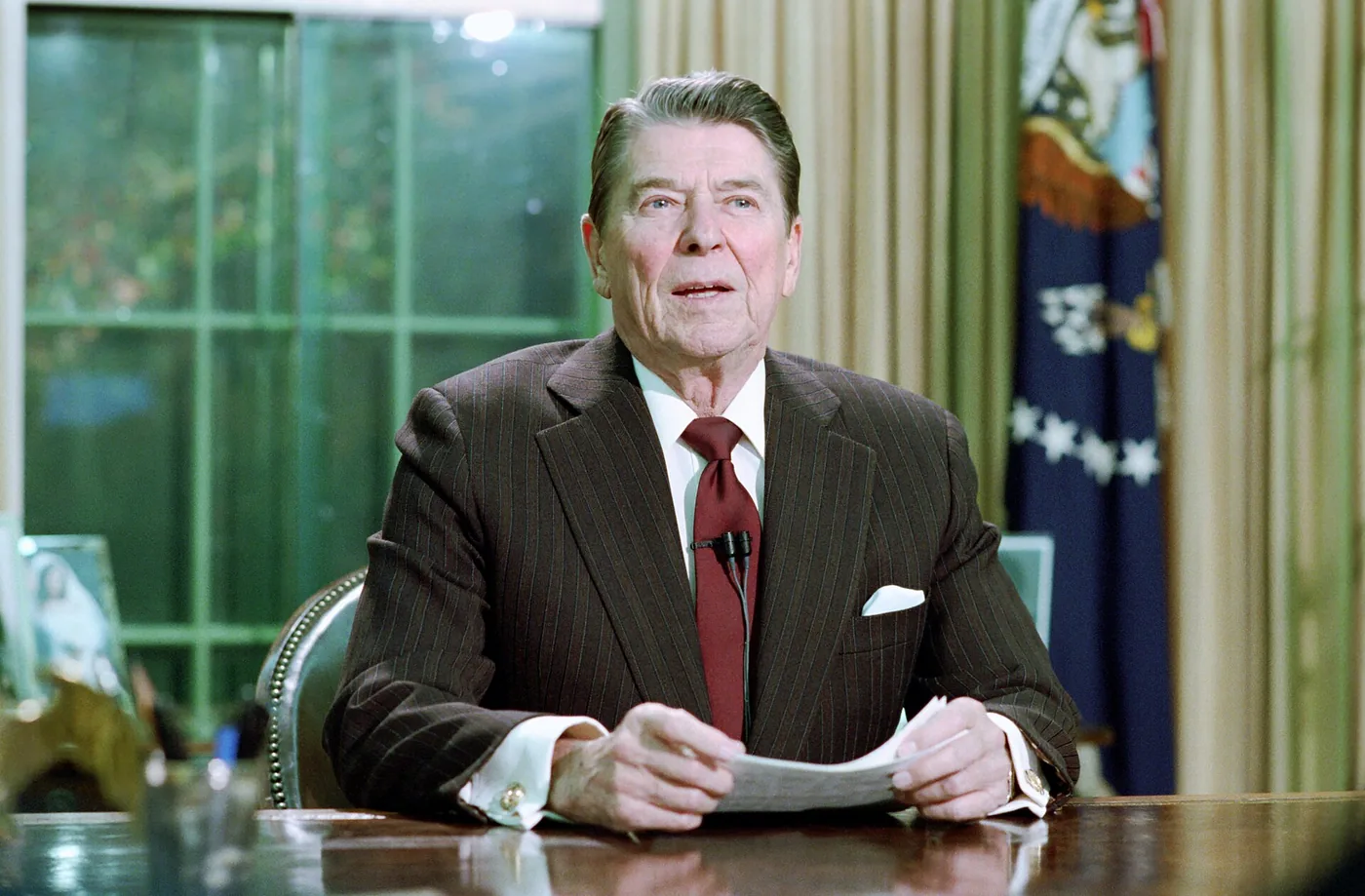
The Iran-Contra affair was a political scandal of the mid-1980s in which the Reagan administration secretly sold weapons to Iran and used the profits to fund the Contras, a group of rebels fighting Nicaragua's leftist Sandinista government. Congress had passed laws forbidding American military support for the Contras. The two covert operations were run by staff on the National Security Council from the White House. A Lebanese magazine broke the story in November 1986. The resulting crisis became the most damaging of Ronald Reagan's presidency and raised a question that has never been fully settled: whether a president can use off-budget money to carry out a policy that Congress has voted to stop.
How the Reagan administration ran two secret operations
The United States had no diplomatic relations with Iran. After the 1953 coup and the 1979 revolution, the two countries were adversaries. The US was supplying Iraq during the Iran-Iraq War and enforcing an arms embargo on Iran. The administration's declared policy was to never negotiate with terrorists or arm states that sponsored terrorism.
But Iran desperately needed replacement parts for the American-built weapons systems it had inherited from Mohammad Reza Shah. At the same time, Iranian-backed groups in Lebanon were holding seven American citizens hostage. Starting in 1985, the administration used Israel as a go-between to sell Iran TOW missiles and parts for its Hawk antiaircraft systems. The idea was that Tehran would pressure the kidnappers to let the hostages go. Three hostages were released over the course of the deal, but three more were seized. The sales had created an incentive for new kidnappings.
The second operation involved Nicaragua. Reagan publicly compared the Contras to America's founding fathers, calling them their "moral equal." But Congress received evidence of Contra atrocities and learned that the CIA had mined Nicaraguan harbors without properly informing Congress. Between 1982 and 1984, Congress passed the Boland Amendments, which barred US agencies from spending money to overthrow the Sandinista government. The strictest version, passed in 1984, prohibited any government body involved in intelligence from giving military or paramilitary help to the Contras.
The NSC staff found other ways to pay. They solicited money from third countries and from private donors. The man who linked the two operations together was Lieutenant Colonel Oliver North, a decorated Marine who had won the Silver Star in Vietnam. North marked up the price on the Iranian arms sales and funneled the surplus to the Contras. He later called it "a neat idea." That connection between the two programs is what gave the affair its name.
How the Iran-Contra affair unraveled
The secret broke in November 1986 when Ash-Shiraa, a Lebanese magazine, published a report about the American arms shipments to Iran. The Reagan administration denied the story, then admitted it was true. Within weeks, investigators discovered that profits from the sales had gone to the Contras. North destroyed classified records with help from his secretary. National Security Adviser John Poindexter resigned. Reagan fired North.
Three investigations followed. The Tower Commission, appointed by Reagan, reported in February 1987 that the president's hands-off management style had let the NSC staff run the operations without supervision. Congressional hearings ran through the summer of 1987, with North testifying in his Marine uniform before a nationwide television audience. Independent counsel Lawrence Walsh spent nearly seven years investigating. His office brought charges against fourteen people, including former Defense Secretary Caspar Weinberger. Eleven were convicted, including North and Poindexter.
The biggest convictions did not hold. Appeals courts threw out the convictions of both North and Poindexter, ruling that prosecutors had relied on evidence contaminated by the pair's immunized testimony before Congress. President George H.W. Bush issued pardons to Weinberger and five other defendants in December 1992, weeks before leaving the White House. The pardons ended Walsh's investigation before it could determine how much Bush, who had served as vice president during the affair, had known. Only one defendant served prison time, and that was for tax crimes.
Did Reagan know about Iran-Contra?
Reagan knew about the arms sales to Iran. His own diary confirms it. The unresolved question is whether he knew that the profits were going to the Contras.
Poindexter, Reagan's national security adviser, told Congress that he deliberately kept information about the diversion to the Contras from Reagan, ensuring the president could deny any knowledge of it. North said he believed Reagan was aware, but he had no direct proof. The Tower Commission concluded that Reagan's management style had let the operations proceed unchecked, but it did not find that he ordered or approved the diversion of funds.
On March 4, 1987, Reagan spoke to the nation from the Oval Office. "A few months ago I told the American people I did not trade arms for hostages," he said. "My heart and my best intentions still tell me that's true, but the facts and the evidence tell me it is not." He accepted responsibility for what had happened on his watch. The full extent of what he knew has never been established.
Why the Iran-Contra affair still matters
The Constitution gives Congress the power of the purse. The Boland Amendments were Congress using that power to end a policy it had voted against. The NSC staff got around the restriction by paying for the Contras with money that never passed through the federal budget: donations from foreign governments, contributions from private donors, and markups on arms sales.
If an administration can fund a policy with off-budget money after Congress has cut it off, the appropriations power does not actually constrain the executive. That was the constitutional question at the center of the affair, and it was never resolved in court. The biggest convictions were overturned on procedural grounds, and the pardons ended the investigation. The fact that an administration circumvented Congress's spending power and no one was imprisoned for it is the lasting precedent the Iran-Contra affair set.