
Iran-Iraq War
The Iran-Iraq War (1980–1988) was an eight-year war between Iraq and Iran that killed roughly a million people and ended in a stalemate.
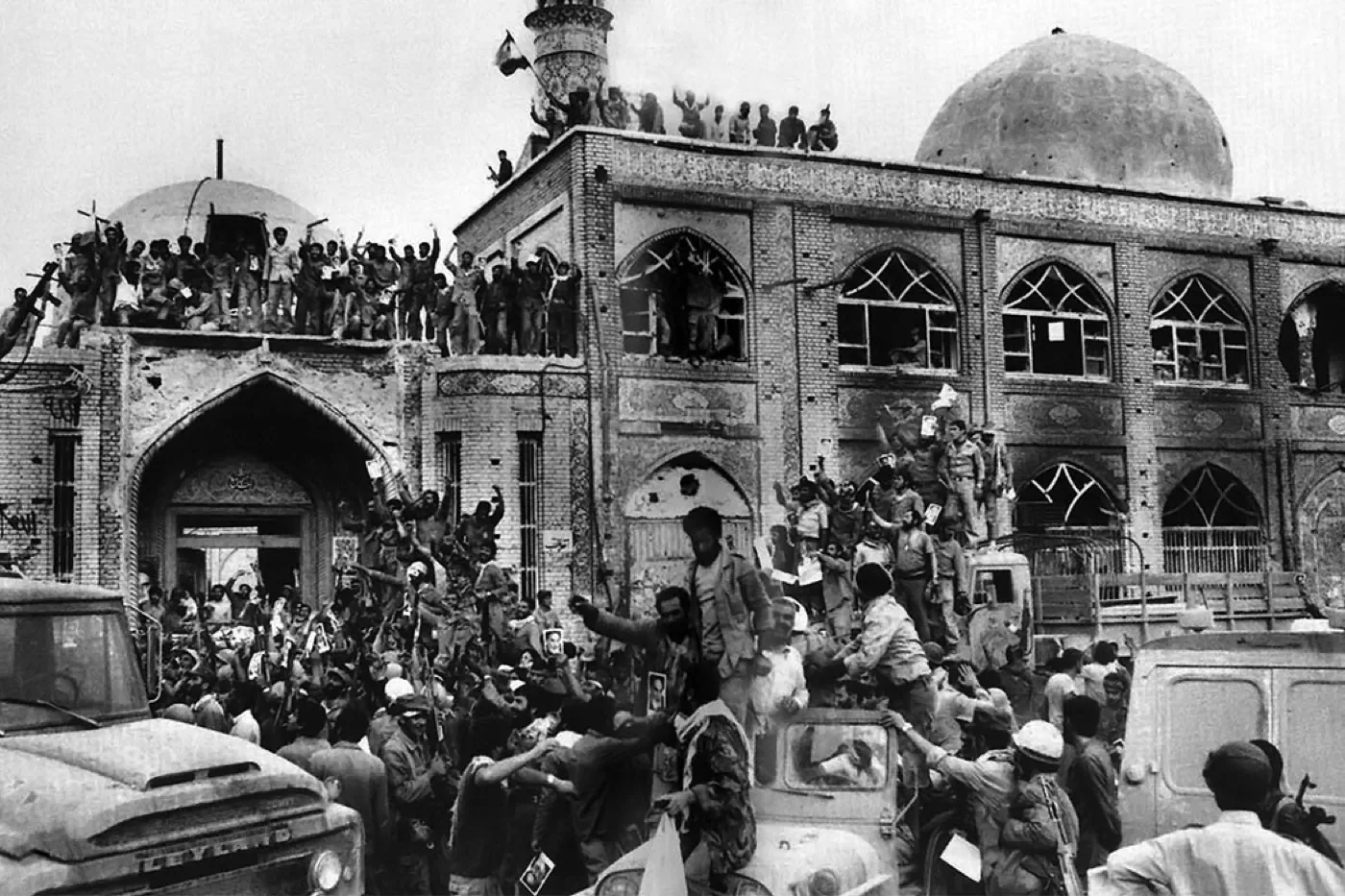
The Iran-Iraq War was an eight-year war between Iraq and Iran, fought from September 1980 to August 1988. Iraq's president, Saddam Hussein, launched the invasion expecting a quick victory over a neighbor weakened by revolution. Instead, the war lasted eight years, longer than any other conventional war of the twentieth century. Roughly one million people died. The border barely moved. Both governments survived. The war left Iraq heavily in debt, Iran deeply distrustful of the outside world, and the region headed toward another war: Saddam's invasion of Kuwait two years later.
Why Saddam Hussein invaded Iran
In 1979, two events reshaped the Middle East within months of each other. In February, Iran's revolution overthrew the Shah and brought Ayatollah Ruhollah Khomeini to power. Khomeini was in his late seventies and had spent the previous fourteen years in exile, including thirteen in Najaf, Iraq. In July, Saddam Hussein became president of Iraq at the age of 42, taking formal control of a country he had run from behind the scenes for years.
Saddam had several reasons to attack. Khomeini openly called on Shia Muslims to rise against their governments, and Iraq's population was majority Shia. Saddam, a Sunni who ruled through the Baath Party, saw that as a direct threat to his hold on power.
Saddam also wanted to scrap the 1975 Algiers Agreement, which had given Iran shared control of the Shatt al-Arab, the waterway formed by the Tigris and Euphrates rivers where they flow into the Persian Gulf. Iraq's only route to the sea ran through it. Beyond the border dispute, Saddam wanted to seize Khuzestan, an oil-rich Iranian province with a large Arab population. Taking it would give Iraq control of some of the largest oil reserves in the region.
Iran looked vulnerable. The revolution had broken its army apart. Many experienced officers had been executed or exiled. Western arms suppliers, including the United States, had cut the country off. Saddam expected a short war.
How the Iran-Iraq War was fought
Saddam ordered his army into Iran on September 22, 1980. Iraqi forces advanced into Khuzestan but met fierce resistance. The invasion stalled within weeks.
By 1982, Iran had pushed Iraqi forces back to the border. Rather than accept a ceasefire, Khomeini chose to keep fighting until Saddam was overthrown. The front settled into a static line of trenches, minefields, and barbed wire that barely moved for the next six years.
Iran had large numbers of fighters but limited equipment. It sent waves of young volunteers called the Basij into attacks on dug-in Iraqi lines. Some of these volunteers were teenagers. Iraq, with superior weapons from outside backers, turned to chemical warfare. Iraqi forces used mustard gas, then the nerve agents tabun and sarin, against Iranian troops. This was the largest use of chemical weapons in war since 1918. In March 1988, Saddam's forces also used chemical weapons against Iraq's own Kurdish population at Halabja, killing thousands of civilians.
Iraq and Iran traded missile strikes on each other's cities, episodes that became known as the "wars of the cities." Both sides attacked oil tankers in the Persian Gulf, threatening the world's oil supply through the Strait of Hormuz. Starting in 1987, the U.S. Navy sent warships to escort Kuwaiti tankers, which had been re-registered under the American flag, through the Gulf. American and Iranian forces clashed during these operations.
France and the Soviet Union supplied Iraq with weapons. Saudi Arabia, Kuwait, and other Gulf monarchies lent it billions of dollars to keep fighting. The United States restored diplomatic relations with Iraq during the war and shared intelligence with Saddam's government. Washington did little to stop Iraq's use of chemical weapons. Iran was largely isolated.
On July 3, 1988, the USS Vincennes, an American cruiser, shot down Iran Air Flight 655, an Iranian passenger plane, killing all 290 people on board. With its cities damaged by missile strikes and its oil economy wrecked, Iran accepted a United Nations ceasefire. Khomeini compared the decision to swallowing poison. The guns fell silent on August 20, 1988. The front line was roughly where it had been eight years earlier.
Who won the Iran-Iraq War?
Neither side won. The border at the end of the war was almost exactly where it had been at the start. No territory changed hands. Both Saddam Hussein and the Islamic Republic survived.
The war's costs shaped what came next for both countries. Iraq emerged owing billions to Saudi Arabia and Kuwait for the loans that had kept it fighting. Two years later, in August 1990, Saddam invaded Kuwait, partly to seize its oil wealth and erase the debt. That invasion led to the Gulf War.
Iran came out of the war believing the world had abandoned it. No major power had punished Iraq for its use of chemical weapons against Iranians. That experience drove Iran to build its own missile program and to develop relationships with armed groups across the region rather than rely on outside powers. The Islamic Revolutionary Guard Corps, which had grown powerful during the war, became the center of Iran's military and political system. Iran refers to the conflict as the "Imposed War," a name that reflects its view that Iraq started the fighting and the world looked the other way.
The Iran-Iraq War killed roughly a million people without moving the border. It left Iraq bankrupt and Iran isolated, and both outcomes helped cause the conflicts that followed.