
John Maynard Keynes
John Maynard Keynes was a British economist who argued governments should spend during downturns and helped design the postwar financial order.
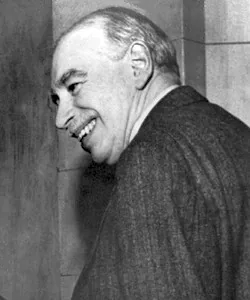
John Maynard Keynes (1883–1946) was a British economist whose ideas changed what governments do during economic crises. Before Keynes, most economists assumed that free markets would correct themselves, that downturns were temporary, and that the right response was patience. Keynes disagreed. He argued that a slump could drag on for years if no one acted, and that the cure was government spending: put money into the economy when the private sector will not. Born in Cambridge to a family of academics, he attended Eton and then King's College, Cambridge, where he studied mathematics rather than economics. He later married Lydia Lopokova, a Russian ballerina, and made a fortune investing in stocks. He spent much of his career advising the British government and shaped the settlements that followed both world wars.
How Keynes predicted the cost of punishing Germany
In 1919, the British Treasury sent Keynes to the Paris Peace Conference as one of its delegates. He was 35. He watched the victors draw up the Treaty of Versailles and impose war reparations on Germany that he believed the country could never afford. Keynes resigned from the delegation and went home to write The Economic Consequences of the Peace, published later that year.
The book made him famous. It argued that demanding more from Germany than the country could pay would wreck its economy, create deep resentment, and produce a second war. Keynes also included sharp, unflattering portraits of the Allied leaders, which helped make the book a bestseller. Within twenty years, his prediction proved accurate.
How Keynes's General Theory changed economics
Keynes published his most important work, The General Theory, in 1936, during the Great Depression. By then he was a fellow and bursar of King's College, Cambridge, and already the most influential economist in Britain.
The book introduced what Keynes called aggregate demand: the total amount of spending across an entire economy. Keynes argued that demand determines output and employment. When spending falls, one person's lost income becomes another person's reason to cut back, and the contraction deepens. Lowering wages does not help when the problem is that nobody is buying.
His proposed fix came in two steps. First, the central bank should lower interest rates to encourage borrowing. If that is not enough, the government should spend directly, hiring workers and building infrastructure, to make up for the missing private spending. The claim behind all of this was radical: a market economy could remain stuck in depression indefinitely, and only deliberate government action could end it.
Keynes at Bretton Woods
In 1944, Keynes was chosen to lead Britain's delegation at the Bretton Woods conference in New Hampshire, where the Allies were designing a new financial order for the postwar world. He was 61 and in poor health. A heart attack in 1937 had left lasting damage, and years of wartime advising had worn him further. The British government had made him Baron Keynes in 1942 for his wartime service.
Keynes brought an ambitious proposal to the negotiations: an international clearing bank that would issue a new currency, called the "bancor," to prevent any country from running permanent trade surpluses or deficits. The proposal failed. Britain was nearly bankrupt and borrowing from Washington, which gave the American side the leverage it needed. Harry Dexter White, the chief American negotiator, pushed through a system built around the dollar. Even so, Keynes helped shape the International Monetary Fund and the World Bank, the two bodies the conference created. When the conference ended, the delegates gave Keynes a standing ovation.
Keynes died on April 21, 1946, at Tilton, his farmhouse in Sussex. He was 62. His heart, weakened by a bacterial infection, gave out less than two years after the Bretton Woods negotiations.
What is Keynesian economics?
Keynesian economics is the idea that governments should manage total spending in the economy to prevent or shorten recessions. When private spending falls, the government fills the gap by cutting taxes, lowering interest rates, or spending directly on jobs and infrastructure. When the economy overheats, the government does the reverse: it raises taxes or cuts spending to cool things down.
After World War II, governments across the Western world adopted this approach as standard policy. For about 25 years it seemed to work. Then the inflation of the 1970s, which Keynesian tools struggled to explain or fix, brought a backlash. Critics argued that government intervention caused more problems than it solved and that controlling the money supply mattered more than managing demand.
The debate swung back in 2008. When the global financial crisis hit, governments worldwide turned to massive public spending to prevent a second Great Depression. The argument between stimulus and austerity during a crisis continues, and both sides of it trace back to what Keynes wrote in 1936.