
Great Depression
The Great Depression was a global economic collapse from 1929 to 1939 that left a quarter of U.S. workers unemployed and reshaped governments worldwide.
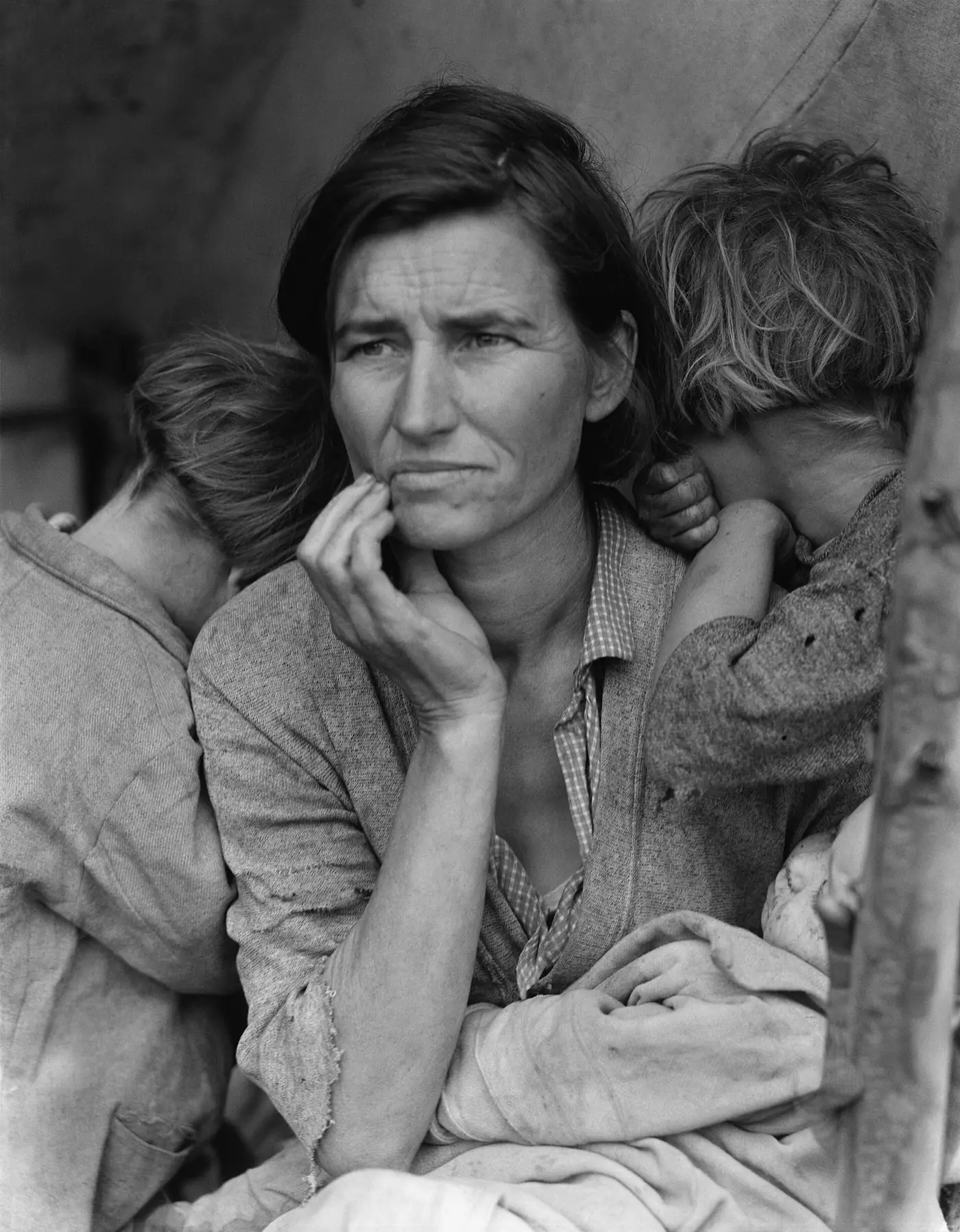
The Great Depression was the deepest and longest economic downturn in modern history. It began after the Wall Street stock market crash in October 1929 and lasted roughly a decade. At its worst, in 1933, about 25 percent of the American workforce was unemployed, roughly 13 million people. Germany's unemployment was even higher, reaching about 30 percent. The value of world trade fell by roughly two-thirds between 1929 and 1934. The collapse destroyed the economic rules that had governed the industrial world, helped bring to power the governments that started the Second World War, and helped create the welfare state and economic policies that still guide governments during crises.
How a stock market crash became a global collapse
The crash of October 1929 wiped out vast amounts of stock market wealth, but stock market crashes do not always become lasting depressions. The reason this crash led to a decade-long collapse was a chain of failures in banking, monetary policy, and trade.
The United States in 1929 had thousands of small, local banks. None were protected by federal deposit insurance. When depositors lost confidence, they rushed to withdraw their money before it was gone. Each bank that failed destroyed the savings and credit of the community it served. The panic then spread to neighboring banks. About 9,000 banks failed between 1930 and 1933. Depositors in those banks lost more than $1.3 billion, the equivalent of roughly $30 billion today. The Federal Reserve had the power to lend money to struggling banks and stop the chain reaction, but it chose not to. The prevailing economic thinking held that letting bad debt clear out of the system was the right course.
The gold standard made everything worse. Countries that tied their currencies to gold could not expand their money supply or lower the value of their currency without losing gold reserves. When demand fell, governments cut spending and raised interest rates, which drove demand down further. Britain left the gold standard in 1931 and began recovering soon after. France stayed on it until 1936 and did not recover until then. Whether a country left the gold standard is the strongest single predictor of when its recovery began.
Trade collapsed at the same time. In 1930, the United States passed the Smoot-Hawley tariff, raising duties on thousands of imported goods. Many countries retaliated with their own tariffs, and world trade splintered into competing currency zones and closed trading blocs that favored imperial partners.
How the Depression reshaped politics
The economic collapse produced political changes that lasted far longer than the Depression itself. In Germany, the number of unemployed workers rose from 1.4 million in 1928 to 5.6 million by 1932. The Nazi party won less than 3 percent of the vote in the 1928 election. By July 1932, its share had reached 37 percent, and Adolf Hitler became chancellor in January 1933. Parliamentary government fell apart across central and eastern Europe over the course of the 1930s. Fascism gained ground in countries where it had been marginal before the crash.
The breakup of world trade pushed Germany, Italy, and Japan toward territorial expansion. All three lacked large overseas empires or reliable access to raw materials, and as trade broke into closed blocs, each concluded that conquest was the only way to guarantee those resources. Japan seized Manchuria in 1931.
In the United States, President Franklin Roosevelt responded with the New Deal, which created deposit insurance through the Federal Deposit Insurance Corporation, banking regulation, and social programs like Social Security. The New Deal set the precedent that mass unemployment is a crisis for the government to address, not a natural process to endure. Sweden, New Zealand, and other countries adopted similar programs. Much of the modern welfare state dates from the Depression.
Why the Depression still shapes economic policy
Two economists offered competing lessons from the collapse, and both still guide how governments handle crises. In 1936, the British economist John Maynard Keynes proposed that an economy could fall into prolonged mass unemployment and remain stuck there, and that government spending was the only way to pull it out. The American economists Milton Friedman and Anna Schwartz argued in 1963 that the Federal Reserve caused the worst of the collapse by allowing the money supply to shrink by roughly a third between 1929 and 1933. In the Keynesian view, the core failure was too little government spending. In Friedman and Schwartz's view, the failure was too little money in the system.
The Bretton Woods system, designed at a 1944 conference, created rules for stable exchange rates and open trade to prevent the cycle of tariffs and currency blocs that had made the Depression worse.
Both sets of lessons were put to use in 2008, when a financial crisis threatened to repeat the pattern. The Federal Reserve was then chaired by Ben Bernanke, an economic historian who had studied the Depression for decades and later won the 2022 Nobel Prize in Economics for his research on bank failures. Bernanke cut interest rates to zero, lent to struggling banks, and coordinated with central banks in other countries. In the 1931 crisis, central banks had done the opposite, competing with each other instead of coordinating. In 2020, governments spent money on a scale that policymakers in the 1930s would not have considered. Every major recession since the Depression has been met with central bank lending, government spending, or both.