
Bretton Woods System
The Bretton Woods system pegged world currencies to a gold-backed US dollar from 1944 to 1971 and created the IMF and World Bank.
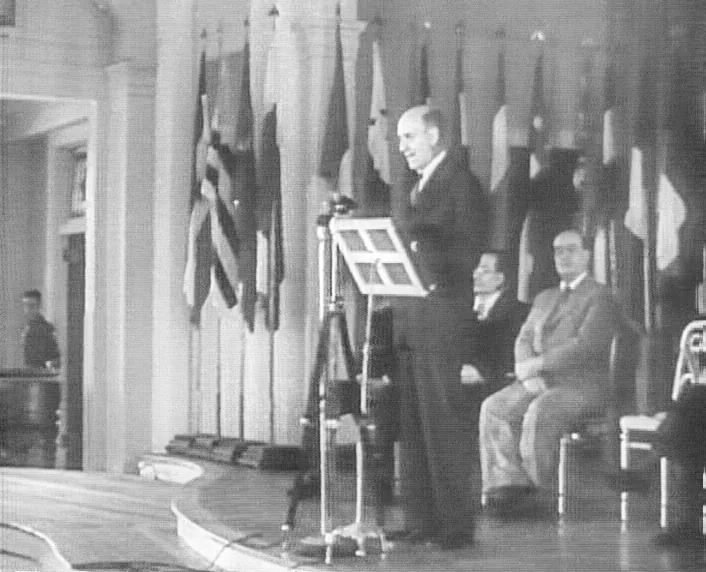
The Bretton Woods system was the set of rules that governed international money from 1944 to 1971. Under the system, every member country pegged its currency to the US dollar, and the United States promised to convert dollars into gold at a fixed rate of $35 per ounce. In practice, this meant the dollar became the currency that other countries held in reserve. The system was designed at a conference in Bretton Woods, New Hampshire, in July 1944. Over three weeks at the Mount Washington Hotel, 730 delegates from 44 nations worked out the details while World War II was still being fought. The conference also created two institutions that still exist: the International Monetary Fund (IMF), which lends to countries in financial crisis, and the World Bank, originally set up to fund Europe's postwar reconstruction.
How the Bretton Woods system was designed
The conference happened because the 1930s had shown what happens without rules. During the Great Depression, countries devalued their currencies one after another to make their exports cheaper, and raised trade barriers to keep foreign goods out. The moves canceled each other out and deepened the collapse. Many of the delegates at Bretton Woods believed that economic chaos had helped cause the war they were now fighting.
Two men dominated the negotiations. John Maynard Keynes, the most famous economist alive, led the British delegation. Keynes wanted a new international currency called the "bancor" and a global institution that would manage it, so that no single country's money would dominate world trade. Harry Dexter White, the chief international economist at the US Treasury, proposed a simpler system built around the dollar: peg every currency to it, and back it with gold. The United States held roughly two-thirds of the world's monetary gold, so White's plan put Washington in control.
White's plan won. Britain was nearly bankrupt and borrowing from the United States to fight the war, so Keynes had little leverage. The final agreement kept fixed exchange rates and the dollar-gold link, both White's ideas. Keynes accepted the result with misgivings. He had serious heart disease and had pushed himself to exhaustion during the three weeks of talks. He died less than two years later, in April 1946, at 62. White's career ended more abruptly. In 1948 he was accused before Congress of passing information to the Soviet Union during the war. He denied the charges and died of a heart attack three days after his testimony, at 55.
The system went into effect in 1946, and for roughly two decades it worked as designed. Because exchange rates were fixed, businesses could trade across borders without worrying that currency swings would wipe out their profits. World trade grew steadily, and the postwar decades became the fastest period of sustained economic growth the industrial world had experienced.
Why did the Bretton Woods system collapse?
The system carried a structural problem that the economist Robert Triffin identified in 1960, now called the Triffin dilemma. Growing world trade required a growing supply of dollars outside the United States. The only way to get more dollars into the world was for the United States to spend more abroad than it earned. But the more dollars that accumulated overseas, the less credible the promise to convert each one into gold became. The United States could not keep enough gold to back all the dollars the world needed.
By the mid-1960s, the strain was showing. The United States was spending heavily on the Vietnam War and on President Lyndon Johnson's Great Society domestic programs, pushing more dollars overseas. France's president, Charles de Gaulle, challenged the system directly in early 1965, calling the dollar's special position unfair and announcing that France would exchange its dollar reserves for gold. Other countries followed, and the US gold reserve shrank.
On August 15, 1971, President Richard Nixon announced that the United States would no longer convert dollars into gold. The decision, known as the Nixon Shock, ended the core promise of the Bretton Woods system. Without the gold backing, the fixed exchange rates fell apart. By 1973 the world's major currencies were floating, their prices set by markets instead of governments.
The Bretton Woods system today
The gold link is gone and currencies float, but much of what the 1944 conference built is still in place. The IMF still lends to countries in financial crisis, the same job it was designed for. The World Bank still funds development, though its focus has shifted from rebuilding Europe to reducing poverty worldwide. And the dollar, no longer backed by gold, remains the world's dominant reserve currency. As of 2024, central banks held about 58% of their foreign exchange reserves in dollars, far ahead of the euro at about 20%.
That dominance has been slowly declining. The dollar's share of global reserves fell by about 4 percentage points over the decade ending in 2024, as countries including China and Russia shifted into other currencies and gold. But no single currency has come close to replacing it. The system the delegates designed at Bretton Woods ended in 1971, but the institutions they created and the dollar's central role in global finance remain.