
Lawrence of Arabia
T.E. Lawrence was a British officer who fought alongside Arab forces against the Ottoman Empire in World War I and became known as Lawrence of Arabia.
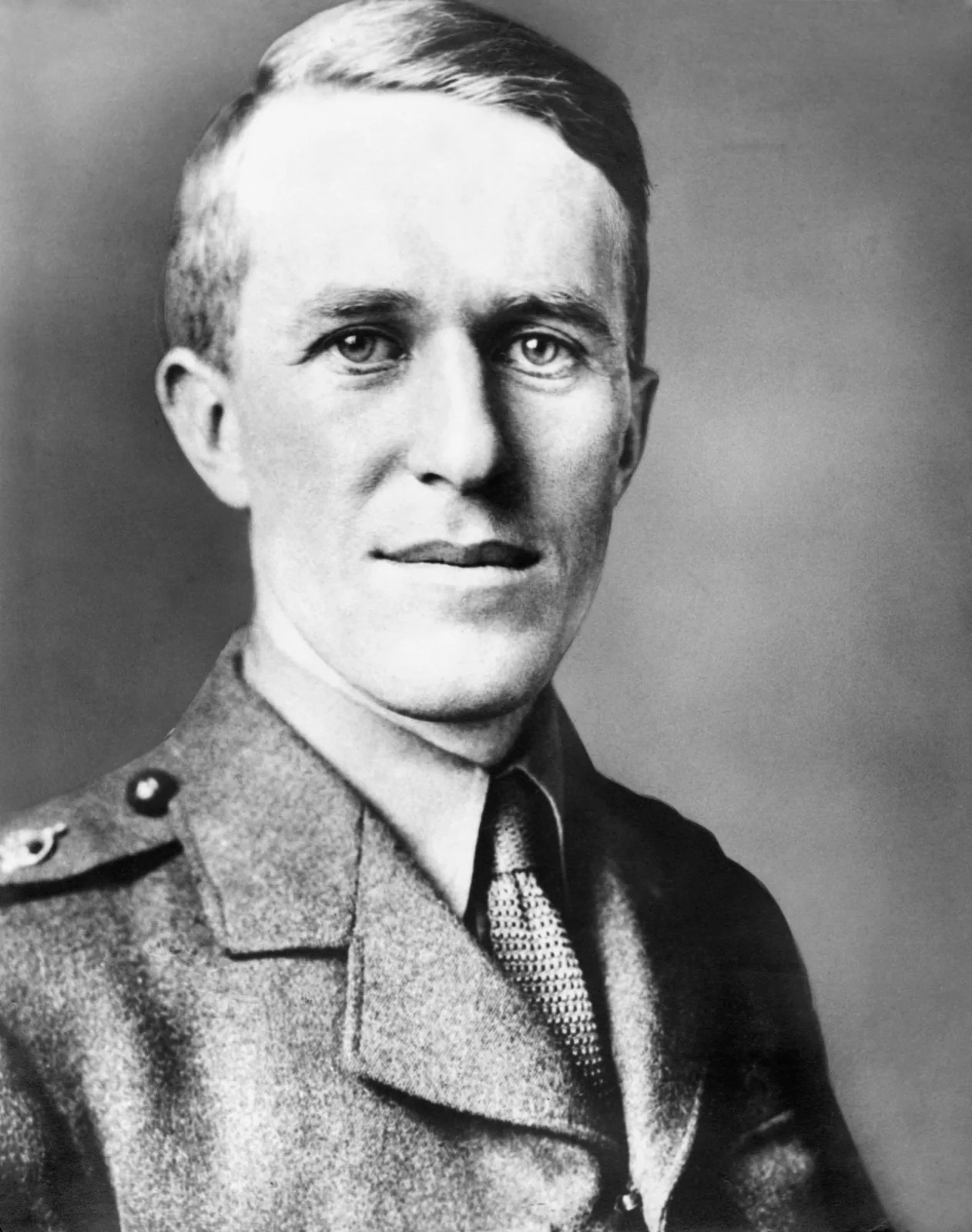
T.E. Lawrence served as a British intelligence officer during World War I, fighting alongside Arab forces against the Ottoman Empire. Born in Wales in 1888, he studied history at Oxford and worked as an archaeologist in Syria before the war. When the Ottomans entered the war in 1914, Lawrence's knowledge of Arabic and the region brought him to the British military headquarters in Cairo. From there he joined the Arab Revolt, where he helped lead guerrilla raids and the surprise capture of Aqaba, a port on the Red Sea, in 1917. After the war, a journalist's traveling show and Lawrence's own memoir, Seven Pillars of Wisdom, made him one of the most famous men in the world. He died in a motorcycle accident in 1935, at forty-six.
How Lawrence joined the Arab Revolt
Before the war, Lawrence was an unlikely soldier. He stood about five feet five, slight and bookish. His father was an Anglo-Irish baronet who had left his wife and adopted a false name to live with the family governess. Lawrence grew up in Oxford, studied medieval history at Jesus College, and in 1910 won a scholarship that sent him to Carchemish, an ancient Hittite site in northern Syria. He spent four years there, learning Arabic and getting to know the region.
When the Ottoman Empire joined Germany and Austria-Hungary in November 1914, Lawrence was posted to the British intelligence office in Cairo. In 1916, Hussein ibn Ali, the Sharif of Mecca, launched a revolt against Ottoman rule. Britain saw the revolt as a way to tie down Ottoman forces and sent officers to advise the Arab leaders. The British sent Lawrence to advise Emir Faisal, one of Hussein's sons, who commanded Arab forces in the field.
Lawrence believed Faisal was the right leader for the revolt and committed himself to the fighting. The war they fought was not trench warfare. It was a guerrilla campaign of camel-mounted raids on Ottoman garrisons, with a central target: the Hejaz Railway, a lone rail line from Damascus to Medina, which Lawrence's forces dynamited again and again.
In July 1917, Lawrence and the tribal chief Auda abu Tayi led a force across a stretch of desert the Ottomans considered impassable. They had set out from Wejh two months earlier with about fifty men and 22,000 gold sovereigns to recruit tribesmen along the way. By the time they reached Aqaba, their force had grown to more than a thousand. They attacked the port from its undefended landward side and took it on July 6, losing only two men. The capture of Aqaba gave the revolt a coastal base for supplies and made Lawrence famous.
The promises Lawrence could not keep
Lawrence urged the Arabs to keep fighting with promises that they would govern their own lands after the war. He appears to have believed those promises himself. But Britain and France had already made a secret deal in 1916. Under the Sykes-Picot agreement, the two powers would split the Ottoman Middle East between them once the war ended. Lawrence knew about the deal. At first, the Arabs he fought alongside did not.
Britain also separately promised a Jewish national home in Palestine through the Balfour Declaration of 1917. By that point, Britain had effectively promised the same territory to two different groups.
After the war, Lawrence went to the Paris Peace Conference in 1919 as Faisal's interpreter and adviser, arguing for Arab self-rule. The conference rejected their case. The postwar settlement divided the region largely along the lines the Sykes-Picot agreement had drawn. France took Syria and Lebanon. Britain took Iraq and Palestine. Faisal was briefly declared king of Syria in 1920, but the French expelled him within months. The British then installed him as king of Iraq. Lawrence had promised the Arabs independence. The postwar settlement gave them none.
Why is Lawrence of Arabia famous?
Once the war ended, an American journalist named Lowell Thomas created a traveling show about Lawrence and the Arab Revolt. Thomas had spent time with Lawrence in the desert in 1918, and the show mixed photographs, film footage, and dramatic narration. It opened in New York in 1919 and moved to London, where it ran for six months. About four million people saw it during its world tour. The show turned Lawrence into one of the most famous British soldiers of the war.
Lawrence wrote his own account in Seven Pillars of Wisdom, which was published in a limited private edition in 1926 and in a full trade edition after his death. It is a long, vivid memoir that has divided readers ever since. Some consider it one of the great war memoirs in English. Others have questioned how much of it is accurate.
Lawrence disliked the celebrity image that built up around him, though he kept feeding it. He tried to disappear by enlisting in the Royal Air Force under the false name John Hume Ross in 1922. When the press discovered him, he was discharged. He then joined the Tank Corps as Private T.E. Shaw before being readmitted to the RAF in 1925. He served there until shortly before his death.
How did Lawrence of Arabia die?
Lawrence left the RAF in February 1935 and retired to a cottage called Clouds Hill in Dorset. On May 13, 1935, he was riding his Brough Superior motorcycle down a narrow lane when he veered to miss two boys on bicycles, went over the handlebars, and suffered a severe head injury. He never regained consciousness and died six days later, on May 19, at forty-six.
The neurosurgeon who treated Lawrence, Hugh Cairns, went on to study motorcycle head injuries, and his research contributed to the eventual requirement for motorcycle helmets in Britain. The 1962 film Lawrence of Arabia, starring Peter O'Toole, introduced the story to a worldwide audience. Lawrence is still one of the most recognized and debated figures of World War I.