
Sharif of Mecca
The Sharif of Mecca was the hereditary Hashemite guardian of Islam's holiest city, an office held for nearly a thousand years until 1925.
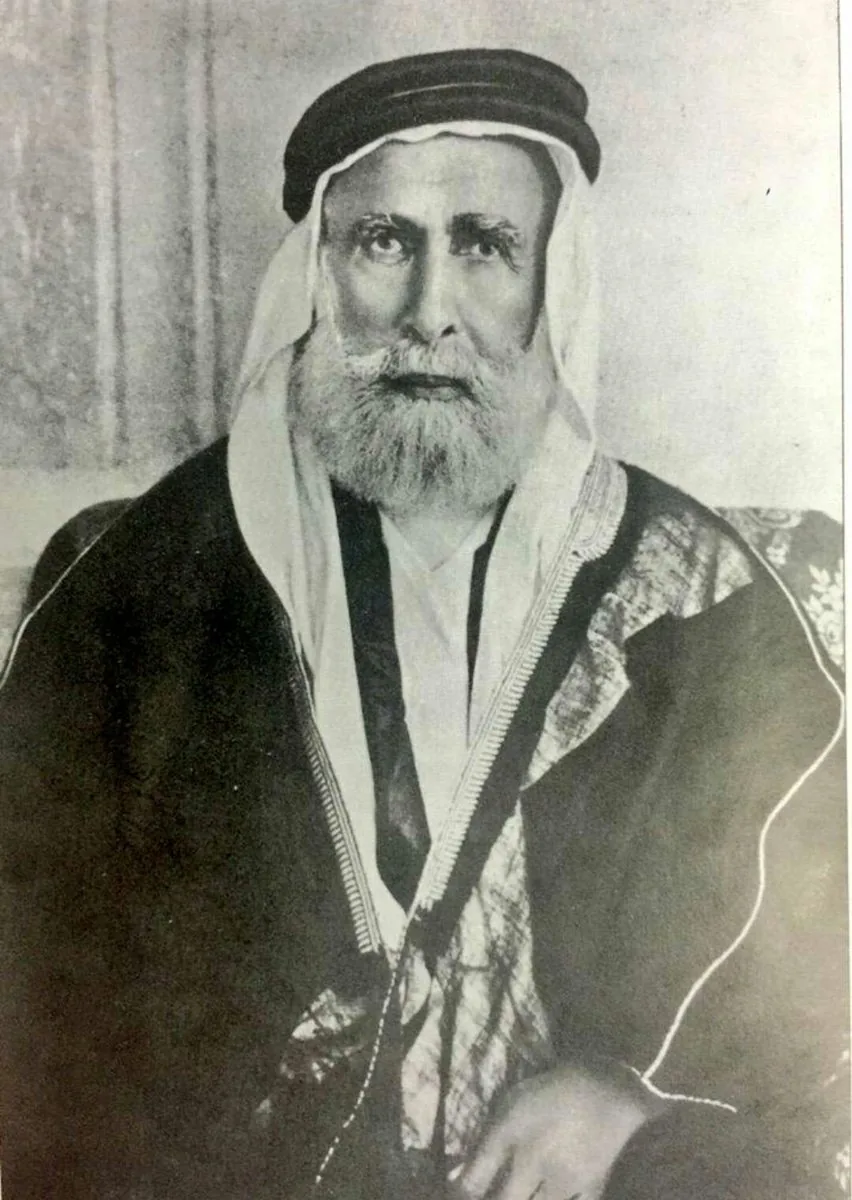
The sharif of Mecca held a hereditary role as guardian of Mecca and Medina, Islam's two holiest cities. The Hashemites, who traced their descent from the Prophet Muhammad through Muhammad's grandson Hasan, held this office from roughly the 10th century. They governed a region called the Hijaz, a narrow band along Arabia's western coast that held both cities, and oversaw the hajj, the yearly pilgrimage that drew believers from Africa, Asia, and Europe. After 1517, the sharif answered to the Ottoman sultan. The Ottomans gained the legitimacy of holding the holy cities, and the sharif kept local control over the Hijaz at the far edge of the empire. The most consequential holder was Hussein bin Ali. He launched an uprising against the Ottomans in 1916 in exchange for a British promise of Arab independence, and lost his kingdom to Ibn Saud nine years later.
How Hussein bin Ali became Sharif and launched the Arab Revolt
Sultan Abdulhamid II appointed Hussein bin Ali as Grand Sharif of Mecca in 1908, partly to remove him from Istanbul, where the Ottoman government had kept him under watch for about fifteen years. Hussein arrived in the Hijaz just as the Young Turks were tightening central control across the provinces. They pushed to extend the Hijaz Railway and placed Turkish administrators in territory the sharifs had run on their own for centuries. Hussein spent his first years as sharif pushing back against that pressure.
When the Ottoman Empire joined the First World War on Germany's side in 1914 and called for a holy war against the Allies, Hussein's endorsement would have given the call weight across the Muslim world. He withheld it. Over eight months, from July 1915 to March 1916, Hussein exchanged a series of letters, ten in all, with Sir Henry McMahon, Britain's senior official in Egypt. Hussein proposed that Britain recognize a single independent Arab kingdom across the Ottoman provinces where Arabic was spoken. McMahon agreed in broad terms but carved out exceptions in vague language, particularly coastal territory west of the line running through Damascus and Aleppo. Whether the promise covered Palestine became one of the most contested questions in Middle Eastern history.
On the basis of that understanding, Hussein launched an armed uprising against the Ottomans in June 1916, later known as the Arab Revolt. Two of his sons, Faisal and Abdullah, commanded the forces in the field. Britain sent money, weapons, and advisers, among them T. E. Lawrence. The campaign pinned down Ottoman troops across the Hijaz and repeatedly cut the railway line that supplied them. Arab forces seized the Red Sea port of Aqaba in July 1917, opening a new front that supported the British advance through Palestine. Faisal's forces entered Damascus in October 1918.
How the Hashemites lost Mecca
Hussein proclaimed himself king in 1916 and claimed sovereignty over all Arabs. Britain and France recognized only his title as King of the Hijaz. The two powers had separately agreed, under the Sykes-Picot agreement of 1916, to split much of the same territory into spheres of influence. Britain had also pledged, through the Balfour Declaration of 1917, to back the creation of a Jewish homeland in Palestine.
The postwar settlement gave the Hashemites thrones but not the unified state Hussein had been led to expect. Faisal took a throne in Damascus in 1920, but the French removed him within months. Britain then installed Faisal as king of Iraq. Abdullah received Transjordan. Hussein refused to sign the treaties that ratified this arrangement, and Britain cut off his subsidy.
In March 1924, the new Turkish republic abolished the Ottoman caliphate. Hussein promptly claimed the title of caliph for himself. The claim angered Muslims elsewhere and gave his rival to the east a reason to move. Ibn Saud, ruler of the Nejd and an ally of the Wahhabi religious movement, sent his forces into the Hijaz in 1924. Hussein abdicated in October in favor of his eldest son Ali, but Ali could not hold the kingdom. Jeddah surrendered in late 1925. The Hashemites lost Mecca after holding it for nearly a thousand years.
The British put Hussein on a ship to Cyprus, where he lived in exile for five years. His wife Adila died there in 1929, and his own health declined sharply after her death. He moved to Amman to live with his son Abdullah and died there on June 4, 1931.
Who controls Mecca today?
Saudi Arabia has held Mecca since Ibn Saud's conquest in 1924. The Saudi king carries the title Custodian of the Two Holy Mosques, a formal claim to the religious authority that once belonged to the sharif. The office of Sharif of Mecca no longer exists. Saudi Arabia manages the annual hajj, and the Saudi state draws a large part of its influence among Muslims from its custody of the holy cities.
The Hashemites still rule in one country. King Abdullah II of Jordan is a direct descendant of Hussein bin Ali, and Jordan is the only Hashemite throne that survived the 20th century. The McMahon-Hussein correspondence, and the question of what exactly Britain promised, is still cited in Arab debates about how the modern Middle East was drawn.