
Muhammad Ali Jinnah
Muhammad Ali Jinnah was a Bombay lawyer who founded Pakistan in 1947, creating the largest state ever built on religious identity.
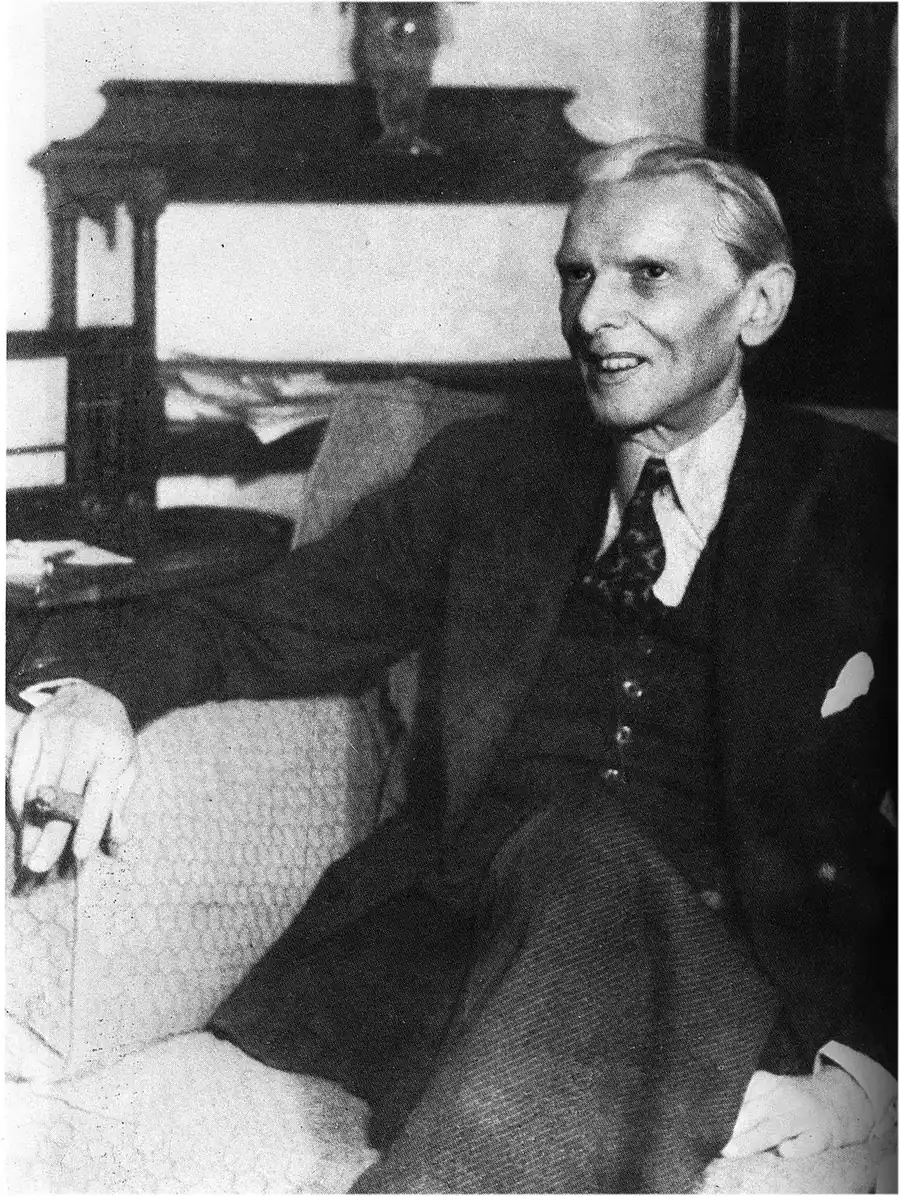
Muhammad Ali Jinnah (1876–1948) was an Indian lawyer and politician who founded Pakistan. Born in Karachi to a Muslim merchant family, he traveled to London at sixteen and became the youngest Indian called to the bar at Lincoln's Inn. He settled in Bombay, earned one of the highest legal incomes in the country, and entered politics as a voice for Hindu-Muslim cooperation. Gopal Krishna Gokhale, a leading Indian nationalist, praised Jinnah's ability to work across religious lines and predicted he would become a unifying force between the two communities. For three decades Jinnah tried to hold India's religious communities together in a single independent country. Then, in 1940, he began arguing that Muslims formed a separate nation and needed a state of their own. On August 15, 1947, he took office as Pakistan's first governor-general. Tuberculosis killed him thirteen months later.
How Jinnah went from unity to partition
In 1906 Jinnah entered politics through the Indian National Congress. Seven years later he also joined the All-India Muslim League, holding membership in both parties at once. In 1916 he brokered the Lucknow Pact between them. The deal gave Muslims separate electorates and reserved legislative seats. In exchange, the League endorsed the campaign for Indian self-rule. It was the high point of cooperation between the two movements, and Jinnah stood at its center.
That cooperation fell apart after 1920. Gandhi took over Congress and built it into a movement of millions, using civil disobedience and religious appeals to rally support. Jinnah believed independence should come through constitutional negotiations, not mass protests that risked disorder. He lost the argument inside Congress, resigned his membership, and moved to London, where he spent years during the 1930s working as a barrister. His political career looked finished.
The 1937 provincial elections revived it. Under a new, broader franchise, Congress won control of most provinces. The League performed badly, taking only about 109 of 482 reserved Muslim seats and failing even in Muslim-majority provinces like Punjab. Congress held power as the sole governing party and refused to share it with the League. For Jinnah this settled things: free elections in a united India would always return a Hindu majority government, and written guarantees would not hold it back.
On March 23, 1940, at Lahore, the League passed a resolution calling for the Muslim-majority regions of India's northwest and east to become separate countries. Jinnah did not frame this mainly as a religious claim. He said Muslims were a people with a distinct history, legal tradition, culture, and collective identity who deserved self-determination, not merely safeguards as a minority inside a Hindu-majority state.
How Pakistan was created
The years 1939–1945 handed the League new leverage. Britain needed Indian support for the war. Congress had resigned from provincial government and launched the Quit India movement. The League offered its cooperation, and in return won recognition as the political voice of India's Muslims.
After the war, in 1946, a British Cabinet Mission proposed a loose federation that would have kept India together. The proposal fell through. Jinnah declared August 16, 1946, a day of mass action, which the League called Direct Action Day. In Calcutta the protests turned into days of communal slaughter that killed an estimated 4,000 to 10,000 people. The violence spread across northern India, and after it, keeping the country together was no longer possible.
The British announced partition in June 1947 and carried it out in ten weeks. The border was published after authority had already been transferred. Between 14 and 16 million people fled across the new lines during the partition of India. Estimates of the dead range from 200,000 to two million.
Jinnah had little time to lead the country he created. He had tuberculosis and had hidden the disease for years. He died on September 11, 1948, at the age of 71, just thirteen months after taking office. In Pakistan he is known as Quaid-i-Azam, "the great leader."
Was Muhammad Ali Jinnah religious?
Jinnah was born Muslim, but he showed little visible interest in theology throughout his life. He wore Western suits, spoke English far more than Urdu, drank alcohol, and ate pork. In 1918 he married Rattanbai Petit, a Parsi woman twenty-three years younger than him, over the objections of both their families. Their only child, a daughter named Dina, later married a non-Muslim against Jinnah's wishes.
His case for Pakistan rested on nationhood, not faith. He argued that Muslims in India were a distinct people because of their shared history, legal traditions, and culture, not because of religious belief. On August 11, 1947, three days before independence, Jinnah addressed Pakistan's constituent assembly. "We are starting with this fundamental principle that we are all citizens and equal citizens of one State," he said. He told lawmakers that every Pakistani could worship wherever they chose, and that the government had no concern with anyone's religion or creed.
That speech is still fought over in Pakistan. Those who want a secular republic treat it as proof that the founder never intended an Islamic state. Those who want an Islamic constitution set it aside. Indian historians raise a different question: whether Jinnah ever truly wanted a separate country at all. Some believe he used the demand for Pakistan as a bargaining position, hoping for a federation that gave Muslims real autonomy. If so, he was trapped when the British and Congress agreed to full partition instead.
Jinnah had no army and no mass following, and his party had been politically irrelevant just ten years before independence. He won a new country through constitutional arguments and relentless negotiation, and died when it was barely a year old. What he meant Pakistan to be remains the central question of Pakistani politics.