
J. Robert Oppenheimer
J. Robert Oppenheimer was the American physicist who directed Los Alamos and led the building of the first atomic bomb.
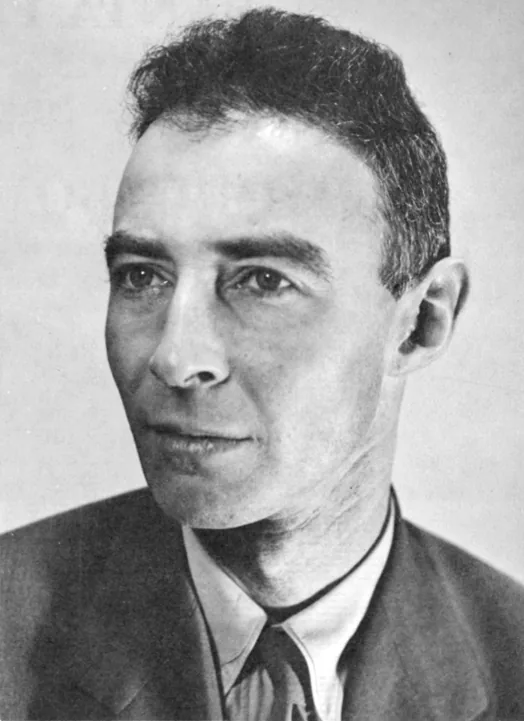
J. Robert Oppenheimer (1904–1967) was an American theoretical physicist who directed the Los Alamos laboratory during World War II and led the team that built the first nuclear weapons. He is often called the father of the atomic bomb.
Born on April 22, 1904, in New York City to a wealthy family of German-Jewish descent, Oppenheimer graduated summa cum laude from Harvard in three years. He earned his doctorate in physics at the University of Göttingen at age 23, then taught at Berkeley and Caltech. He was known as a theorist of unusually wide range. He read Sanskrit for pleasure, loved the New Mexico landscape since horseback-riding trips as a teenager, and was hopeless at anything mechanical. In 1942, the United States Army chose him to run the most important secret weapons program in American history, even though his largest management role to that point was running a university seminar.
How Oppenheimer built the bomb at Los Alamos
General Leslie Groves, the Army engineer in charge of the Manhattan Project, picked Oppenheimer in late 1942. The choice surprised nearly everyone. Oppenheimer held no Nobel Prize. His security file was full of left-wing associations from the 1930s, including friends and family members who were Communist Party members. But Groves judged that this impractical intellectual could lead people, and the judgment proved correct.
Oppenheimer chose the site himself: a remote mesa in northern New Mexico, in a landscape he had known since boyhood. He recruited many of the country's best physicists, including Enrico Fermi, and persuaded them to move their families to a place ringed by barbed wire with no address they could share. He kept dozens of teams communicating across chemistry, engineering, and ordnance under intense time pressure. Colleagues said he could follow and contribute to every discipline represented in a seminar full of specialists. He held the full scope of the project in mind, from bomb physics to housing shortages on the mesa. He mediated between scientists who resisted authority and military officers who did not trust civilians with secrets.
What began as a small team became a community of several thousand and produced a usable weapon in slightly more than two years. On the morning of July 16, 1945, at 5:29, the team detonated the world's first nuclear device at a test site in the New Mexico desert, an event code-named Trinity. Weeks later, atomic bombs developed at Los Alamos destroyed Hiroshima on August 6 and Nagasaki on August 9. An estimated 200,000 people died from the two bombings and their aftermath by the end of 1945, and Japan surrendered.
Why did Oppenheimer lose his security clearance?
After the war, Oppenheimer became the most influential scientific adviser in the American government. He chaired the General Advisory Committee of the Atomic Energy Commission and argued for international control of nuclear weapons. In January 1950, five months after the Soviet Union tested its first atomic bomb, President Truman ordered an urgent effort to develop the hydrogen bomb, a weapon hundreds of times more powerful. Oppenheimer opposed it. He argued the hydrogen bomb could only destroy whole populations and served no legitimate military goal.
His opposition made powerful enemies. The most dangerous was Lewis Strauss, the chairman of the Atomic Energy Commission, whom Oppenheimer had publicly embarrassed in a 1949 congressional hearing. In December 1953, during the McCarthy era, when fear of Communist infiltration gripped Washington, the commission suspended Oppenheimer's security clearance. A three-member security board held hearings in Washington in April and May 1954. The charges listed 23 allegations of Communist associations from the 1930s and one charge related to his opposition to the hydrogen bomb. The board found him loyal but voted 2–1 to revoke his clearance. The full commission upheld the decision 4–1 in June 1954.
Oppenheimer never held government influence again. He continued as director of the Institute for Advanced Study in Princeton, a position he had held since 1947. In 1963, President Kennedy chose him for the Enrico Fermi Award, the government's highest honor for work in nuclear science. Kennedy was assassinated before he could present it. President Johnson gave Oppenheimer the award at the White House that December. Oppenheimer died of throat cancer on February 18, 1967, at age 62.
In December 2022, Energy Secretary Jennifer Granholm formally vacated the 1954 decision. She called the process flawed and said the evidence of Oppenheimer's loyalty had only been confirmed over time.
What did Oppenheimer say after the bomb?
Oppenheimer described the Trinity test in a 1965 television interview for the NBC documentary "The Decision to Drop the Bomb." Watching the fireball, he said, he thought of a verse from the Hindu scripture the Bhagavad Gita. "Now I am become Death," he told the camera, quoting the scripture he had studied in the original Sanskrit, "the destroyer of worlds."
The quote became the most famous words associated with the atomic age. The line comes from a passage where the god Vishnu reveals his terrifying form to a prince to persuade him to do his duty. Oppenheimer gave this recollection twenty years after the test. Historians have debated whether he really thought of it in the moment or shaped the memory later. Either way, the words fixed him in public memory as the reluctant creator of a weapon that changed warfare.
In a 1947 lecture at MIT, Oppenheimer said that "the physicists have known sin; and this is a knowledge which they cannot lose."