
Reformation
The Reformation was the sixteenth-century split in Western Christianity, begun by Martin Luther in 1517, that divided Europe into Catholic and Protestant.
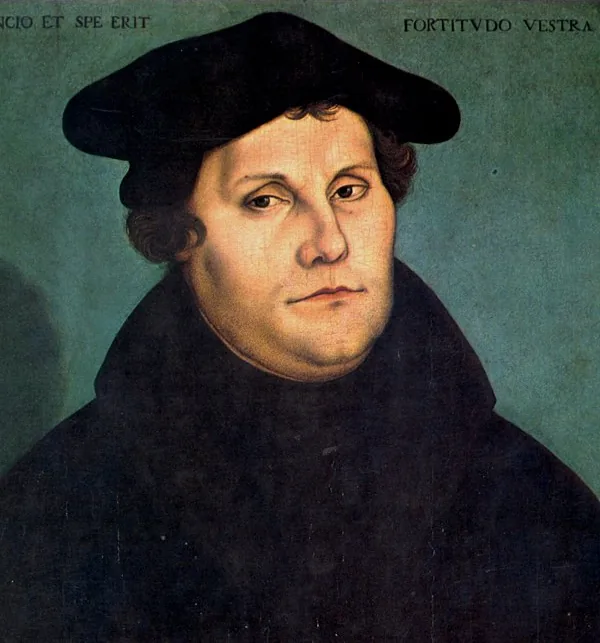
The Reformation was the split in Western Christianity that began in 1517 when a German theology professor named Martin Luther challenged the authority of the Catholic Church. What started as an academic dispute about the sale of indulgences grew into a movement that divided Europe's Christians into Catholics and Protestants, redrew the continent's political map, and set off more than a century of religious war. By the time the fighting ended with the Peace of Westphalia in 1648, the old order of one church under one pope was finished. In its place was a continent of sovereign states, each choosing its own faith.
How Martin Luther started the Reformation
Martin Luther was born in 1483 in Eisleben, in what is now eastern Germany. His father was a copper miner who had worked his way up to owning his own mines and wanted his son to become a lawyer. Luther finished second in his class at the University of Erfurt and had just begun studying law when a thunderstorm changed his plans. Caught in the open in July 1505, he promised Saint Anne he would become a monk if he survived. Two weeks later he entered an Augustinian monastery, to his father's anger.
Luther became a priest, then a theology professor at the University of Wittenberg. The trigger for his public protest was a Dominican friar named Johann Tetzel, who traveled through Germany selling indulgences. Indulgences were certificates that promised to reduce the time a dead person's soul spent in purgatory. Tetzel was raising money to help pay for the construction of St. Peter's Basilica in Rome, and he reportedly used the sales pitch: "As soon as the coin in the coffer rings, the soul from purgatory springs."
On October 31, 1517, Luther published ninety-five arguments against the Church's sale of indulgences. He wrote them in Latin for scholarly debate, not popular revolution. But copies were quickly translated into German. With the help of the printing press, which by then was about seventy years old and widely available, the theses reportedly spread across Germany within two weeks and across Europe within two months. Luther followed up with short pamphlets written in German so ordinary people could read them. A printer could produce one in a single day, and a copy cost about as much as a chicken. Luther's writings eventually sold millions of copies, and illustrated broadsheets carried his message to people who could not read. The spread of Luther's ideas outran the ability of Church authorities in Rome to respond.
Luther's argument grew wider. He came to believe that faith alone was enough for salvation, that the Bible outranked the pope and church councils, and that the papacy itself was part of the corruption. In 1521, Emperor Charles V summoned Luther to the Diet of Worms, an assembly of the Holy Roman Empire, and ordered him to take back his writings. Luther, then 37, refused. He told the assembly that his conscience was "captive to the Word of God" and that he could not recant. Weeks later, the Edict of Worms formally declared Luther a heretic and banned his writings. But Luther went into hiding under the protection of a sympathetic German prince, and by then his ideas had spread too far to contain.
How the Reformation split Christianity
Luther's followers became known as Lutherans, but the Protestant movement quickly fractured. In Geneva, a French-born lawyer named John Calvin arrived in 1536, was expelled two years later, and returned in 1541 to build a tightly ordered Protestant city-state. Calvin's stricter form of Protestantism spread to France, the Netherlands, and Scotland. In England, King Henry VIII broke with Rome in 1534, not over theology but because the pope refused to annul his marriage to Catherine of Aragon. Henry declared himself Supreme Head of the Church of England.
Western Christianity, which had been a single institution for over a thousand years, was now many separate churches, each claiming to hold the truth. The Catholic Church responded with its own Counter-Reformation, addressing some internal abuses and pushing back against Protestantism.
The Reformation also redistributed political power. Princes who adopted Protestantism could take over monastery estates and Church revenues and free themselves from papal authority. What looked like a religious dispute was also a contest over land, money, and sovereignty.
Why did the Reformation lead to war?
The question of which territories would be Catholic and which Protestant could not be settled by debate. In 1555, the Peace of Augsburg offered a compromise: each German prince would choose the religion practiced in his territory, a Latin formula, "cuius regio, eius religio," meaning that each ruler would set the faith of his lands. It produced only a temporary truce.
The deeper conflict erupted in the Thirty Years' War, which lasted from 1618 to 1648 and killed millions of people across Europe. What began as a fight among German princes drew in France, Sweden, Spain, and other powers. Famine and disease killed far more people than the battles did. Some regions of Germany lost close to half their population.
The war ended with the Peace of Westphalia in 1648. It established that sovereign states, not the pope, would decide their own religious and political affairs. The principle of state sovereignty that came out of Westphalia remains a foundation of international law. Luther, who died in 1546, had set out to reform one church. The movement he started replaced a unified Christendom with dozens of competing churches and helped create the modern system of sovereign states.