
Robert Clive
Robert Clive was the British soldier who won Bengal for the East India Company at the Battle of Plassey in 1757, launching British rule in India.
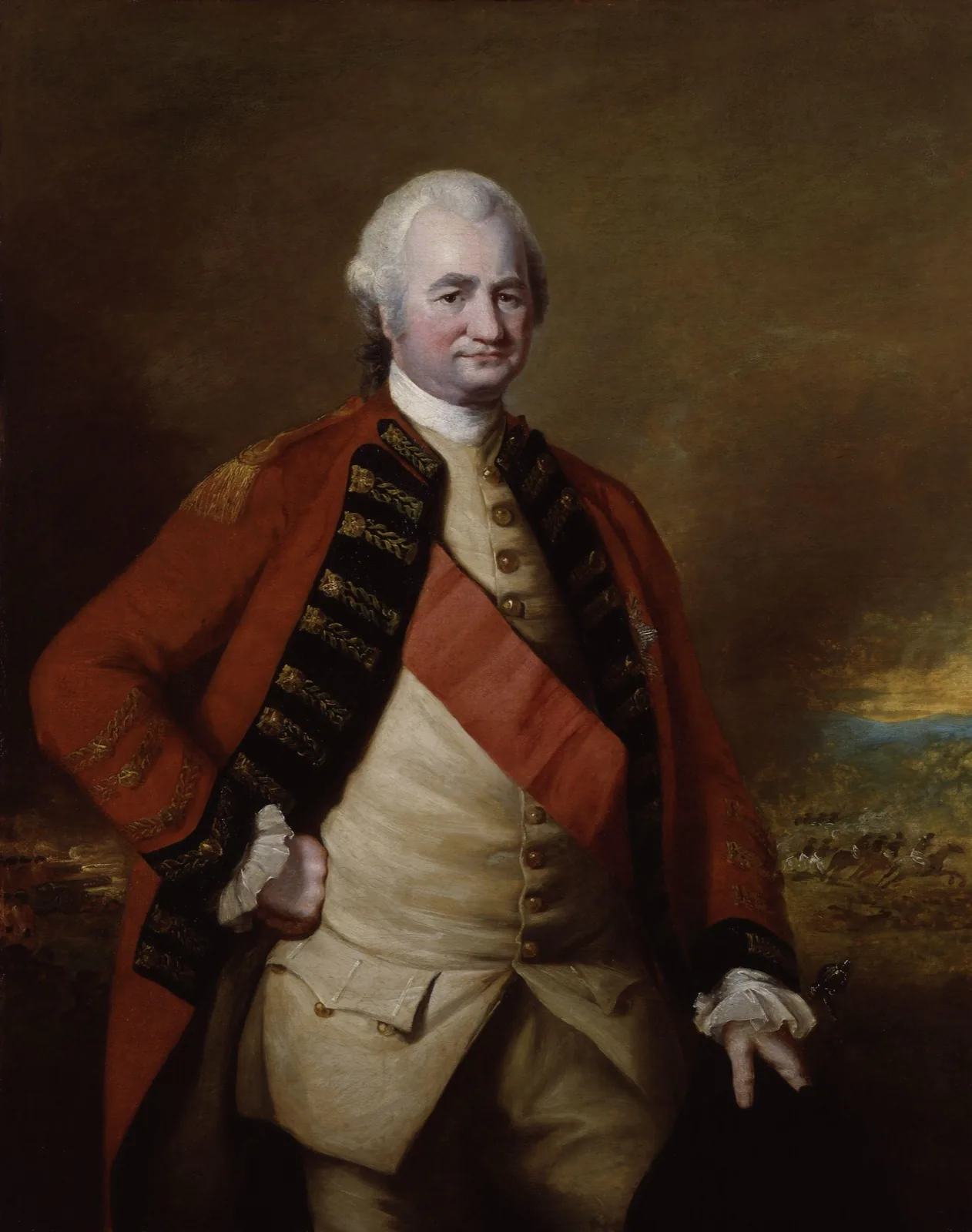
Robert Clive (1725–1774), known as Clive of India, was a British soldier and administrator who conquered Bengal for the East India Company and turned a trading venture into the governing power of India's richest province. He arrived in India in 1744 as an 18-year-old clerk. Within fifteen years he commanded the Company's army in Bengal, won the Battle of Plassey by bribing the enemy's own general, and later secured the right to tax tens of millions of people on behalf of a private corporation. He returned to Britain enormously wealthy and widely resented. Parliament investigated him and voted that he had both taken a fortune and done great service. He killed himself in 1774, aged 49.
How Robert Clive won Bengal for the East India Company
Clive was born in Shropshire in 1725, the son of a minor landowner. By all accounts he was restless and difficult as a boy. He reached Madras in 1744 as a junior clerk for the Company, and according to a story his companions later told, twice attempted suicide before finding that soldiering suited him better than office work.
The Company in the 1740s was a trading operation. It ran a few coastal forts and competed with France for access to Indian markets. Clive proved himself during the Company's wars with France in southern India, most notably at the siege of Arcot in 1751, where he held a garrison against a much larger force for weeks. The victory made him famous in both Britain and India. In February 1753 he married Margaret Maskelyne in Madras. Her brother Nevil later became Britain's Astronomer Royal.
By 1756 the Company was at war with Bengal's ruler, Siraj-ud-Daulah. The Nawab had captured Calcutta and, according to British accounts, confined European prisoners in a tiny cell in the incident known as the Black Hole of Calcutta. Clive recaptured Calcutta and moved to overthrow the Nawab.
Before the Battle of Plassey on June 23, 1757, Clive secretly offered the throne to Mir Jafar, who commanded the Nawab's army. When the fighting began, Mir Jafar's troops, a large part of the Nawab's roughly 50,000-strong army, refused to fight. Clive's roughly 3,000 soldiers won the battle and lost about 22 men. Siraj-ud-Daulah fled, was captured, and was executed. Mir Jafar took the throne as the Company's puppet. He paid the Company and its officers millions of pounds as the price of his throne.
How the East India Company ruled Bengal after Plassey
Clive personally received a jagir, a grant of land revenue from the territory around Calcutta, worth about £27,000 a year. Other Company men followed his example and stripped Bengal of its wealth.
In 1765 Clive returned to India and secured the diwani from the Mughal emperor: the right to collect all land revenue in Bengal, Bihar, and Orissa. A trading company now collected taxes from tens of millions of Indians. Under this arrangement, the Company took the revenue while Indian officials handled day-to-day governing. London got the profit, and Indians bore the consequences.
Those consequences were catastrophic. Drought struck in 1769, and the Company's refusal to reduce its tax demands turned a bad harvest into a disaster. The famine that struck Bengal in 1770 killed an estimated 10 million people, roughly a third of the province's population, while the Company kept collecting its taxes. The Company Clive had armed went on to rule most of India for another century before handing control to the British Crown in 1858.
How did Robert Clive die?
Clive returned to Britain with a fortune and a reputation for plunder. He was the original "nabob," the word the press used for Company men who came home rich from India at the expense of the people they governed. In 1772 and 1773 Parliament held hearings on corruption in Bengal. Clive defended himself with a line that became famous: given the wealth available to him, he told Parliament, "I stand astonished at my own moderation." The House of Commons condemned the principle of private enrichment from conquest. It also voted that Clive had rendered "great and meritorious services to his country."
By then Clive was in poor health and relied on opium to manage his pain. On November 22, 1774, he died at his home in London at the age of 49. The exact manner of his death is disputed. Some contemporary accounts said he cut his own throat with a penknife, while others pointed to an opium overdose. In either case, it was a suicide.
Clive showed the Company that it could conquer territory in India with a small force, buy a local ally, and fund the conquest from the conquered territory's own revenue. That method built British India.