
Roman Senate
The Roman Senate was the council of former magistrates that guided the Roman Republic and continued under the emperors for over a thousand years.
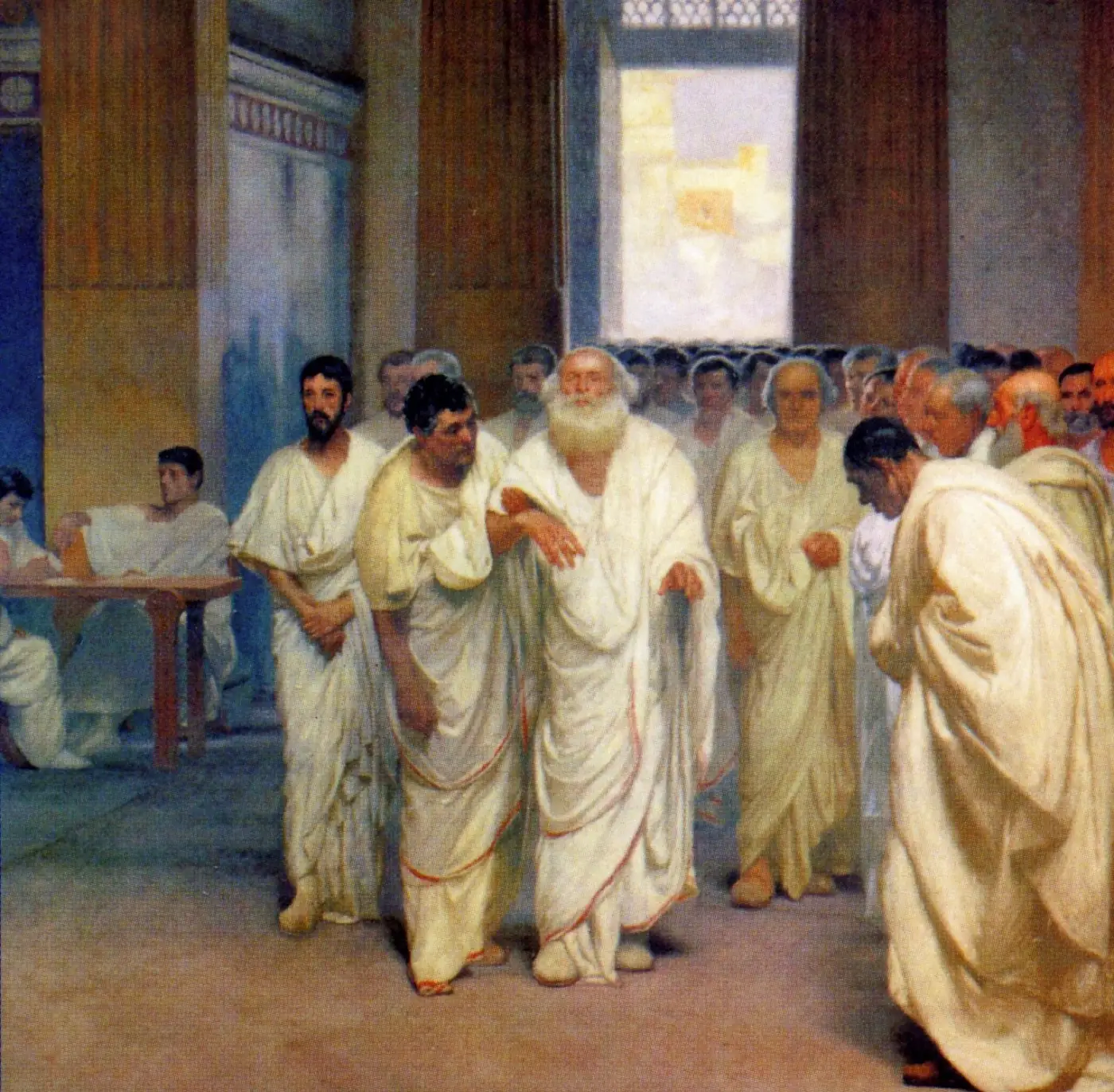
The Roman Senate was the council of former magistrates that governed the Roman Republic from 509 BCE until the emperors took power in 27 BCE. It could not pass laws, command armies, or elect officials. Its power came from auctoritas, the weight that Roman society gave to the collective judgment of its wealthiest and most experienced men. Because the Republic's elected officials rotated out every year, the Senate was the one permanent institution with governing experience. The Senate controlled Rome's finances, met with foreign ambassadors, decided which generals received which armies and provinces, and supervised religious observances. The letters SPQR, short for Senatus Populusque Romanus, meaning "the Senate and People of Rome," were stamped on coins and public buildings across the Roman world.
How the Senate governed the Republic
The Senate met in the Curia, a hall at the edge of the Roman Forum. A consul or senior magistrate called each session, set the agenda, and asked senators to speak in order of rank. Sessions were open to the public, and people could sit outside the doors to listen. When the Senate reached a decision, it issued a decree. Magistrates were not legally bound to follow the Senate's advice, but ignoring it meant losing the support of the men who controlled Roman politics.
The Roman Republic was not a democracy. Citizens voted in assemblies, but the voting system was weighted toward the wealthy, and ordinary Romans rarely set policy against the Senate's wishes. Real power belonged to a few hundred men from a narrow aristocracy who had served together in office and whose families had held seats for generations.
Cicero was a rare outsider who reached the top. In 63 BCE he became consul despite having no senators anywhere in his family line, the first "new man" to reach that office in more than thirty years. During his consulship Cicero uncovered a conspiracy by a senator named Catiline to overthrow the government and delivered a series of speeches to the Senate and the people that are still studied today. His career showed that an outsider with enough talent could reach the consulship, but also how rarely it happened.
The system worked well enough to take Rome from a city-state to the dominant power in the Mediterranean over three centuries. But in the Republic's last century, generals and politicians fought over whether the Senate's hold on power should be loosened, and each round of conflict left more traditions broken.
How the Senate lost its power
After winning a civil war that began in 49 BCE, Julius Caesar ruled Rome as dictator and reshaped the Senate. He packed it with his own supporters, expanding its membership from about 600 to 900, and added men from Gaul and Spain. The old families saw their chamber being diluted and their influence shrinking. On March 15, 44 BCE, a group of at least 60 senators stabbed Caesar to death at a Senate meeting in the Theatre of Pompey. The conspirators, led by Marcus Junius Brutus and Gaius Cassius Longinus, believed they were saving the Republic. Instead they started another civil war, and Caesar's adopted heir Octavian, just 18 years old when Caesar was killed, won it.
In 27 BCE, Octavian took the name Augustus and became Rome's first emperor. He reduced the Senate back to 600 members and removed men he considered unfit. He kept its ceremonies, debates, and decrees while controlling who sat in the chamber. Senators still filled the highest positions in government, and what the Senate voted on was still legally binding. But the Senate commanded no legion, and Augustus decided every important question himself. He had learned from Caesar's murder that abolishing the Senate would invite resistance. Leaving it in place, under his control, was safer.
Under later emperors the ceremonies continued but the emperor made every real decision. The emperor Caligula reportedly threatened to make his horse a consul. Whether or not the story is true, it captured what the Senate had become: a body whose members served at the emperor's pleasure. The Senate continued to meet for centuries. It outlasted the fall of the western Roman Empire in 476 CE, and its last recorded act in the west dates to around 603 CE. In Constantinople, a separate eastern Senate carried on into the 1200s. The United States Senate, the French Senate, and dozens of other modern legislatures take their name from the Roman original.
How were Roman senators chosen?
Roman senators were not elected by the public. During the Republic, a senator earned his seat by serving as a magistrate, usually starting as a quaestor, the entry-level financial office. An official called the censor reviewed the Senate's membership every five years and could add or remove names. Once enrolled, a senator held his seat for life unless the censor removed him for misconduct or financial ruin.
For most of the early Republic, patricians, Rome's hereditary upper class, dominated the Senate. After plebeians won the right to hold the consulship in the 300s BCE, more of them entered the Senate, but in practice most senators still came from a few hundred established families. By the time of Augustus, a senator needed property worth at least one million sesterces, a fortune equivalent to millions of dollars today. Senators were not paid. They were expected to spend their own money on public duties, games, and building projects. Augustus set the minimum age for entry at 25.
At the start of the Republic the Senate had about 300 members. The dictator Sulla raised the number to 600 around 80 BCE. Julius Caesar expanded it to 900. Augustus cut it back to 600, and the size stayed roughly there for more than three centuries.