
Saddam Hussein
Saddam Hussein ruled Iraq from 1979 to 2003, starting two wars and using chemical weapons on his own citizens.
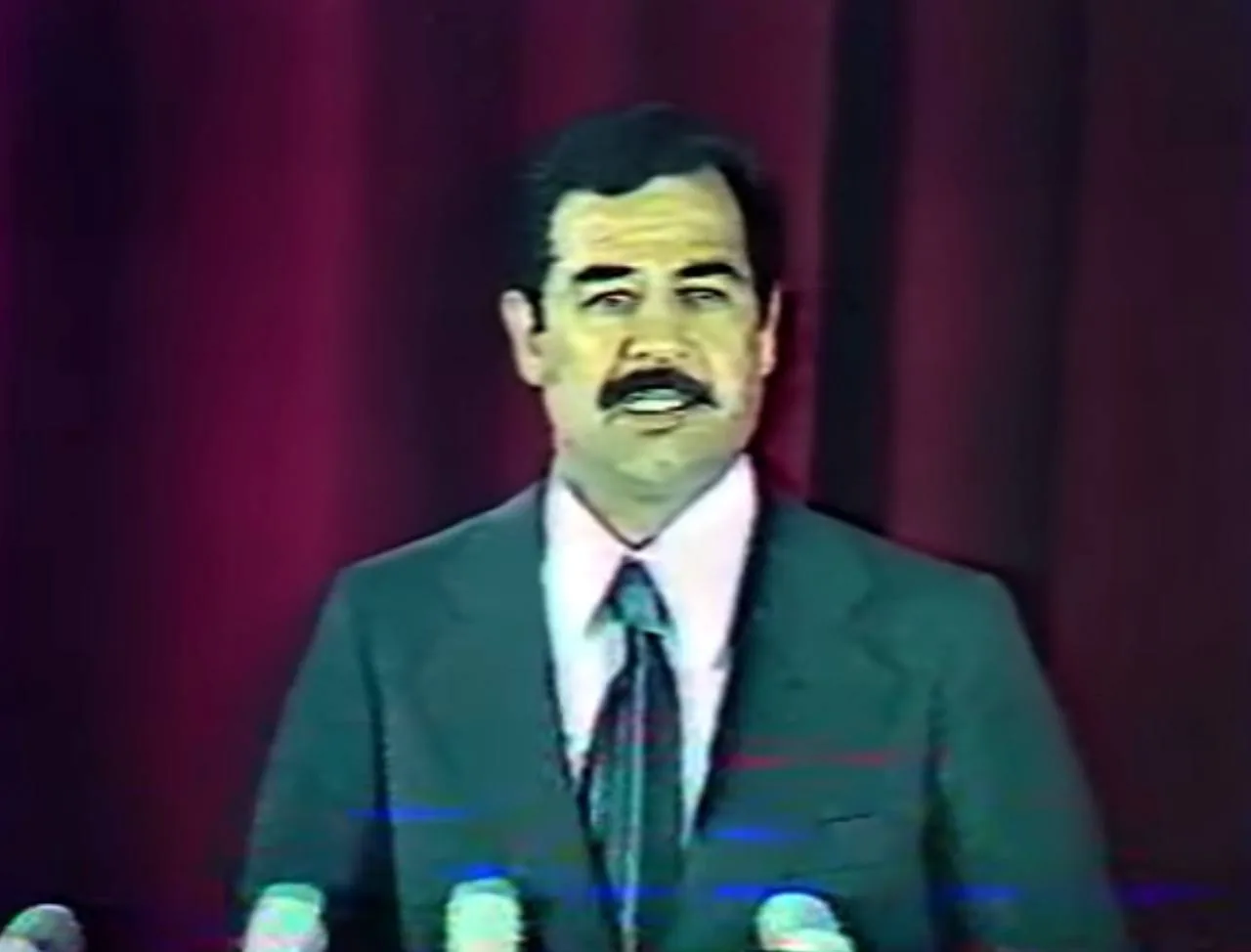
Saddam Hussein was the president of Iraq from 1979 to 2003. He grew up in poverty near Tikrit, became a member of the Ba'ath Party at age 20, and spent eleven years running Iraq's internal security services before taking power. He started two wars, invading Iran in 1980 and Kuwait in 1990, and used chemical weapons on both Iranian soldiers and Iraqi Kurdish civilians. His forces killed tens of thousands of Kurds in the Anfal campaign of 1988. In December 2003, nine months after American forces invaded Iraq, soldiers found Saddam hiding in a hole on a farm near his hometown. He was tried for ordering a massacre and hanged on December 30, 2006.
How Saddam Hussein took power
Saddam was born on April 28, 1937, in al-Awja, a small village near Tikrit. His father was absent, and a violent stepfather raised him. He joined the Ba'ath Party at age 20 and quickly proved he was willing to use violence for it. In October 1959, at age 22, he joined a five-man team sent to kill Iraq's prime minister, Abd al-Karim Qasim. The team killed Qasim's driver but only wounded Qasim. Saddam was shot in the leg and escaped to Cairo.
The Ba'athists took permanent control of Iraq in 1968. Saddam chose not to become president. Instead, he took charge of internal security, which meant he controlled who was surveilled, who advanced and who vanished. Ahmed Hassan al-Bakr, his older cousin, served as president. For eleven years Saddam built his position until no one in the party could challenge him.
Saddam formally became president in July 1979. Six days later, on July 22, he called a meeting of the senior Ba'ath leadership in a hall in Baghdad. A detained official read out a forced admission of involvement in an alleged Syrian-backed plot. Saddam then began reading names from a list. Guards led each named man out of the room as those still in their seats shouted pledges of loyalty. Saddam had twenty-two of them sentenced to death. He ordered the surviving officials to take part in the executions, which bound them to the killings. Saddam had the entire event recorded on video and smoked a cigar the whole time.
Saddam Hussein's wars
In September 1980 Saddam invaded Iran. He expected that Khomeini's revolution had wrecked Iran's military, and that Iraqi forces could take Khuzestan, Iran's oil-producing border province, within weeks. The Iran-Iraq war lasted eight years. Estimates of the dead range from 500,000 to one million on both sides. The frontlines returned to roughly where they had been before the war.
During the war Iraq attacked Iranian troops with mustard gas and nerve agents and launched ballistic missiles into Iranian cities. Western governments, which preferred Saddam to Khomeini, provided Iraq with intelligence, credit and diplomatic cover.
In 1987 and 1988 Saddam turned the same chemical weapons on Iraq's Kurdish population. The Anfal campaign, led by Saddam's cousin Ali Hassan al-Majid, destroyed about 2,000 villages and killed an estimated 50,000 to 100,000 people according to conservative counts. Kurdish authorities cite higher figures. On March 16, 1988, Iraqi aircraft dropped mustard gas and nerve agents on the town of Halabja, killing roughly 5,000 civilians in hours. Most of them were women and children.
On August 2, 1990, Iraq invaded Kuwait. A thirty-four-nation coalition led by the United States drove Iraqi forces out in six weeks. For the next twelve years Iraq lived under harsh international sanctions. Saddam crushed Shia and Kurdish uprisings that the United States had encouraged but then did not support. He also kept it deliberately unclear whether Iraq still had weapons of mass destruction, which it did not.
How was Saddam Hussein captured?
The United States invaded Iraq in March 2003, and the government fell within three weeks. On December 13, 2003, American special operations soldiers found Saddam hiding in a small underground space on a farm in ad-Dawr, near Tikrit. He was armed with a pistol but did not resist, and no shots were fired.
Saddam was tried by the Iraqi High Tribunal for the 1982 Dujail massacre. After residents of the village fired on his motorcade, Saddam had ordered the killing of 148 men and boys. He was sentenced to death on November 5, 2006, and hanged on December 30, 2006. A separate trial for the Anfal campaign was still under way when he was executed, so the court never reached a verdict on his largest crime.
What happened to Iraq after Saddam Hussein?
After the 2003 invasion, the American-led occupation dissolved the Iraqi army and purged the Ba'ath Party from government. This removed Saddam's loyalists but also the administrators, engineers and officers who ran the country. Hundreds of thousands of trained soldiers lost their jobs overnight.
Many of those former officers joined the Sunni insurgency that grew after the invasion. About a decade later, former Ba'athist military leaders provided much of the command structure of the Islamic State, which seized a third of Iraq in 2014.
Britain had created Iraq in 1921 by joining three Ottoman provinces: one mostly Kurdish, one mixed Sunni and Shia Arab, and one mostly Shia Arab. After 2003 the country fractured along roughly the same lines. More than twenty years later, Iraq holds together as a single state, but its politics remain shaped by sectarian division, competing militias, and the rivalry between the United States and Iran.
Saddam Hussein remains a much-studied modern case of what happens when a dictator who holds a divided state together is removed without a plan for what comes after.