
Baath Party
The Baath Party was an Arab nationalist movement founded in 1947 to unify the Arab world that instead produced rival police states in Iraq and Syria.
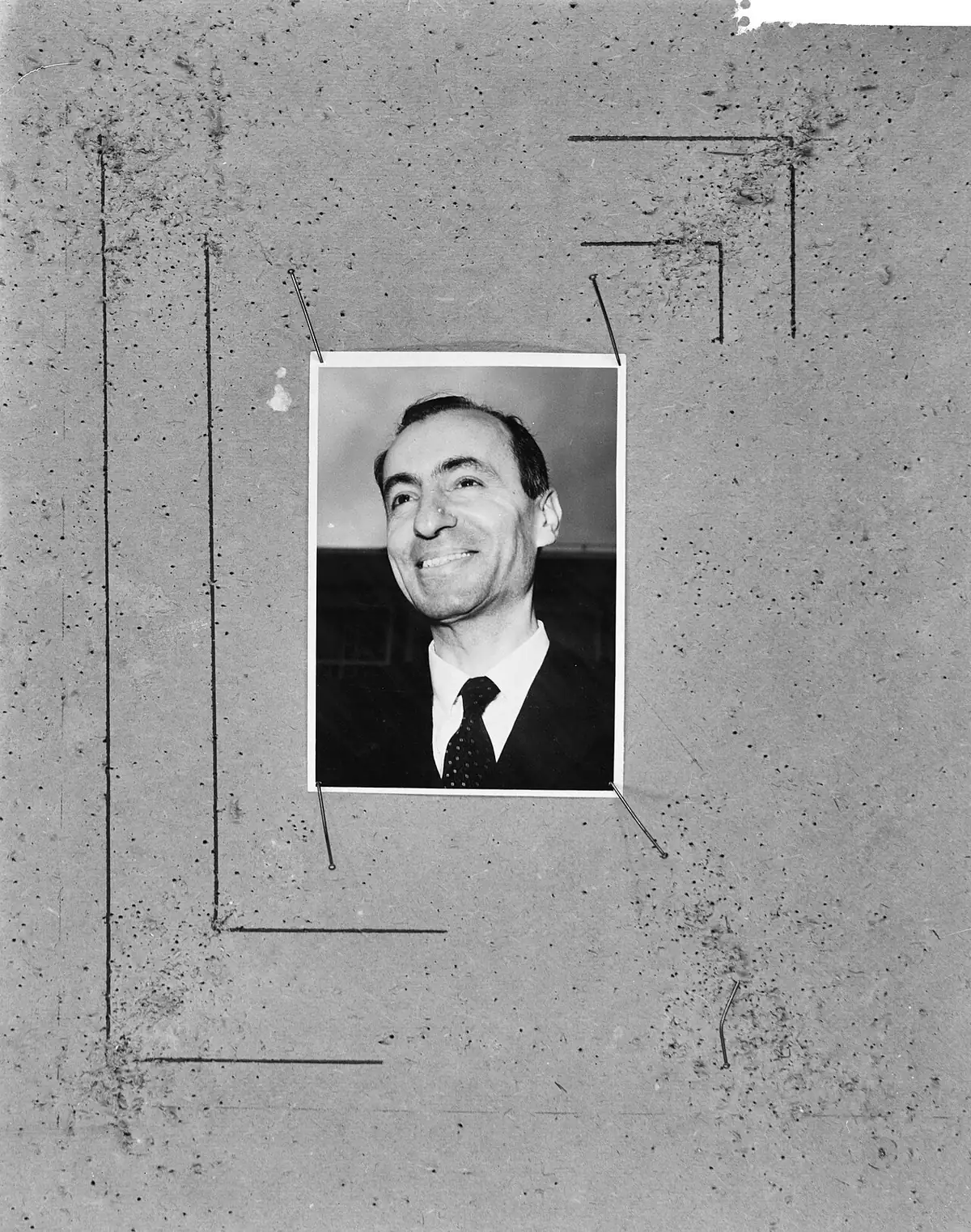
The Baath Party was an Arab nationalist political party founded in Damascus in 1947. Its name means "resurrection" in Arabic. The founders wanted to erase the borders that Britain and France had drawn across the Arab world after World War I and unite the Arabs into a single secular state. Their slogan was "Unity, Freedom, Socialism." The party took power in both Syria and Iraq in 1963 and eventually divided into two hostile branches. Instead of uniting the Arab world, each branch built a one-party state run by a minority sect, and the two paid for each other's opponents for decades. Iraq's branch was dissolved after the American invasion in 2003. Syria's collapsed when the Assad government was overthrown in December 2024.
How the Baath Party began
Three Damascus schoolteachers who had studied in France are credited with founding the party, which was created at a congress on April 7, 1947. Michel Aflaq came from a Greek Orthodox Christian family. Salah al-Din al-Bitar was Sunni Muslim. Zaki al-Arsuzi was Alawite. The range of faiths among the founders was the point of the movement. They argued that the Arabs were one nation broken apart by colonial powers, and that faith was personal, not political.
Their secular nationalism made a specific promise to the region's minorities. In a place where Sunnis were the majority, Christians, Alawites, Druze, and other smaller communities could join the national project as full members. Religious politics could not offer them that. The promise shaped who the party attracted, and, later, who ended up ruling through it.
In 1953 the party absorbed the Arab Socialist Party, led by Akram al-Hourani, which brought a network of contacts among Syrian military officers. The Baath recruited heavily inside the armed forces of both Syria and Iraq, the fastest path to power in the postcolonial Arab world. Baathists helped bring about Syria's union with Gamal Abdel Nasser's Egypt in 1958, though the union required dissolving the party and fell apart when Syria withdrew in 1961.
How the Baath Party split into two rival states
In Iraq, Baathist military officers overthrew the government in February 1963, lost power nine months later, and seized it permanently in 1968. In Syria, Baathist officers assumed control in March 1963 and kept it for more than sixty years.
In 1966, younger and more radical members of the Syrian branch pushed the founders out. Aflaq left the country and eventually settled in Baghdad, where the Iraqi branch treated him as the legitimate leader of the whole movement. The result was two competing Baath organizations. Each maintained its own chain of command and insisted it represented the true party.
In practice, both built the same kind of government. There was one permitted political party that had merged with the state. Overlapping security agencies watched the country and each other. Power was concentrated in a small circle drawn from one religious community, and the leader was surrounded by a cult of personality.
Hafez al-Assad, an air force officer, seized control of Syria in 1970. His government drew its inner circle from the Alawite community, roughly 10 to 15 percent of Syria's population, while the majority was Sunni. In Iraq, Saddam Hussein climbed to the top through the party's intelligence and enforcement agencies. His inner circle was Sunni Arab, about 15 to 20 percent of Iraq's population, holding power over a country where Shia Arabs were the majority and Kurds dominated the north.
The two governments looked nearly identical in structure, and they despised each other. During the Iran-Iraq War, Syria supported Iran, making it one of the few Arab governments to take Tehran's side. Iraq responded by arming groups opposed to the Syrian government. Each country took in the other's political exiles.
What happened to the Baath Party in Iraq?
After the American invasion in 2003, Iraq's Baath Party was outlawed. The occupation authority issued an order barring senior Baathists from public life, pushing as many as 100,000 people out of government jobs. Many were teachers, engineers, and low-level officials who had signed up because a government career required party membership. The American authorities also disbanded the entire Iraqi military.
This left a large number of trained people with military experience, real grievances, and no place in the new order. Many joined the armed resistance against the new Iraqi government. A significant share of the Islamic State's military leadership came from Saddam's old army and intelligence services. These former officers knew how to organize fighters, run logistics, and control territory. A movement built to overcome sectarian divisions ended up providing experienced commanders to one of the most sectarian forces in modern history.
The end of the Baath Party in Syria
Syria's Baath branch outlasted Iraq's by two decades. Hafez al-Assad died in 2000 and passed power to his son Bashar, who maintained the same system. When the Arab Spring reached Syria in 2011, the government responded with force, and the country descended into a civil war that killed hundreds of thousands and displaced millions.
In December 2024, opposition forces swept across Syria and brought down the Assad government. The Baath Party suspended all its operations and handed its assets to the state. With both branches gone, the party that set out to unite the Arab world had instead produced two hostile one-party states. It never delivered the unity, freedom, or socialism it promised.