
What happened to ISIS after the caliphate fell?
ISIS lost its territory in 2017. By 2026, Syria's prison camps have emptied, the war has shifted to Africa, and the group is on its fifth leader.
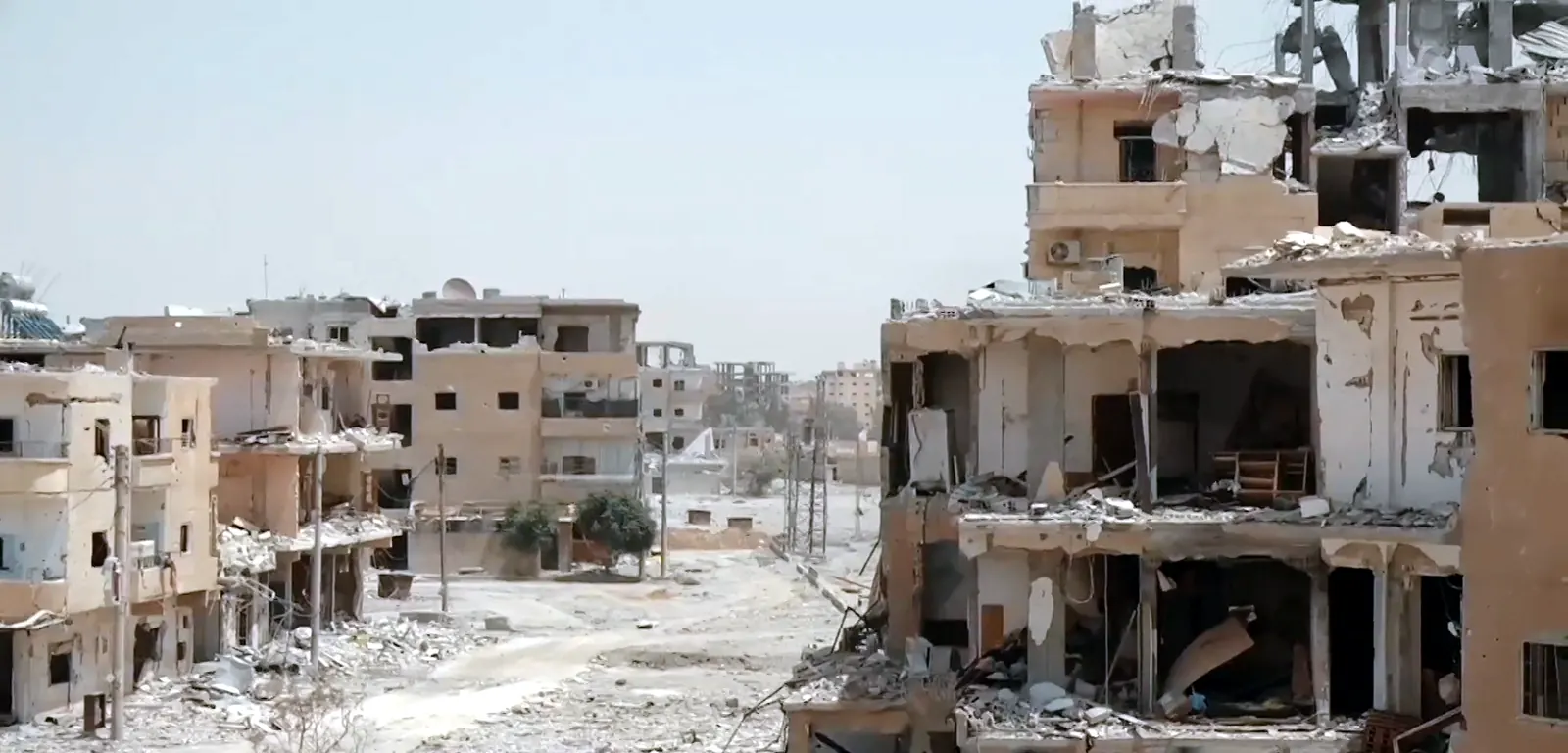
On January 30, 2026, Syria's new government announced the closure of al-Hol, the sprawling detention camp in the northeast that had held tens of thousands of women and children linked to ISIS. For seven years, Kurdish fighters had guarded the camp while home country after home country refused to take its citizens back. When Syria's government fell in December 2024 and the Kurds lost power, the guards left. Thousands of people walked out. American intelligence estimated that roughly 20,000 ISIS-linked individuals were now unaccounted for across Syria. The caliphate was destroyed nine years earlier. The people who filled it were not.
How the caliphate rose and fell in three years
The group that became ISIS started as an al-Qaeda franchise in post-invasion Iraq. Abu Musab al-Zarqawi, a Jordanian militant who had trained in Afghanistan, built a network in 2003 to fight the American occupation. He pledged allegiance to Osama bin Laden in 2004, but the two men wanted different things. Bin Laden wanted to attack the United States. Zarqawi wanted to attack Shia Muslims, provoke a sectarian civil war in Iraq, and build a Sunni state from the wreckage. In February 2006, his operatives bombed the al-Askari shrine in Samarra, one of the holiest Shia sites in the world. The explosion triggered two years of sectarian killing that left roughly 100,000 to 200,000 Iraqis dead. An American airstrike killed Zarqawi four months later, but his strategy survived him.
Syria's civil war gave Zarqawi's successors the opening. Abu Bakr al-Baghdadi, an Iraqi religious scholar who had spent time in American detention at Camp Bucca, expanded the group across the Syrian border and renamed it the Islamic State in Iraq and the Levant. In June 2014, ISIS overran Mosul, Iraq's second-largest city with 1.8 million people. The Iraqi army, trained and equipped by the United States at a cost of roughly $25 billion, collapsed in two days. Within weeks, ISIS held territory larger than the United Kingdom.
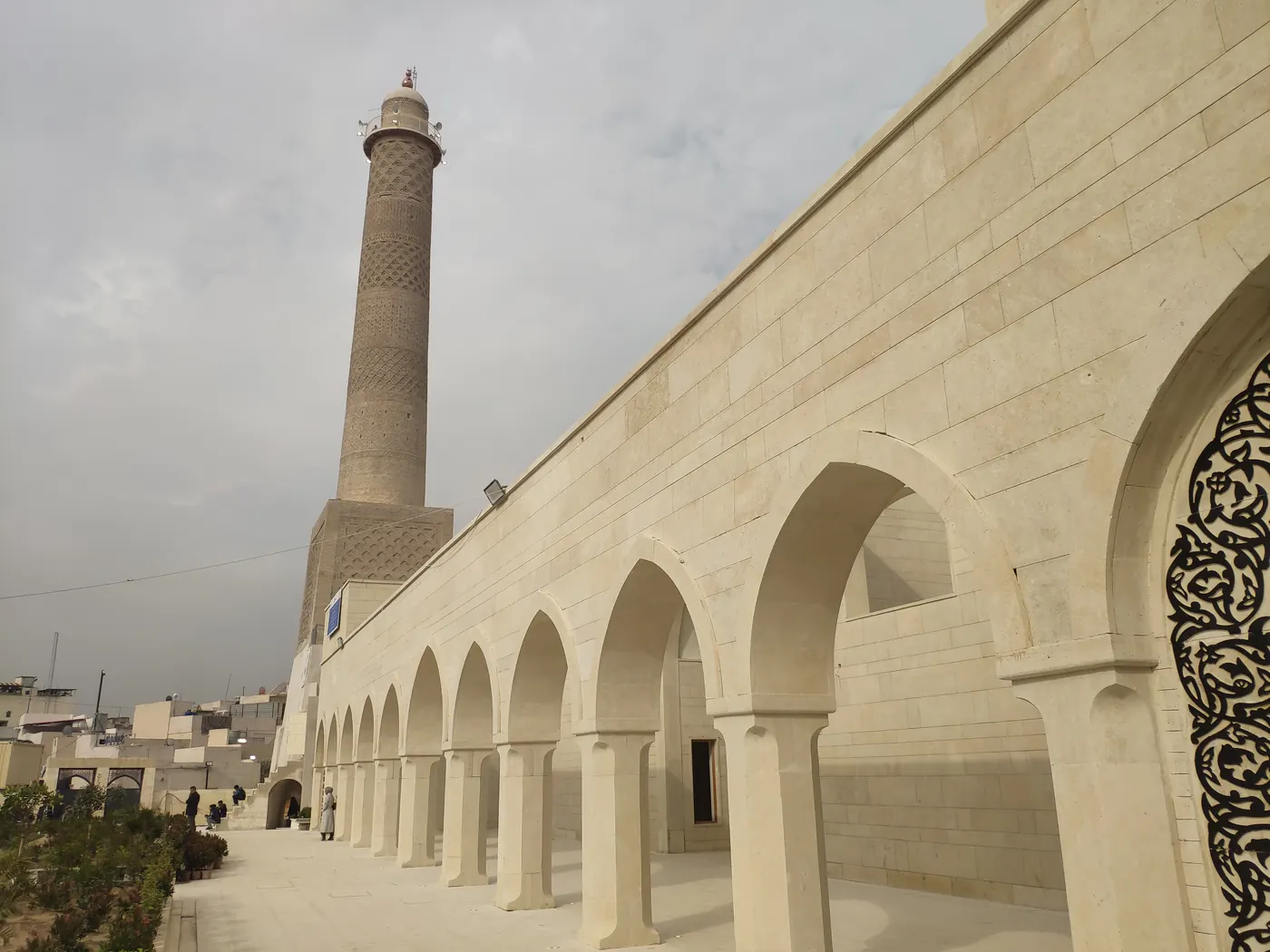
On July 4, 2014, Baghdadi climbed the pulpit of the Great Mosque of al-Nuri in Mosul and declared himself caliph. The state he ran collected taxes, operated courts, and provided basic services. It also beheaded prisoners on camera, crucified opponents in public, and systematically enslaved thousands of Yazidi women. A US-led coalition of more than 60 countries, with Kurdish forces and Iranian-backed Shia militias doing much of the ground fighting, spent three years destroying it. Mosul fell in July 2017. Raqqa, the group's Syrian capital, fell that October. Baghdadi was killed in an American special operations raid in October 2019, cornered in a tunnel in northwest Syria.
The prison camps nobody wanted to deal with
The caliphate was gone. Tens of thousands of its fighters and their families were not. They surrendered to Kurdish-led forces in the final battles and were held in a network of camps and makeshift prisons across northeastern Syria. The largest, al-Hol, held roughly 73,000 people at its 2019 peak, most of them women and children. About 6,200 were foreign nationals from some 60 countries.
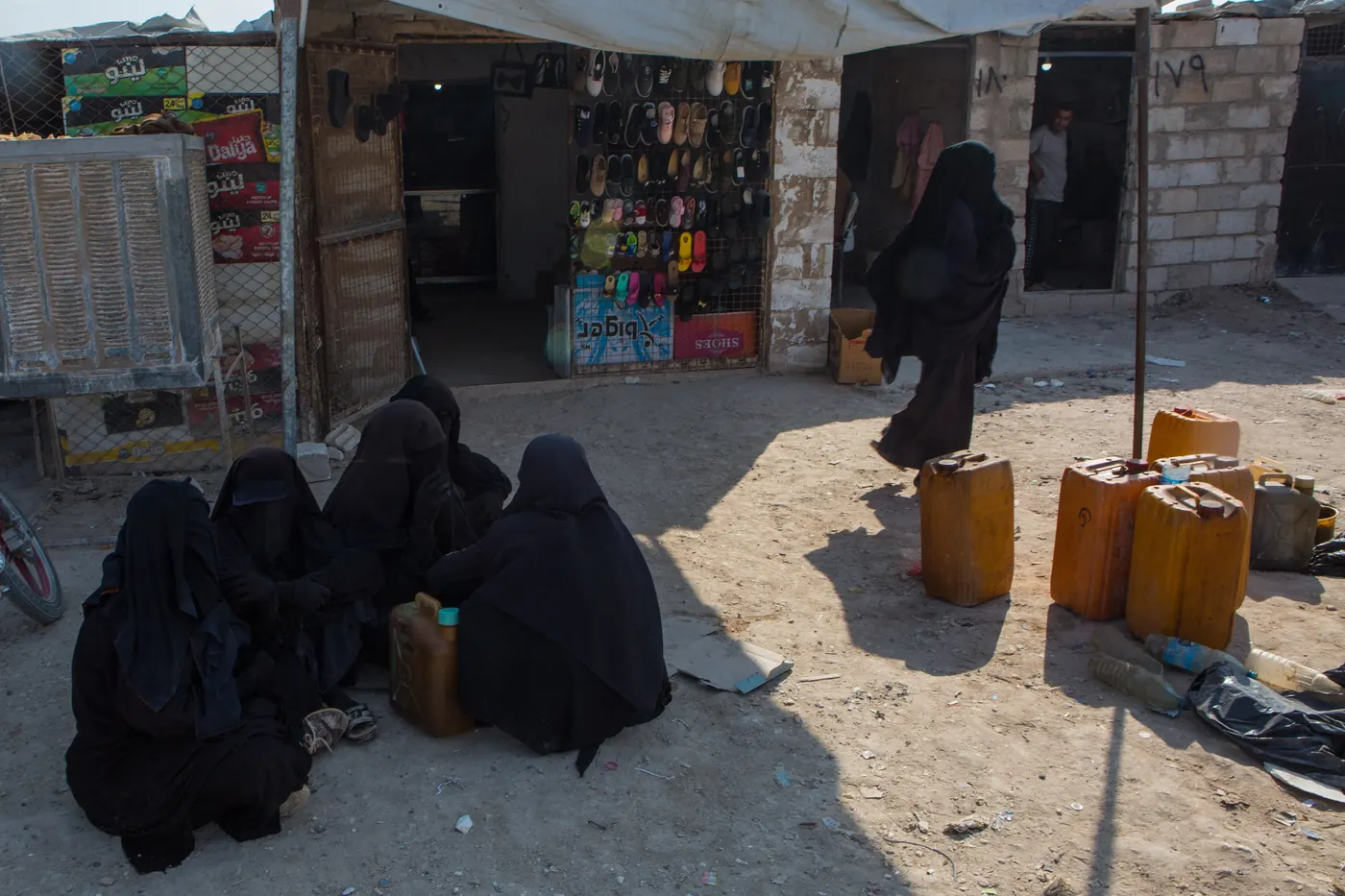
The Kurdish authorities who ran the camps had no legal standing, no courts, and too few guards. Inside al-Hol, hardline women enforced strict ISIS rules, attacked aid workers, and killed residents who rejected the group's ideology. The UN called the camp an "apocalypse." For years, Western and Arab governments were asked to repatriate their citizens. Most refused or moved slowly. By 2024, informal departures and selective releases had brought the camp's population down to around 24,000, but the core problem, what to do with committed ISIS members and their radicalized children, had not been addressed.
Then Syria's war ended. In December 2024, rebels overthrew Bashar al-Assad in eleven days. The Kurdish-led Syrian Democratic Forces, which had guarded the camps since 2017, suddenly faced a hostile new government and Turkish-backed forces in the north. By August 2026, Kurdish forces had formally disbanded and their fighters were absorbed into the Syrian national army. The camps emptied before any proper handover was complete.
The United States scrambled to contain the fallout. It transferred more than 5,700 ISIS fighters from Syrian prisons to facilities in Iraq, with plans for up to 7,000. In February 2026, American troops at the Ghwayran prison in Hasakah, which held roughly 6,000 ISIS fighters, prevented a mass escape. By April, the last US soldiers had left Syria entirely, ending a decade of military presence in the country. The prisoners were now someone else's problem.
Five leaders killed in five years
Every ISIS leader since Baghdadi has been killed. Abu Ibrahim al-Hashimi al-Qurashi died in a US raid in February 2022. His successor, Abu al-Hassan al-Hashimi al-Qurashi, was killed in October 2022. The fourth leader, Abu al-Hussein al-Husseini al-Qurashi, was killed in 2023. The fifth and current leader, Abu Hafs al-Hashimi al-Qurashi, was named in August 2023. Almost nothing about him is publicly known.
The leadership churn has not mattered, and that fact is the point. ISIS no longer runs like a state with a president. It runs like a franchise. Local affiliates across Africa, Central Asia, and the Middle East plan their own operations, raise their own money, and pledge allegiance to whichever name sits at the top. Killing the leader changes the name on the letterhead and nothing else.
The war moved to Africa
While the world tracked ISIS in Syria and Iraq, the group's war shifted continents. In the first half of 2025, more than two-thirds of all ISIS operations worldwide were in Africa. Militant Islamist violence across the continent killed roughly 23,968 people in 2025, a 24 percent increase over the year before.
The deadliest front is the Sahel. ISIS's Sahel Province operates across Mali, Niger, and Burkina Faso, three countries where military juntas replaced elected governments, promised to defeat the insurgency, and failed. In the Democratic Republic of Congo and Mozambique, ISIS's Central Africa Province has seized towns, displaced hundreds of thousands, and outlasted every military operation thrown at it.
In Afghanistan, the group's most internationally ambitious affiliate, ISIS-Khorasan, claimed the March 2024 attack on Crocus City Hall in Moscow that killed 149 people. In January 2026, it bombed a restaurant in Kabul. European security services disrupted multiple ISIS-K plots targeting Western cities through 2024 and 2025.
ISIS in 2026 is not the organization that held Mosul. It has no capital, no tax base, and no territory it can call a state. It claimed 587 operations in the first half of 2026 alone. The fronts where it kills the most people are the ones that get the least attention.
Why destroying the caliphate did not destroy the threat
The caliphate of 2014 to 2017 proved something important: jihadism fails as a governing project. ISIS's rule drove away or killed the populations it claimed to serve. It provoked a coalition of enemies who agreed on little else. Mainstream Sunni authorities denounced it. Polling across Muslim-majority countries has consistently shown rejection of the group.
But the caliphate also left behind every condition that created it. Failed states in the Sahel and parts of Central Africa still provide ungoverned space for armed groups. Iraq's sectarian fault line has not healed. Some of the world's youngest and poorest populations still lack jobs, stable governments, and any visible path to a normal life. The franchise model means ISIS no longer needs territory to operate. It needs failed states, and the world keeps producing them.
The caliphate lasted three years. Its aftermath has lasted nine and counting. For a decade, the question of what to do with the people who built it was pushed to the side. In January 2026, the camps closed and the answer was: nothing. The fighters scattered, the prisoners walked free, and the countries that had refused to deal with them now face the consequences of not having dealt with them. The most expensive military campaign since the Iraq war dismantled a state. It did not solve the problem that created one.
Test what you learned
5 questions on this article. About two minutes, no signup.