
Samurai
The samurai were Japan's hereditary warrior class, governing the country in the emperor's name from 1185 to 1868.
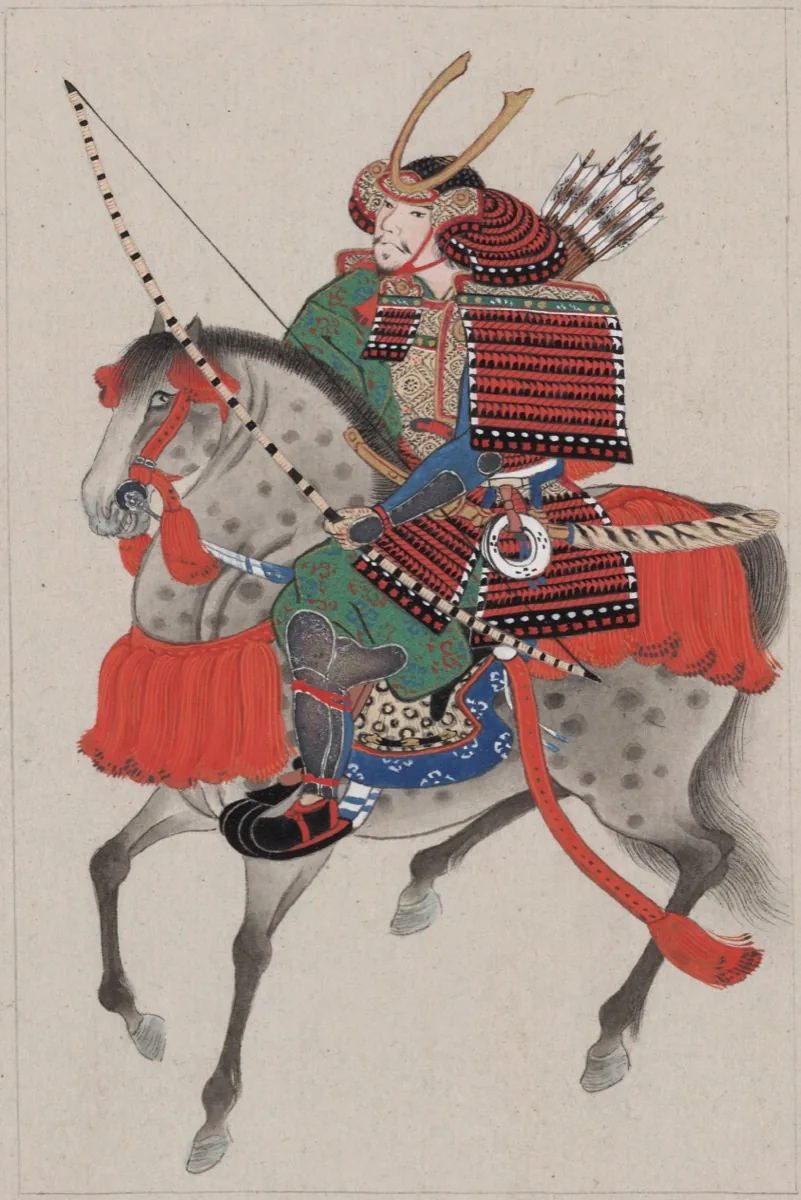
The samurai were Japan's hereditary warrior class. The word comes from a Japanese verb meaning "to serve," and service defined the role from beginning to end. Samurai held power across Japan for nearly seven centuries, from 1185 to 1868, ruling in the emperor's name while the emperor stayed in his palace in Kyoto. At their peak under the Tokugawa shogunate, they accounted for between five and six percent of Japan's people, about two million if you count their families. Few other pre-modern societies had a hereditary military elite that large. The most surprising part of their story is how it ended: the people who took apart the warrior class in the 1870s were themselves born into it.
How mounted archers became Japan's ruling class
The samurai began as hired fighters. In the eighth and ninth centuries, the imperial court in Kyoto needed soldiers to police the frontier provinces and push back the Emishi people in the north, but the aristocrats who ran the court preferred poetry to fighting. They turned to provincial warriors, mounted archers who served local lords, to do the work for them.
These warriors grew powerful as they acquired land and followers. In 1185, after winning the Genpei War, the Minamoto clan established Japan's first shogunate, a military government based in the coastal town of Kamakura. From that point until 1868, warriors held power across Japan, not courtiers.
For centuries the line separating warriors from farmers was unclear. Any man could pick up a weapon and fight, and a skilled fighter could become a lord. Toyotomi Hideyoshi was himself the son of a peasant farmer who started out as a sandal-bearer for the warlord Oda Nobunaga and rose to rule all of Japan. Then he closed off the path he had taken. His sword hunt of 1588 ordered every peasant to surrender their weapons. Later edicts locked each family into one of four hereditary groups: warrior, farmer, artisan, and merchant. Once the Tokugawa shogunate took power, these divisions became legally binding. The paired long and short swords known as the daisho were reserved for samurai alone, a visible badge of rank, and only samurai could hold government office.
What did samurai do during 250 years of peace?
After 1615, when the Tokugawa destroyed the last rival clan at Osaka Castle, Japan entered roughly two and a half centuries without a major war. The samurai had no one left to fight.
They became bureaucrats. Samurai received salaries in rice, measured in a unit called koku, taken from the rice tax their lord collected. Their posts became inherited. They drilled with wooden swords but most never used real ones in battle. Many studied calligraphy, poetry, and Confucian philosophy. Over time, they ran up debts to the merchant class, which officially ranked below them but often had more money.
The warrior code of bushido was largely written down during this peaceful era, composed by samurai who had never fought. It stressed loyalty, self-discipline, and readiness to die for one's lord. As a formal code, bushido was less a guide for warriors at war than a set of ideals for administrators trying to justify a military class that no longer fought.
How the samurai abolished themselves
By the 1850s, the samurai system was visibly failing. When American warships arrived in 1853 and forced Japan to open its ports, the crisis showed how far the country had fallen behind. The loudest critics of the old order came from samurai in the peripheral domains, far from the shogun's capital. These men seized power in 1868 and restored the emperor as head of state.
Then they began dismantling their own class. Their conclusion was that the hereditary order they had grown up in was exactly what had left Japan unable to stand against Western powers. The feudal domains were abolished in 1871, severing the bond between lords and their retainers. A conscription law in 1873 required all men to serve in the military, ending the samurai monopoly on bearing arms. In 1876, the Haitorei edict made it illegal to carry swords outside, and the government forcibly converted samurai rice stipends into one-time payments in government bonds. The bonds soon lost much of their value to inflation. About two million people saw their livelihoods, standing, and sense of purpose disappear in under a decade.
A number of samurai fought back. The largest uprising was the Satsuma Rebellion of 1877, led by Saigo Takamori. Saigo had been one of the three leaders of the 1868 restoration. He was a physically imposing man, nearly six feet tall and well over 200 pounds at a time when most Japanese men were far smaller, and no photograph of him survives. He left the government over a policy dispute and returned to his home province, where thousands of discontented samurai rallied to him. The imperial army defeated them with drafted farmers armed with modern rifles. Saigo died in the final battle at Shiroyama.
Samurai values after the class ended
The samurai class was abolished, but its values were not. Many former samurai went into business, joined the new army's officer corps, entered the civil service, or became teachers. They carried the old ideals of loyalty and personal sacrifice into the foundations of modern Japan.
The government went further. It took the reworked warrior ethic and taught it to drafted farmers and townsmen who had no warrior ancestry at all. Service, obedience, and willingness to die became duties expected of every Japanese citizen. In the 1930s and 1940s, this nationalized version of the samurai code was used to demand that ordinary soldiers and civilians die rather than surrender.
The samurai class held power for about seven hundred years. The values it created, loyalty, discipline, and the duty to serve, still run through Japanese institutions and culture.