
Tokugawa Shogunate
The Tokugawa shogunate governed Japan for 265 years, keeping over two centuries of peace while closing the country to the outside world.
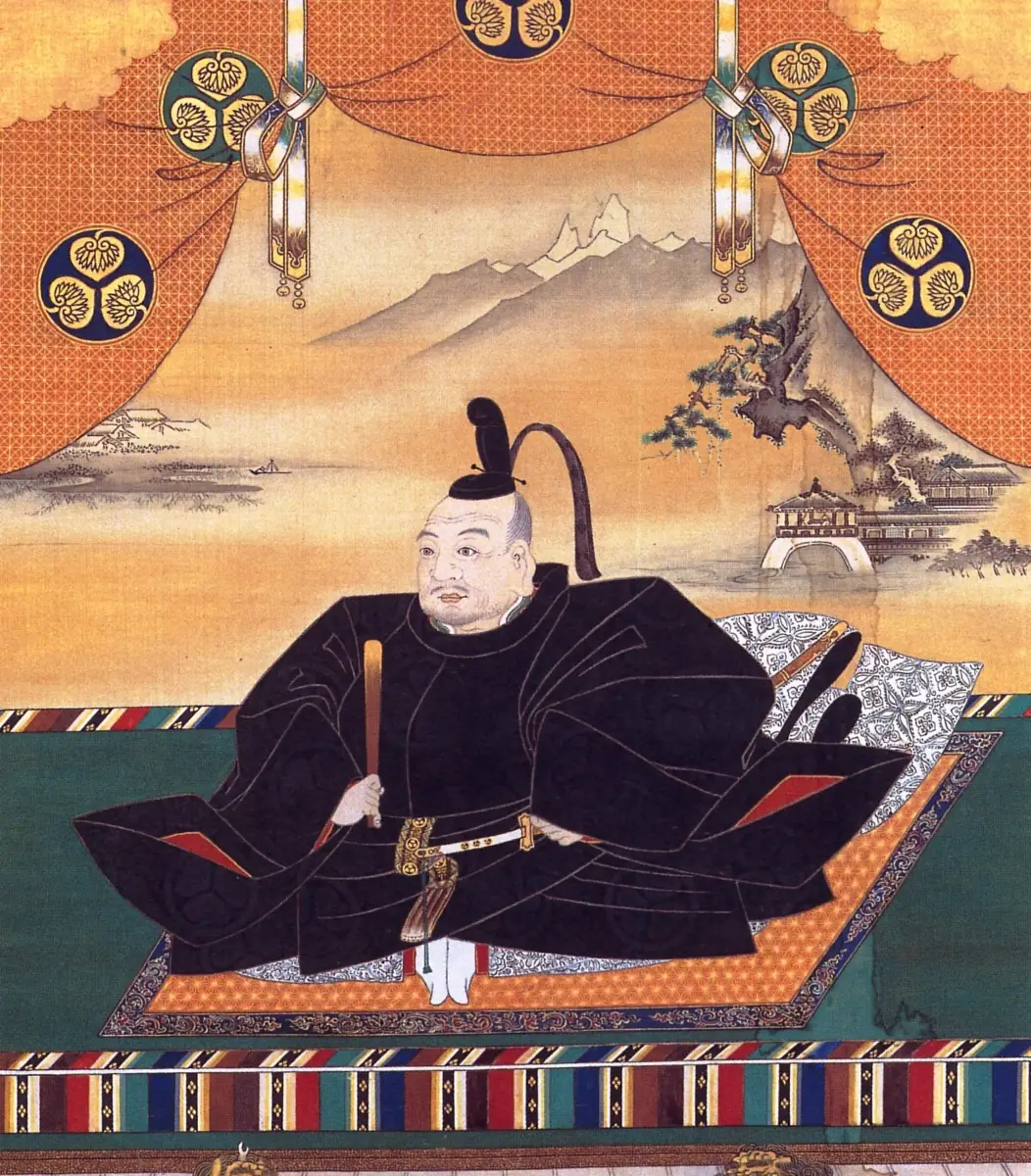
The Tokugawa shogunate, known in Japanese as the Edo bakufu, governed Japan for 265 years, from 1603 until 1868. Tokugawa Ieyasu founded it after winning the Battle of Sekigahara in 1600, which ended decades of civil war among regional warlords. As shogun, Ieyasu held the real political power. The emperor remained in Kyoto with his ceremonies and prestige but made no governing decisions. Ieyasu's capital was Edo, a small coastal town that Tokugawa rule transformed into the world's largest city: by the early 1700s it held over a million people. For more than two centuries Japan saw no major war. Beginning in the 1630s, the shogunate also cut Japan off from nearly all foreign contact. The peace and isolation gave the country widespread literacy and a rich domestic culture, but when a squadron of American warships appeared in 1853, Japan had nothing that could stop them.
How Tokugawa Ieyasu took control of Japan
Ieyasu spent much of his youth as a political hostage, first of the Oda clan and then of the Imagawa. He fought his first battles as a teenager and spent decades assembling alliances before his decisive victory at Sekigahara. His favorite pastime was falconry, which he believed kept a warrior sharp.
After Sekigahara, Ieyasu's main challenge was holding the country together. He faced about 200 daimyo, the regional lords who controlled their own territories, collected their own taxes, and commanded their own soldiers. Earlier rulers had tried and failed to keep them in line. Ieyasu chose not to eliminate the daimyo. He chose to constrain them.
He redrew the map of domains, placing trusted allies in the territories closest to Edo and pushing potential rivals to the edges. No lord could raise a new fortress without government approval, and no lordly family could arrange a marriage without the shogunate's consent. The most powerful constraint was sankin-kotai, a system of alternate attendance. Each lord was required to maintain a residence in Edo and live there every other year. When a lord went home, his wife and children stayed behind, effectively as hostages. The cost of traveling back and forth with a full ceremonial procession drained the lords' treasuries. The roads used by these processions had a second consequence: they connected the separate territories into one national market.
Society was divided into a fixed hierarchy. Samurai held the top rank, followed by farmers, artisans, and merchants. Over time the actual distribution of wealth turned this order nearly upside down. The samurai had been bred for combat, but with no battles to fight they turned into government officials living on fixed rice payments. The merchant class grew wealthy enough to become patrons of kabuki and buyers of ukiyo-e woodblock prints.
How the Tokugawa shogunate closed Japan
Beginning in the 1630s, the shogunate severed Japan from foreign contact. The Japanese term for this policy, sakoku, means "closed country." The government banned Christianity, a faith that had attracted hundreds of thousands of Japanese followers, and persecuted its believers. In 1637 and 1638, a peasant uprising with strong Christian ties called the Shimabara Rebellion was crushed, and nearly all of its roughly 37,000 participants were killed. Portugal's traders were sent away in 1639. No Japanese person was allowed to travel abroad or come home again, on penalty of death. The construction of seagoing vessels was forbidden.
Not all contact was severed. Dutch East India Company traders were restricted to Dejima, a tiny artificial island in Nagasaki harbor, and permitted only a handful of vessels annually. Chinese traders also operated in Nagasaki, and Korea maintained contact through the Tsushima domain. Through the Dutch connection came rangaku, or "Dutch learning," the study of European medicine, science, and military technology by a handful of Japanese intellectuals.
The long peace behind those closed borders transformed Japanese society. Japan developed widespread literacy, an interconnected road system, and a commercial economy strong enough to sustain popular fiction and printed news. But the rangaku scholars who read European books grasped how quickly Western technology was advancing. By the time Britain was producing steamships and building railways, Japan still forbade the construction of vessels capable of crossing open water.
Why did the Tokugawa shogunate fall?
In 1853 Commodore Matthew Perry entered Edo Bay with a squadron of four warships. The shogunate had no way to force them out. Perry came back the following year and imposed a treaty opening two ports. Britain, France, Russia, and the Netherlands pressed for similar access. The unequal treaties that resulted gave foreign powers low tariffs, opened more ports, and placed foreign nationals beyond the reach of Japanese courts. The shogunate's failure to resist any of it showed that it could not protect the country.
Opposition formed in Satsuma and Choshu, powerful domains on Japan's western periphery. Samurai there adopted a rallying cry, sonno joi: honor the emperor, drive out the foreigners. They organized a movement to abolish the shogunate and restore direct imperial rule. Japan's final shogun, Tokugawa Yoshinobu, gave up power in November 1867. The Boshin War, which lasted from 1868 into 1869, ended what remained of the old regime. The Satsuma Rebellion of 1877, led by former allies of the new government, was the last armed challenge from the old samurai order.
The new leaders who took power in 1868 inherited a country shaped by 265 years of Tokugawa rule in contradictory ways. Japan was literate, cohesive, and commercially capable, ready to take in Western technology within a single generation. It was also a country without a modern national army, with few factories, and with little direct knowledge of the world beyond its shores. The rapid modernization that followed, and the vulnerability that made it necessary, were both products of the same long era of peace and seclusion.