
Satrapy
A satrapy was a province of the Persian Empire, run by a governor called a satrap who answered to the king.
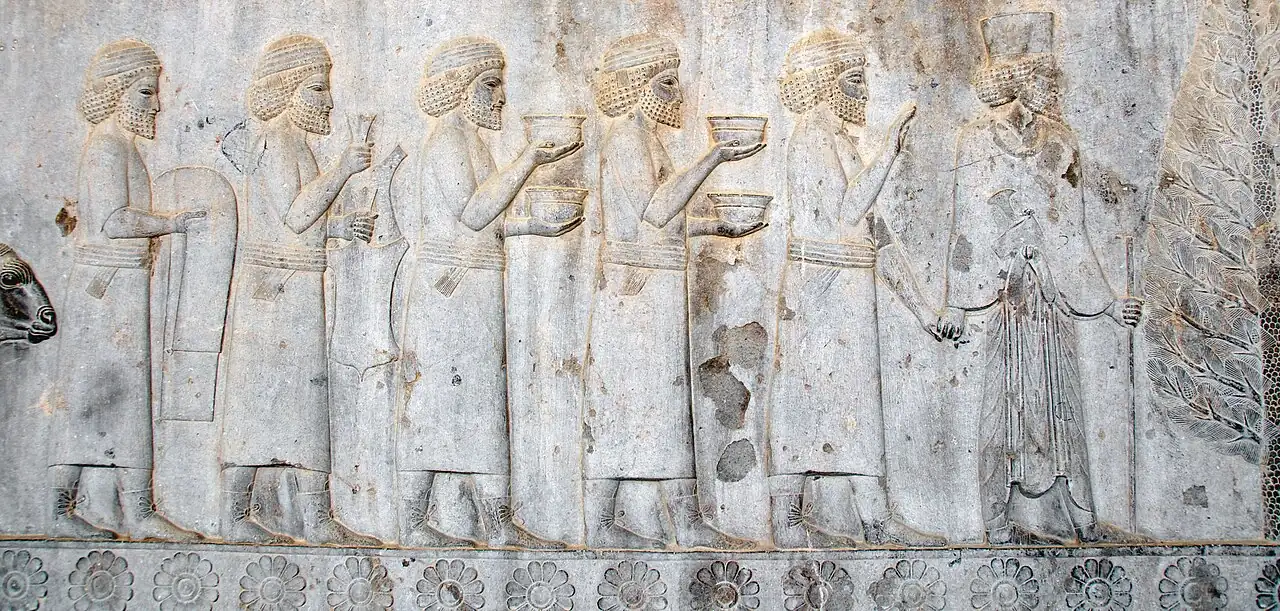
A satrapy was one of the provinces that made up the Persian Empire. The official who governed it was called a satrap. The title comes from the Old Persian "khshathrapavan," roughly meaning "protector of the realm." Cyrus the Great founded the empire in the mid-500s BC, but it was Darius I who divided it into a formal system of provinces. He created about 20 satrapies stretching from Egypt and the Aegean coast of modern Turkey to the Indus Valley. A satrap's job was to gather the taxes his province owed, settle disputes, keep the roads working, and supply soldiers when the king needed them. The system worked well enough that Alexander the Great kept it after he conquered Persia, and successor states used versions of it for nearly a thousand more years.
How Darius I organized the Persian Empire
Cyrus built the empire in about twenty years, but he ruled it loosely. When Darius I took power in 522 BC, after a violent succession struggle, he inherited territory that stretched across most of the known world but had no uniform administration. His solution was to formalize the provinces. Darius typically chose Persian aristocrats for the role, and many were relatives of the king. A satrap was responsible for collecting the tribute his province owed, keeping order, dispensing justice, and providing soldiers when the king called for them. He held his own court, a smaller version of the king's, and wielded broad authority over everyday life in his province.
To connect this territory, Darius built the Royal Road, a route of about 1,600 miles from Sardis in western Anatolia to Susa, one of the empire's capitals. Relay stations along the road let a royal messenger cross the empire in about nine days. An army marching the same distance needed roughly three months. The Greek historian Herodotus praised the couriers so highly that a paraphrase of his words ended up inscribed on the James A. Farley Post Office in New York City more than two thousand years later.
How did the Persian Empire keep satraps under control?
A satrap who sat in a distant province with his own court, his own treasury, and his own soldiers had everything he needed to declare independence. The system was designed to prevent that. The garrison commander in each satrapy reported directly to the king, not to the satrap. The province's chief tax collector answered to the king as well. A satrap controlled day-to-day government but did not fully control either the money or the army in his own province.
On top of that, royal inspectors traveled the provinces unannounced. Greek sources called them "the king's eyes and ears." They answered only to the king and could report on any satrap at any time.
These checks worked when the king was strong enough to enforce them. When the king was weak, the same distance that let a satrap govern effectively also let him defy the court. Some satrapies became hereditary, with the same family holding the same province for generations and building a local power base. In the 360s BC, several western satraps revolted against Artaxerxes II in what historians call the Great Satraps' Revolt. The system's vulnerability was built into its design: it gave provincial governors enough power to run their territories, and sometimes enough power to challenge the king.
How Persia governed conquered peoples
Most empires before Persia controlled subject peoples through deportation and terror. The Assyrians were the main example. Persia took a different approach. It taxed its provinces heavily and demanded soldiers, but otherwise left local life alone. Local law, language, religion, and leaders generally stayed in place.
Cyrus allowed the Judean exiles to go back to Jerusalem from Babylon and reconstruct their temple. The Book of Isaiah calls him God's anointed, the only non-Jew to receive that title in the Hebrew Bible. Egyptian temples continued to function under Persian rule. Babylonian priests kept collecting their temple income. The Greek cities along the Ionian coast governed themselves through local leaders who answered to the satrap above them. Persia demanded tribute and obedience, not conformity.
This approach was practical. Governing dozens of peoples who spoke different languages and worshiped different gods was far easier when you did not try to change how they lived. It also reduced the risk of revolts, because most subjects had no cultural grievance to rebel over.
The satrapy system after Persia
When Alexander conquered the Persian Empire in the 330s BC, he did not replace its administration. He kept the satrapies, left several Persian satraps in their posts, and adopted Persian court practices. His Macedonian veterans were disgusted by the change. After Alexander's death, the Seleucid dynasty ruled its share of his empire through satrapies. The Parthians and Sasanians, the Persian dynasties that followed, used modified versions of the same system for roughly another seven hundred years.
The same pattern appeared in later empires that never ruled Persia. Rome's provincial system paired governors with separate financial officials who reported to the emperor. The Ottoman Empire balanced a provincial governor against a separate judge and treasury official. The Mughal Empire split the same duties in its subah system. Imperial China sent governors to provinces far from where they grew up and replaced them on a set schedule. All of them were solving the same problem the Persians had faced first: how to govern a distant province without losing control of the governor.
The word "satrap" survived, too. In modern political writing, calling a leader a satrap means accusing them of governing on behalf of an outside power while pretending to rule independently.