
How Cyrus the Great built the Persian Empire
A vassal king in the mountains of Iran overthrew his overlord, took Babylon without a siege, and built the Persian Empire in twenty years.
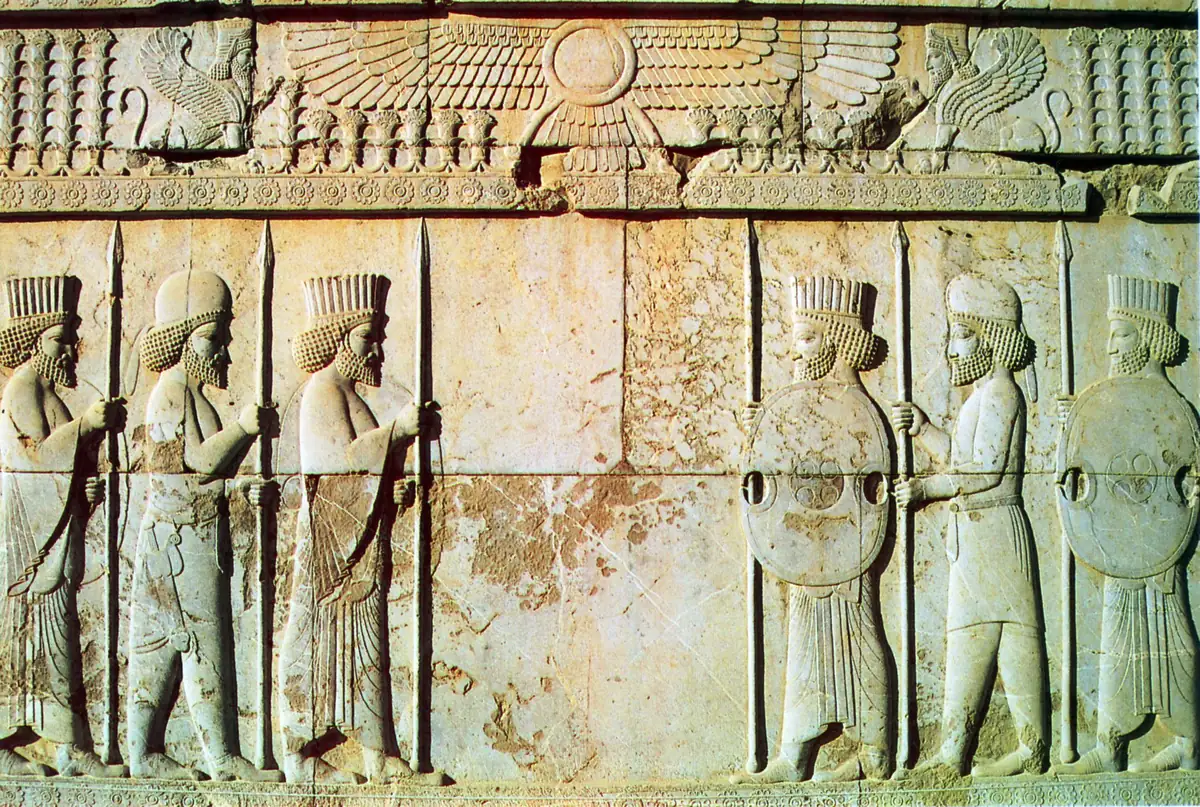
Around 559 BC, a minor king named Cyrus inherited the throne of Anshan, a small Persian kingdom in the mountains of what is now southwestern Iran. Anshan was a vassal of the Median Empire, and Cyrus was expected to stay a vassal. Within twenty years he had overthrown his overlord, defeated the richest king in the known world, and taken Babylon, the largest city on earth, almost without a fight. The empire he left behind stretched from the Aegean coast of Turkey to the borders of India. His successors expanded it further, and at its peak the Achaemenid dynasty held roughly 44 percent of all the people alive on earth, a share no empire has matched since.
The shepherd boy and the general's revenge
The legends around Cyrus's birth follow a pattern so old it appears in the stories of Moses and Romulus. According to Herodotus, King Astyages of Media dreamed that a vine grew from his daughter's body and covered all of Asia. His priests told him the dream meant her son would overthrow him. Astyages married the daughter, Mandane, to a minor Persian nobleman he considered no threat: Cambyses of Anshan, Cyrus's father. When a second dream repeated the warning after the child was born, Astyages ordered his general, Harpagus, to kill the baby.
Harpagus could not bring himself to do it. He gave the infant to a shepherd named Mitradates, whose wife had just delivered a stillborn child. She swapped the dead baby for Cyrus and raised the living one as her own. When Astyages discovered the switch years later, he spared Cyrus on his priests' advice and sent the boy back to his parents in Anshan. But he punished Harpagus by killing the general's only son, butchering the body, and serving the boy's cooked flesh to his father at a banquet. Only after Harpagus had finished eating did Astyages reveal what he had consumed.
That act of cruelty decided the empire's future. When Cyrus raised a rebellion against the Medes around 553 BC, Harpagus was ready. He organized the conspiracy from inside the Median court, recruited disloyal nobles, and defected with a large part of the Median army on the day of battle. By 550 BC, Cyrus held the Median capital at Ecbatana. Rather than punishing the defeated Medes, he kept their nobles in office and merged the two peoples into a single ruling class. A vassal kingdom had absorbed its overlord in three years.
The king who believed the wrong oracle
The fall of Media alarmed Croesus, king of Lydia in western Turkey and the wealthiest ruler of his age. Lydia had invented coinage, and Croesus minted the first pure gold and silver coins in the ancient world. The phrase "rich as Croesus" still exists in dozens of languages. Before marching against Cyrus, Croesus consulted the Oracle at Delphi and received the most famous bad advice in ancient history: "If you cross the Halys River, you will destroy a great empire."
Croesus assumed the empire would be Persia's. He crossed the Halys in 547 BC, fought an indecisive battle at Pteria, and retreated to his capital at Sardis to wait out the winter and call up allies from Egypt and Sparta. Cyrus did not wait. He marched straight after Croesus, arrived at Sardis before any reinforcements, and took the city after a short siege. The great empire Croesus destroyed was his own. According to Herodotus, Cyrus spared Croesus and kept him at the Persian court, where the former king lived out his days as an advisor to the man who had taken everything he owned. With Lydia came the Greek cities of the Aegean coast, the same cities that would later rebel and pull Persia into the wars with Greece that Cyrus's successors fought and lost.
The city that opened its own gates
After Lydia, Cyrus spent several years campaigning in Central Asia before turning to the greatest prize in the ancient Near East. Babylon in 539 BC was the largest city on earth, ringed by massive double walls that the Greeks counted among the wonders of the world. Its king, Nabonidus, had alienated the powerful Babylonian priesthood by neglecting Marduk, the city's chief god, in favor of the moon god Sin.
In October 539 BC, Cyrus's general Ugbaru defeated the Babylonian army at Opis on the Tigris. Days later, Babylon opened its gates. The Nabonidus Chronicle, a Babylonian clay tablet now in the British Museum, records that Persian troops entered the city "without battle." Cyrus himself arrived on October 29 and presented himself not as a foreign conqueror but as the legitimate king chosen by Marduk to restore the city's honor.
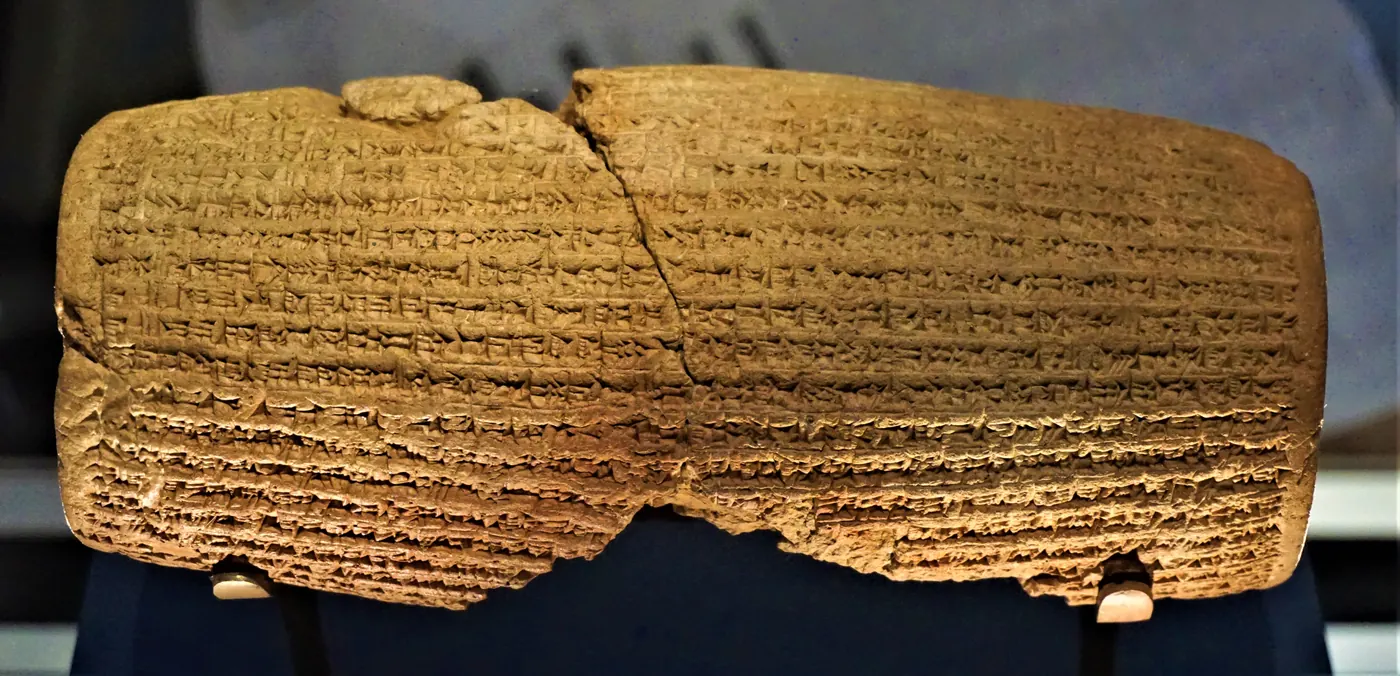
He issued a decree, now known as the Cyrus Cylinder, announcing that he would return displaced peoples to their homelands and rebuild their temples. The Hebrew Bible records that this included the Jews exiled in Babylon since 597 BC: Cyrus let them go home and rebuild the Temple in Jerusalem. The Book of Isaiah calls him Yahweh's "anointed one," the only non-Jew in the Bible to receive the Hebrew title that translates as messiah.
The pattern held across the empire. Earlier powers like Assyria had ruled through terror: mass deportations, flayed rebels, cities burned as warnings. Cyrus let conquered peoples keep their gods, their customs, and their local rulers, so long as they paid tribute and stayed loyal. A replica of the Cyrus Cylinder now sits in the lobby of the United Nations, and it is sometimes called the world's first charter of human rights. Historians push back: the Cylinder is a standard Mesopotamian foundation text, royal propaganda in a genre centuries old. The tolerance was real, but it was practical, not principled. Garrisoning an empire from Turkey to Pakistan would have been impossibly expensive. Letting local systems run themselves was simply cheaper. Cyrus's successors refined the model further. Darius divided the empire into more than 20 satrapies, connected them with a royal road, and ran a postal relay whose riders Herodotus described with words now inscribed on the James Farley Post Office in New York: "Neither snow nor rain nor heat nor darkness of night prevents these couriers from completing their designated stages with utmost speed."
Why Iranians still gather at his tomb
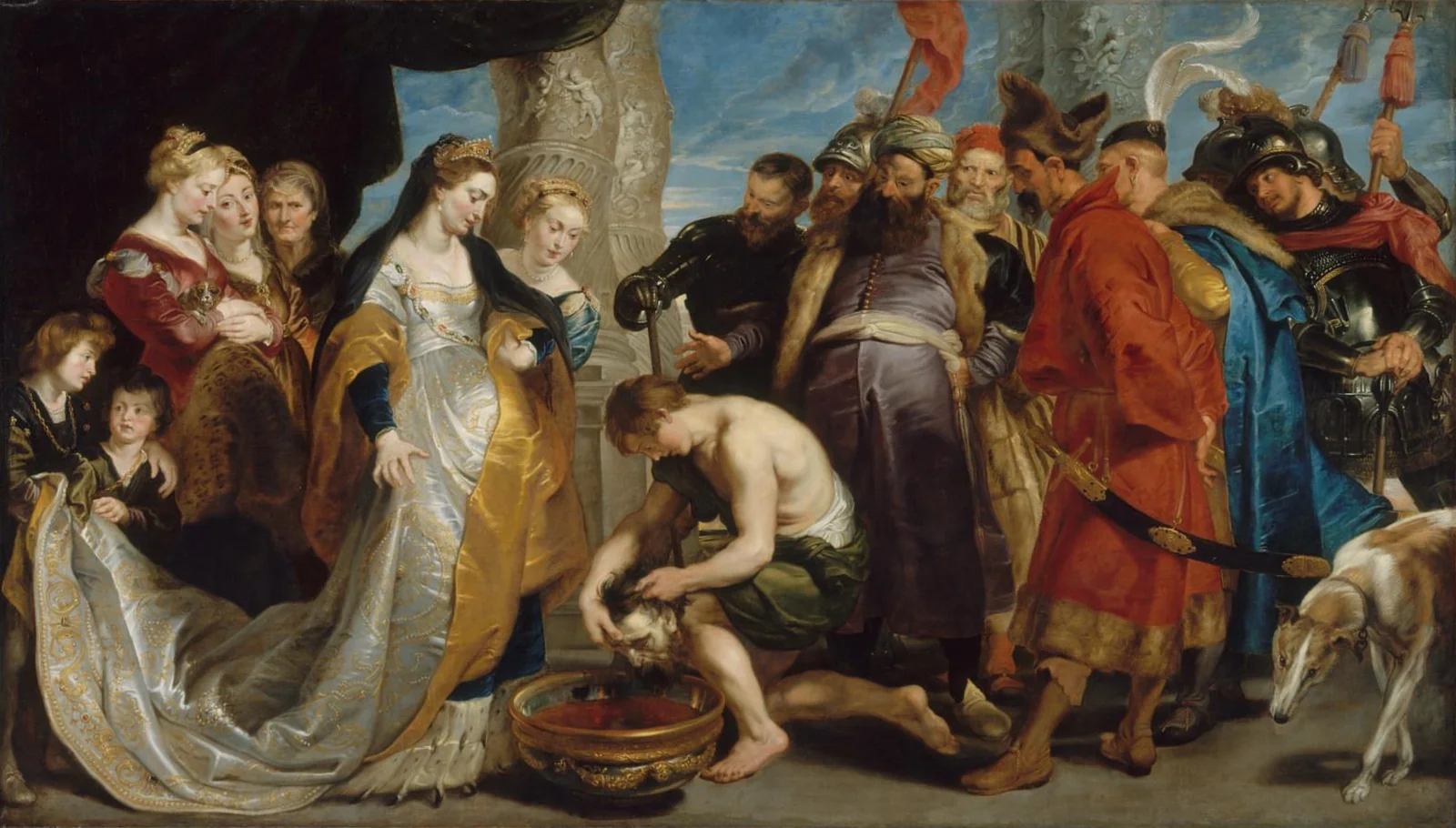
Cyrus died around 530 BC on a campaign against the Massagetae, a nomadic people of Central Asia. Herodotus called the battle "the fiercest between non-Greeks that had ever taken place." The Massagetae won, and Cyrus fell. According to Herodotus, Queen Tomyris of the Massagetae had his body found on the field, cut off the head, and shoved it into a wineskin filled with human blood. "I warned you that I would quench your thirst for blood," she told the dead king.
He was buried at Pasargadae, his first capital, in a plain stone tomb on a stepped platform that still stands today. Ancient writers recorded the inscription: "O man, whoever you are, wherever you come from, for I know you will come: I am Cyrus, who won the Persians their empire. Do not therefore begrudge me this bit of earth that covers my bones." When Alexander the Great arrived two centuries later and found the tomb looted, he ordered it restored.
The tomb still stands. So does Cyrus's hold on the Iranian imagination. In 1971, Mohammad Reza Shah held a 2,500-year celebration of the Persian Empire at Persepolis, spending hundreds of millions of dollars to position himself as Cyrus's heir. Many historians consider the spectacle a catalyst for the resentment that fueled the 1979 revolution. But the attachment to Cyrus outlived the Shah who tried to claim it. In October 2016, an estimated 15,000 to 20,000 Iranians gathered at the tomb and chanted "Iran is our country, Cyrus is our father," one of the largest protests the Islamic Republic had seen in years. In 2025, the regime blocked the roads to prevent it from happening again. Twenty-five centuries after a vassal king started a rebellion in the mountains of Iran, his tomb is still the place Iranians go when they want to say who they are.
Test what you learned
6 quick questions on this article. No signup, just you against the text.