
Sayyid Qutb
Sayyid Qutb was an Egyptian writer whose prison books became the intellectual foundation of modern jihadist movements.
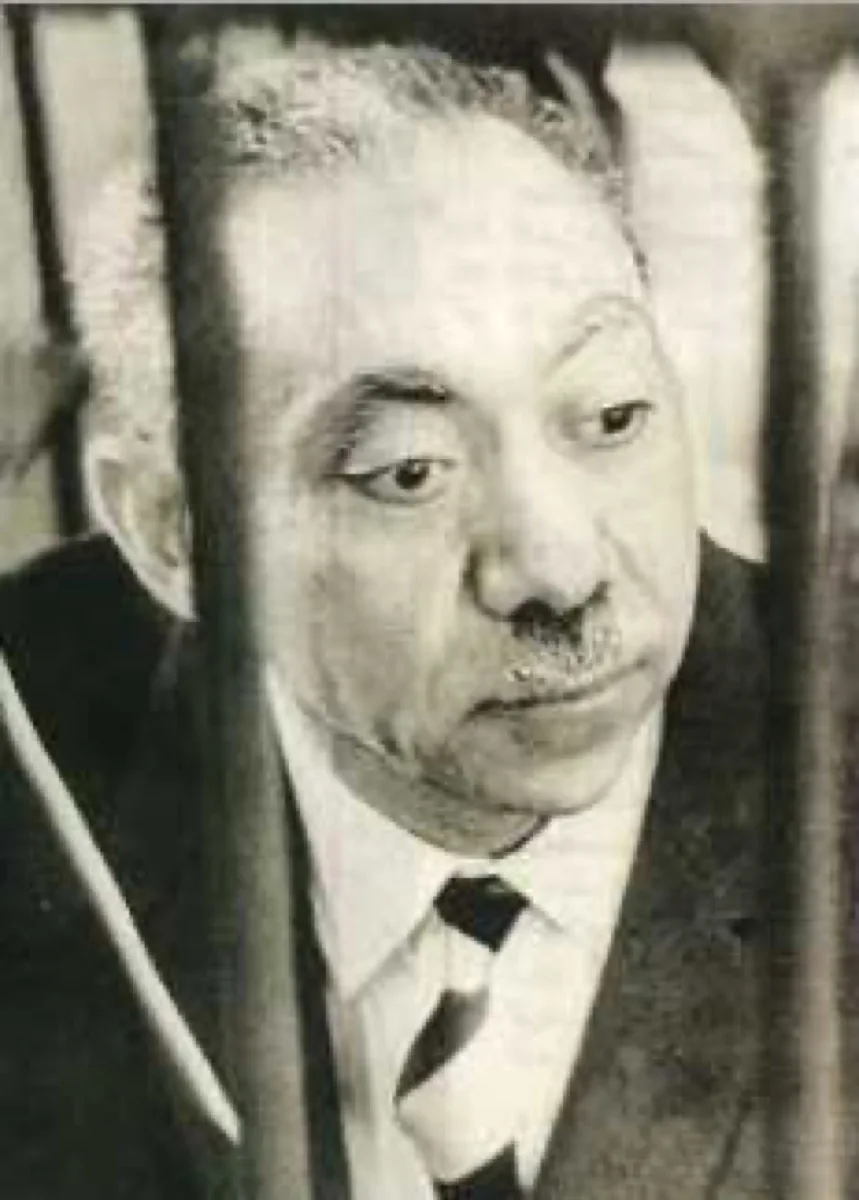
Sayyid Qutb (1906–1966) was an Egyptian writer and thinker whose books, written mostly in prison, became the intellectual foundation of modern jihadist movements. He never fired a weapon. He started his career as a literary critic and poet in Cairo. After a two-year stay in the United States left him convinced that Western modernity was spiritually bankrupt, he joined the Muslim Brotherhood and wrote about Islam as a total political system. The Egyptian government hanged him in 1966. His short book Milestones gave later movements, including al-Qaeda, their central argument: that nominally Muslim governments are not really Muslim at all, and that fighting them is a religious duty.
How Qutb went from literary critic to Islamist
Qutb was born in 1906 in Musha, a village in Upper Egypt's Asyut province. He learned the Quran by heart as a child and completed teacher training in Cairo, where he spent his early career writing poetry, novels, and literary criticism. In his thirties he was an ordinary Egyptian nationalist writer with no particular religious program.
In 1948, the Egyptian government sent him to America to observe how its schools worked. His stay lasted about two years, part of it at Colorado State College of Education in the small city of Greeley, Colorado. What he saw appalled him. He described a society with enormous material wealth and no spiritual life, obsessed with money and sports, and marked by casual racism toward Black Americans. One evening at a Congregationalist church in Greeley, the pastor dimmed the lights and played "Baby, It's Cold Outside" for a social dance. Qutb watched the couples press together and was horrified that it was happening inside a house of worship.
He did not conclude that America alone was the problem. He decided that the modern West had nothing of value to offer spiritually, and that Egypt's own elites were busy copying it. Soon after returning home, he joined the Muslim Brotherhood.
What Qutb wrote in an Egyptian prison
Qutb initially welcomed the 1952 military coup that brought Gamal Abdel Nasser to power, and Nasser tried to bring him into the fold. The relationship fell apart quickly. In 1954, after a Brotherhood member tried to assassinate Nasser, the government crushed the movement. Qutb was imprisoned and tortured. He spent most of the next decade in a prison hospital.
There he wrote two major works. One was In the Shade of the Quran, a lengthy commentary on the Quran. The other was Milestones (Maalim fi al-Tariq), a short book published in 1964 that made two arguments which changed the course of Islamist thought.
The first took the classical Arabic word jahiliyya, which in Islamic tradition means the time of ignorance before the Prophet, and applied it to the present. Qutb argued that countries whose laws were written in parliaments instead of taken from God were living in a new age of ignorance. Under this reading, Egypt and other Muslim-majority countries were not Muslim in any real sense.
His second key concept was hakimiyya, the idea that only God can hold sovereign authority. If that is true, then any human legislature is an act of rebellion against God. And if Muslim rulers are actually ruling outside Islam, then fighting them is jihad, not treason. A committed vanguard, Qutb argued, has the right to start that war on its own, without seeking the broader community's approval.
Qutb himself was often careful and ambiguous about how far to push these ideas. His readers were not.
Why was Sayyid Qutb executed?
Qutb was released from prison in 1964 but rearrested in 1965 and charged with conspiracy against the Egyptian government. He was tried, found guilty, and hanged on August 29, 1966, at age 59. Several foreign leaders urged Egypt's president, Gamal Abdel Nasser, to spare his life. Nasser refused.
The execution turned Qutb into a martyr. Mainstream Brotherhood leaders wrote and circulated rebuttals for years, insisting that Qutb had not authorized takfir, the act of declaring fellow Muslims to be unbelievers. The Kharijites, an early Islamic sect, had used takfir to justify killing other Muslims, and the comparison carried weight. Much of the Brotherhood moved toward electoral politics in the following decades.
How Qutb's ideas shaped jihadist movements
A more militant reading of Qutb's books spread through a direct line of people. His brother, Muhammad Qutb, moved to Saudi Arabia in the early 1970s and taught Islamic studies at King Abdulaziz University in Jeddah. A generation of young radicals studied under him there.
One of the people Qutb's execution radicalized was Ayman al-Zawahiri. He was fifteen years old and living in Cairo when Qutb was hanged in 1966. His uncle had been Qutb's student and had served as Qutb's lawyer at the trial. Zawahiri later described the execution as the event that put him on his path. He went on to become the chief ideologist of al-Qaeda.
Jihadist groups that drew on Qutb's thinking have taken far more Muslim lives than Western ones. The pattern fits his doctrine, which aimed at nearby rulers before it aimed at anyone abroad. The idea from Qutb that mattered most was not that Islam should fight the West. It was that Muslim rulers who govern by secular law are themselves the enemy.