
Special Economic Zones
Special economic zones are areas where a country suspends its normal economic rules to attract foreign investment and test market reforms.
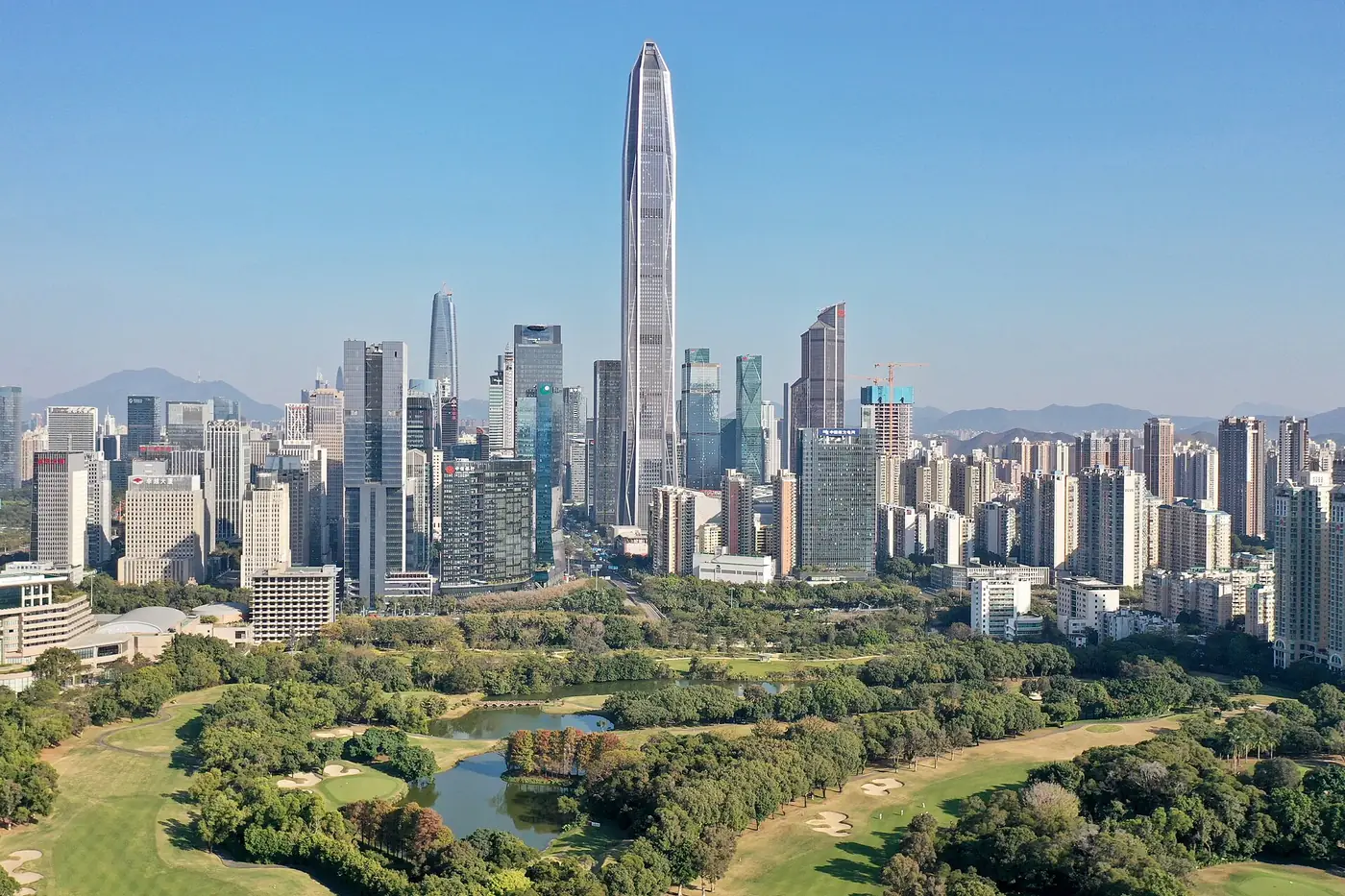
A special economic zone is a designated area within a country where different economic rules apply. Taxes are lower, foreign companies can own businesses, imports of components arrive duty-free, and hiring and firing follow simpler rules. The idea is to attract foreign money and know-how to a fenced-off area without changing the rules for the rest of the country. The best-known version comes from China, which created four zones in 1980 as part of Deng Xiaoping's economic reforms. Thousands of zones now exist around the world. Most of them have produced disappointing results. The ones that worked almost always had something behind them that the zone itself could not provide.
Why Deng Xiaoping created China's special economic zones
By 1979, China was poor and falling further behind its neighbors. Deng Xiaoping wanted to bring in foreign capital and technology, but he could not simply announce that China was giving up on central planning. The Communist Party had told people for three decades that free markets were dangerous. A failed reform at the national level would have discredited the whole idea permanently.
The zone concept solved this problem by quarantining the experiment. If the zones worked, the model could be spread across the country. If they collapsed, the damage would be limited to a small part of Guangdong province and could be disowned. The approach became known as "crossing the river by feeling the stones."
The government approved four zones in 1979 and formally launched them in 1980: Shenzhen, Zhuhai, and Shantou in Guangdong province, and Xiamen in Fujian province. The locations were chosen carefully. All four were far from Beijing and close to sources of overseas Chinese capital. Shenzhen sat across the border from Hong Kong. Zhuhai faced Macau. Shantou and Xiamen were near Taiwan. The Chinese diaspora in those territories had the money, the managers, and the business connections that the zones needed.
How Shenzhen became a city of 18 million
Shenzhen is the zone most closely tied to the policy. Before the zone, Shenzhen was a border county called Bao'an with a population of about 310,000. It was not the fishing village that later accounts described, but it was poor, rural, and known mainly as a place people crossed through on their way to Hong Kong. In the decades before the zone, about a million people had fled through Bao'an to Hong Kong as undocumented immigrants.
By the mid-1980s, foreign factories were arriving. A generation of migrant workers followed them from China's interior, most without legal permission to live in the city. Shenzhen developed an extraordinarily concentrated electronics supply chain in its Huaqiangbei district, where buyers could find every component needed to assemble a phone, a drone, or a laptop within a few city blocks. Huawei, Tencent, BYD, and DJI all set up their headquarters there.
By 2025, Shenzhen's population had reached about 18 million. Its economy now has a larger output than Hong Kong's, the city it was built to learn from.
How China expanded its zones
The zone program grew in waves. In 1984, China opened fourteen more coastal cities to foreign investment under similar terms. In 1988, the entire island province of Hainan became a special economic zone. In 1990, Shanghai's Pudong district was designated a zone and developed into one of China's major financial centers.
Reform stalled after the crackdown at Tiananmen Square in 1989. In January 1992, Deng Xiaoping traveled to Shenzhen on what became known as his "southern tour." He was 87 and formally retired, but he used the city's visible prosperity to argue that economic reform should continue. He overcame resistance from conservatives in the Party leadership. By the end of the year, the national government had committed to building what it called a "socialist market economy," and investment poured in.
Why do most special economic zones fail?
More than 5,000 special economic zones now operate worldwide. India passed a special economic zone act in 2005 and built about 280 operational zones. African governments have opened dozens of industrial parks, many with Chinese financing and construction. Gulf states run financial free zones that operate under separate legal systems. Most of these efforts have produced disappointing results.
A zone tends to work when it serves as a first step toward broader reform that the government intends to spread, and when it is attached to a functioning port, reliable electricity, and a state capable of enforcing contracts. A zone tends to fail when a government treats it as a tax holiday that should attract investors by itself, or when the country lacks the roads, ports, or customs systems to move goods to a ship. China's original zones worked because the fence was not the point. The point was a credible signal that reform would eventually go national. Countries that copied the fence without the commitment behind it usually ended up with an empty industrial park.
China's special economic zones today
China's zones have changed along with the country. China is no longer a poor nation trying to attract foreign factories with low wages. Its zones now subsidize domestic companies working on semiconductors, batteries, and artificial intelligence. The Communist Party has taken a more direct role in corporate governance inside the zones than it did in the early years.
The zones that Deng Xiaoping created to separate market experiments from the rest of the economy now serve as the base for a state-led industrial strategy aimed at controlling key technologies.