
Talleyrand
Talleyrand was a French diplomat who served six regimes and restored defeated France as a great power at the Congress of Vienna.
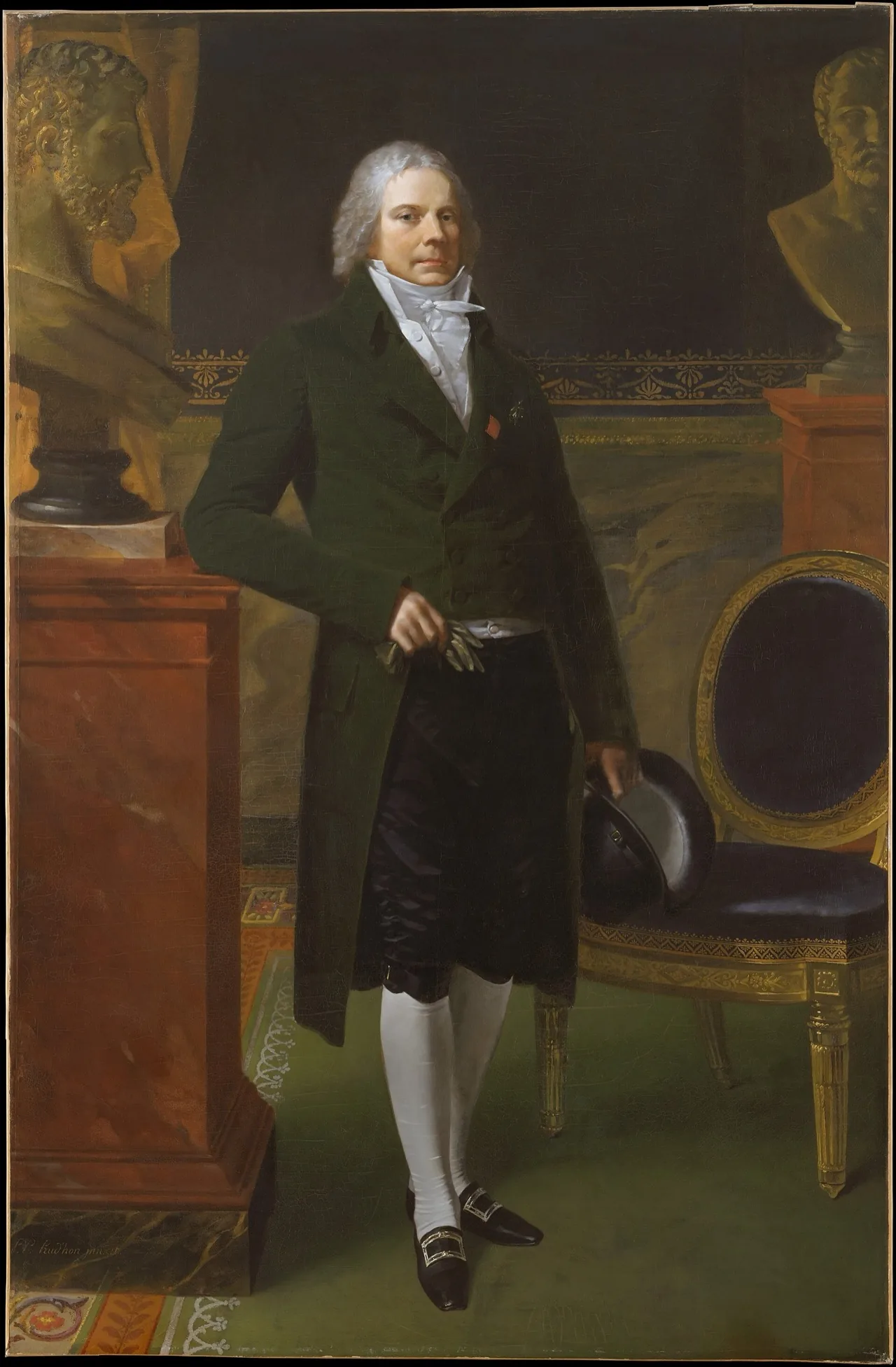
Charles Maurice de Talleyrand-Perigord (1754–1838) was a French diplomat who held high office under six consecutive regimes: the Ancien Régime, the Revolution, the Directory, Napoleon, the Restoration, and the July Monarchy. He was an excommunicated bishop and a foreign minister who openly took bribes. After France spent twenty years at war with the rest of Europe, Talleyrand was the negotiator who restored it as a great power at the Congress of Vienna in 1814. He survived every change of government because each successor found him too useful to discard.
How Talleyrand rose through the Revolution
Talleyrand was born in 1754 into one of France's oldest noble families. He had a club foot, most likely congenital, that kept him out of the army, the usual career for a man of his rank. His family put him into the Church instead. In 1789 he was made Bishop of Autun, a role he accepted without much religious conviction.
When the Revolution began, Talleyrand sided with it. In October 1789 he proposed in the National Assembly that France confiscate all Church lands to cover the national debt. The Assembly voted in favor. The pope excommunicated Talleyrand in 1791. He spent the Terror abroad, first in England and then in Philadelphia, and returned to France in 1796. By 1797 he was foreign minister of the Directory.
He used the post to enrich himself. When American envoys arrived in Paris to negotiate a treaty, Talleyrand's agents told them to pay a $250,000 bribe before he would receive them. The scandal, known as the XYZ Affair, nearly started a full-scale war between France and the United States. Bribery was not an occasional lapse for Talleyrand. He took money from every side throughout his career, and governments across Europe knew it.
How did Talleyrand betray Napoleon?
Talleyrand helped Napoleon seize power in the coup of November 1799 and served as his foreign minister for the next eight years. Over time, he concluded that Napoleon's wars of expansion would destroy France. The invasion of Spain in 1808 confirmed that view.
At the Congress of Erfurt in 1808, Talleyrand was officially representing Napoleon in negotiations with Tsar Alexander I of Russia. Instead, he privately urged Alexander to hold firm against Napoleon, arguing that Europe's balance of power depended on it. He was working for the opposing side while still holding a French title.
On January 28, 1809, at the Tuileries, Napoleon denounced Talleyrand in front of his ministers, calling him a thief, a coward, and, in the most remembered phrase, excrement in a silk stocking. Talleyrand stood still, said nothing, and walked out. He reportedly said afterward that so great a man really should have learned better manners.
Napoleon stripped Talleyrand of his post as grand chamberlain but did not arrest him. That decision came back around in the spring of 1814, when allied armies reached the gates of Paris. Talleyrand arranged for the Senate to vote Napoleon out of power and place Louis XVIII on the throne. Within weeks Talleyrand was foreign minister once more.
How Talleyrand restored France at the Congress of Vienna
France arrived at Vienna as the nation that had been at war with its neighbors for two decades. The four victorious powers, Britain, Austria, Russia, and Prussia, planned to settle Europe's future among themselves and present France with the result.
Talleyrand refused to accept this. His argument was that the purpose of the Congress was to restore lawful governments, not to hand out territory, and that the principle covered France as much as anyone else. This gave him standing, but not yet real influence.
The opportunity came when the victors fell out among themselves. Russia claimed Poland. Prussia claimed Saxony. Britain and Austria opposed both claims. On January 3, 1815, Talleyrand concluded a secret treaty of mutual defense with Britain and Austria, aimed at Russia and Prussia, with each side pledging 150,000 troops. After that, France was no longer an outsider but a full participant, and the four-power arrangement became five.
The peace terms preserved France's pre-war borders and its seat among the great powers. Napoleon's escape from Elba later that year led to a harsher second Treaty of Paris, but the overall structure held.
Why the Vienna settlement lasted
Talleyrand's last major act of diplomacy began in 1830. At 76, he went to London as France's ambassador and helped negotiate Belgian independence, establishing a new neutral state in northern Europe.
Talleyrand died on May 17, 1838. In his final days he reconciled with the Catholic Church that had excommunicated him nearly half a century earlier.
The settlement Talleyrand helped build at Vienna brought the losing side into the European system rather than crushing it. General peace held in Europe for a century. When the victors gathered again after World War I, they chose the opposite approach. The Treaty of Versailles in 1919 punished and isolated Germany. That peace lasted twenty years.