
Warsaw Pact
The Warsaw Pact was the military alliance between the Soviet Union and seven Eastern European countries, from 1955 to 1991.
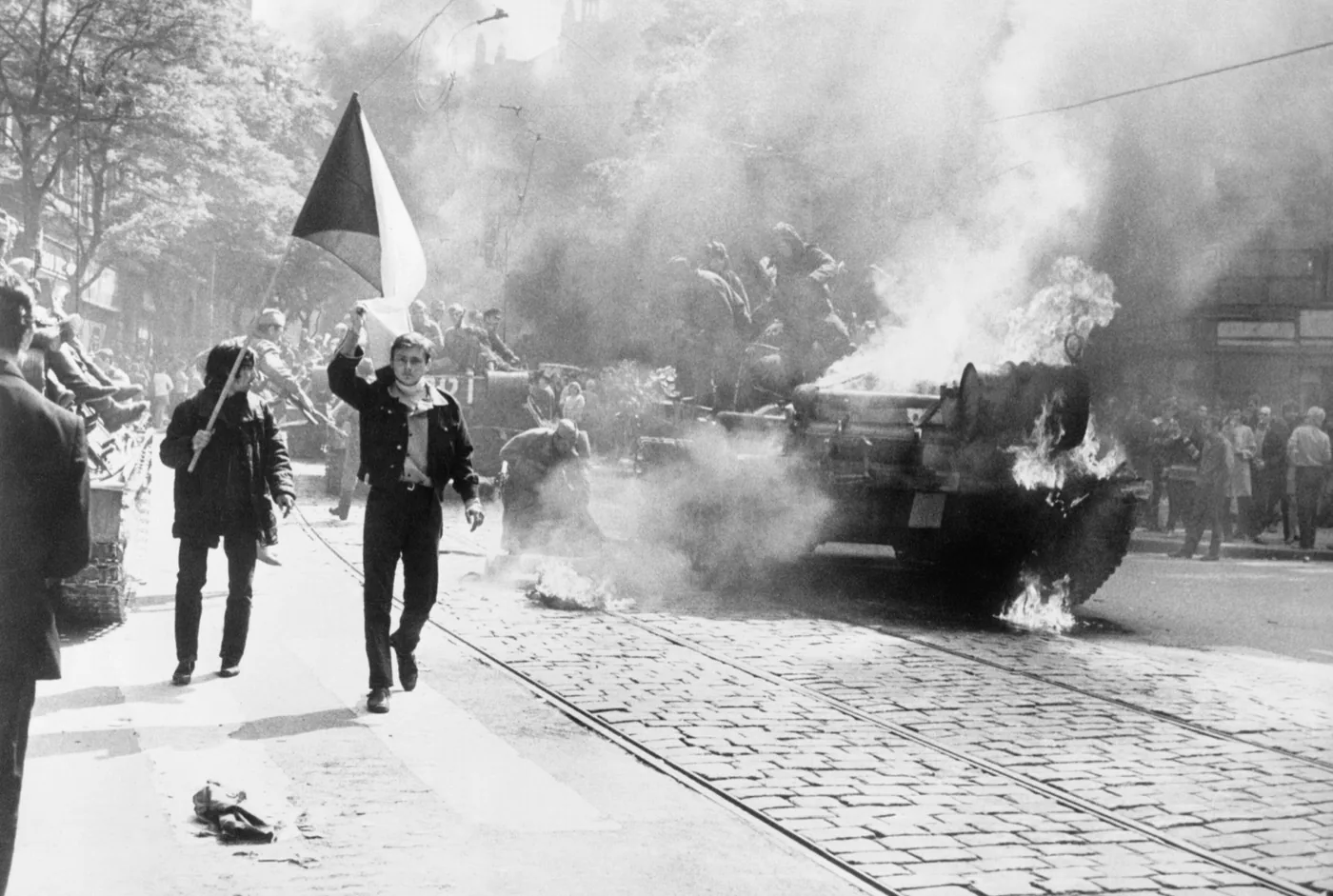
The Warsaw Pact was a military alliance between the Soviet Union and seven Eastern European countries that lasted from 1955 to 1991. Its formal name was the Treaty of Friendship, Cooperation, and Mutual Assistance. On paper it was a mutual defense pact, the communist answer to NATO: an attack on one member was to be treated as an attack on all. In practice, the Soviet Union controlled it. All major commands were held by Soviet generals, all planning followed Soviet doctrine, and Soviet troops were based on several members' territory. In thirty-six years, the alliance never fought NATO. The only times Warsaw Pact forces went to war, they invaded their own members: Hungary in 1956 and Czechoslovakia in 1968.
How the Warsaw Pact was created
On May 6, 1955, West Germany joined NATO and began to rearm. Fourteen years earlier, German armies had invaded the Soviet Union. The war that followed killed an estimated 27 million Soviet citizens. Eight days after West Germany's entry, on May 14, the Soviet Union and seven Eastern European states signed a mutual defense treaty in Warsaw. The signatories, in addition to the Soviet Union, were Albania, Bulgaria, Czechoslovakia, East Germany, Hungary, Poland, and Romania. Marshal Ivan Konev, a Soviet general who had led armies against Germany in World War II, was named the alliance's first commander.
The treaty formalized what already existed. The Soviet military already trained, equipped, and stationed troops across Eastern Europe. What the Warsaw Pact added was a legal framework, a unified command structure, and a formal justification for keeping Soviet troops on other countries' territory. Albania was the one member that broke away early. It sided with China in the Sino-Soviet split, stopped participating in the Pact in 1961, and formally withdrew in 1968.
How the Warsaw Pact was used against its own members
On November 1, 1956, Hungary's prime minister, Imre Nagy, announced that Hungary would leave the Warsaw Pact and become a neutral country. Nagy was a lifelong communist who had been born in 1896 in a small town in southern Hungary, the son of servants. He had worked as a locksmith, fought in World War I, and spent years living in Moscow. On November 4, Soviet tanks rolled into Budapest. The fighting killed at least 2,500 Hungarians and about 700 Soviet soldiers. About 200,000 Hungarians fled to the West. The Soviet Union replaced Nagy with János Kádár, who led Hungary for the next three decades. Two years after the invasion, Nagy was tried in secret and executed by hanging.
Twelve years after Hungary, Czechoslovakia's leaders began a set of liberalizing reforms known as the Prague Spring. On the night of August 20, 1968, about 250,000 Warsaw Pact troops and 2,000 tanks from the Soviet Union, Poland, Bulgaria, and Hungary crossed into Czechoslovakia. Soviet leader Leonid Brezhnev then declared that socialist countries had only limited sovereignty, and that the Soviet Union had the right to intervene in any socialist state where it considered socialism to be threatened. This became known as the Brezhnev Doctrine.
How the Warsaw Pact ended
In the late 1980s, Soviet leader Mikhail Gorbachev quietly abandoned the Brezhnev Doctrine. He signaled that the Soviet Union would no longer use force to keep communist governments in power. Once Eastern European leaders understood that Soviet tanks would not come, communist regimes fell one after another during 1989. Poland held partly free elections in June. Hungary opened its border with Austria in September, letting thousands of East Germans cross to the West. The Berlin Wall fell in November. By the end of the year, communist governments across Eastern Europe had collapsed, most of them without violence.
On July 1, 1991, the alliance held its final meeting in Prague and officially dissolved. The host was Václav Havel, a Czech playwright who had been imprisoned for his dissident activities under the communist government and was now president of Czechoslovakia. It was the same city that Warsaw Pact armies had invaded in 1968. Five months later, the Soviet Union itself ceased to exist.
Why did former Warsaw Pact countries join NATO?
Within a decade of the Pact's dissolution, several of its former members had joined NATO. Poland, Hungary, and the Czech Republic joined in 1999. Bulgaria, Romania, and Slovakia joined in 2004. Albania, which had left the Pact decades earlier, joined NATO in 2009. East Germany became part of NATO through German reunification in 1990, before the Pact had even formally dissolved.
For these countries, NATO membership was a guarantee that they would never again be pulled into a military alliance by force. For Russia, the same expansion looked like a threat. Russian leaders have cited NATO's eastward growth as a security concern since the 1990s, and the disagreement continues.