
228 Incident and the White Terror
The 228 Incident was the 1947 massacre of Taiwanese civilians by the Nationalist government, followed by 38 years of martial law called the White Terror.
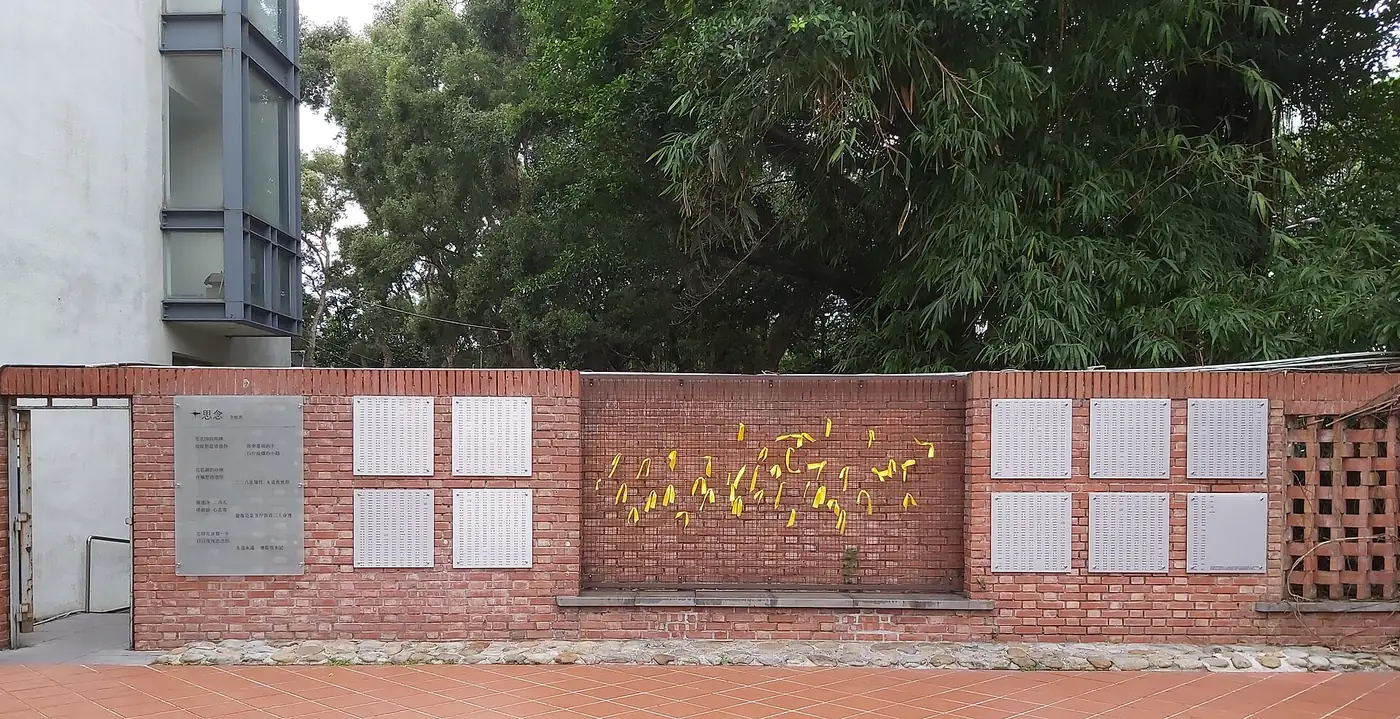
On February 28, 1947, Taiwanese civilians rose up against the Chinese Nationalist government that had taken over the island after World War II. The Nationalists crushed the uprising within weeks, killing thousands. They then imposed martial law that lasted 38 years, from 1949 to 1987, one of the longest periods of martial law in modern history. During those decades, known as the White Terror, the government imprisoned an estimated 140,000 people and put 3,000 to 4,000 to death. The 228 Incident and the White Terror together destroyed a generation of Taiwan's educated class and remained forbidden topics for decades.
How the 228 uprising began
Taiwan had been a Japanese colony for fifty years before Japan's surrender in 1945. When Chinese Nationalist administrators arrived to take over, many Taiwanese expected liberation. Instead they got an occupying government whose language most of them could not understand, that took control of the economy, and that regarded locals as people tainted by Japanese rule. Officials enriched themselves openly. Prices spiraled. Factories and equipment that had survived the bombing were dismantled and sent to China.
It started on the evening of February 27, 1947, when inspectors from the government's Tobacco Monopoly Bureau stopped a 40-year-old widow named Lin Jiangmai who was selling untaxed cigarettes on a Taipei street to feed her children. The inspectors confiscated her goods and her money, then struck her on the head with a pistol. When a crowd gathered, one of the inspectors fired into it and killed a bystander. Within days, protests had spread across the entire island.
The uprising was about far more than cigarettes. Grievances against the Nationalist administration had been building since 1945. Protesters took over the radio station in Taipei. Groups of civic leaders organized in cities across the island and began running local affairs. For about a week, these leaders sat down with the governor, Chen Yi, and put forward demands for self-rule and an end to corruption. Chen Yi appeared to listen. At the same time, he was cabling Chiang Kai-shek for reinforcements.
How the Nationalists targeted Taiwan's educated class
Troops from the mainland landed at the port of Keelung on March 8, 1947, and began shooting on arrival. The crackdown was not aimed at rioters. It was aimed at a class. Doctors, lawyers, teachers, journalists, students, and local politicians were hunted down by name. People were seized from their homes and never seen again.
The repression went after anyone with education, public standing, or a voice. A study commissioned by the government in the 1990s put the number of dead at 18,000 to 28,000. The true count is uncertain because the Kuomintang destroyed records and survivors kept silent for decades.
The killing did not stop with the uprising. On May 19, 1949, the Nationalist government declared martial law, months before Chiang Kai-shek lost the mainland to Mao Zedong and moved his government to Taiwan. Martial law lasted until July 15, 1987, a total of 38 years.
Under martial law, new political parties were banned, newspapers were controlled by the state, and military courts tried civilians for political crimes. The security apparatus treated any criticism of the government as evidence of communist sympathy. Over the course of the White Terror, the government imprisoned an estimated 140,000 people. Firing squads put 3,000 to 4,000 to death, many of them at Machangding, an execution site on the banks of the Xindian River in Taipei. Many of the condemned were guilty of nothing more than holding the wrong opinions or knowing the wrong people. Sons and daughters of the dead or imprisoned were often told nothing about what happened to their parents. For four decades, no one in Taiwan could speak publicly about what happened in 1947, write about it, or teach it.
Why is February 28 a memorial day in Taiwan?
February 28 is a national holiday in Taiwan, called Peace Memorial Day. A turning point came in 1995, when President Lee Teng-hui became the first leader to offer an official apology for the massacre. Lee had lived through the terror himself. In the late 1960s, he was detained and interrogated as a suspected communist sympathizer.
After Lee's apology, Taiwan began confronting its past. February 28 was designated a memorial day in 1995 and became a public holiday in 1997. Taipei built a memorial park and museum, and the government began paying reparations to victims' families. Starting in 2018, a government commission on transitional justice declassified security files and overturned wrongful convictions from the White Terror era. The commission completed its mandate in 2022 and transferred its remaining work to other agencies.
The legacy of the 228 Incident and the White Terror still shapes Taiwanese politics. The divide between families who endured the massacre and mainlanders who came with Chiang Kai-shek in 1949 created the central fault line in the island's party system. The share of people in Taiwan who call themselves Taiwanese rather than Chinese has grown steadily. Taiwan today is a democracy and, through its semiconductor industry, a critical part of the global economy. The 228 Incident and the White Terror remain central to how the island sees itself and to why many of its people are wary of Beijing's calls for unification.