
Kuomintang (KMT)
The Kuomintang is China's Nationalist Party. It ruled the mainland, lost the Chinese Civil War, and retreated to Taiwan in 1949.
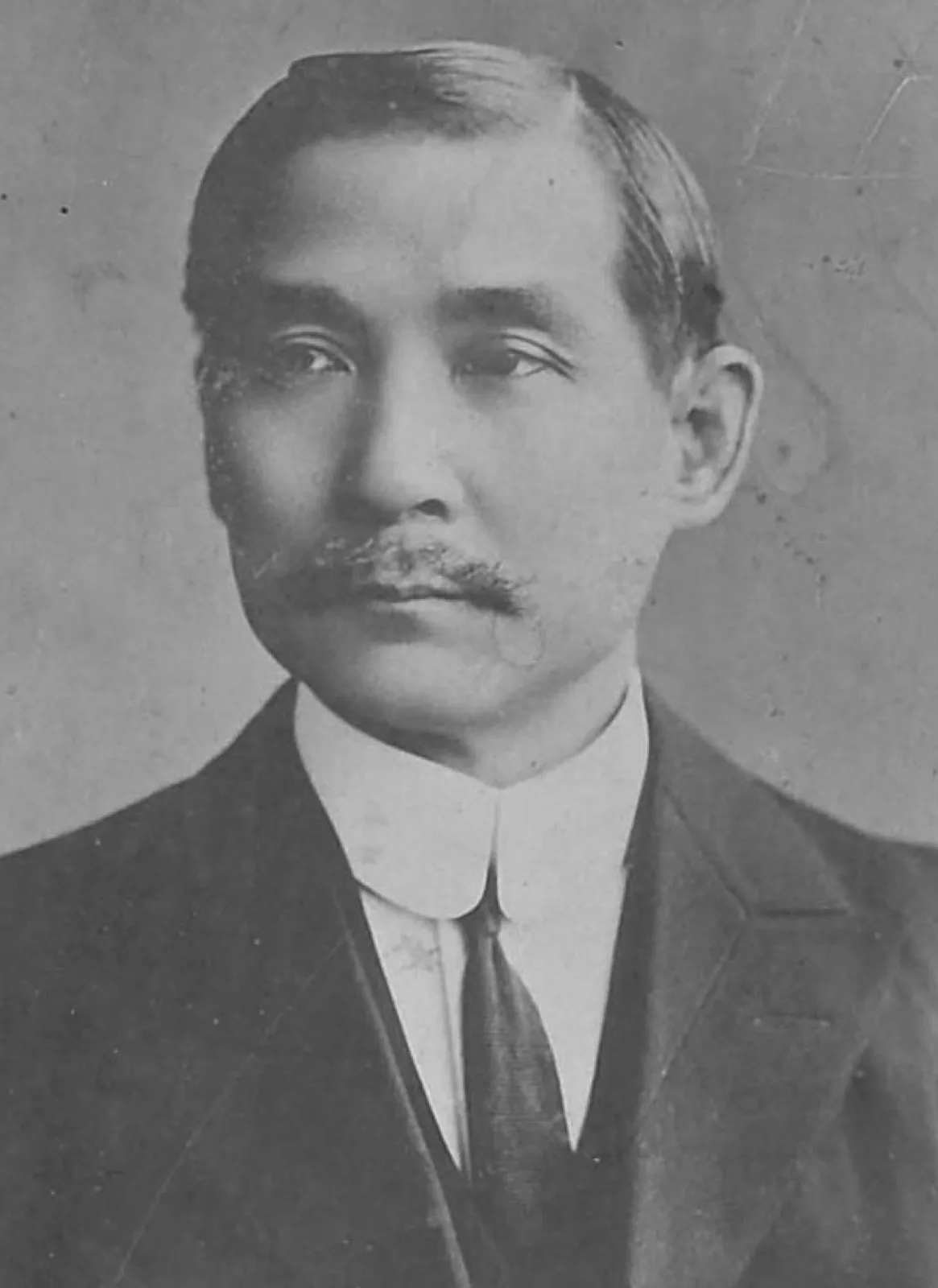
The Kuomintang, or KMT, is the Chinese Nationalist Party. The name means "National People's Party" in Chinese and is also written Guomindang in the pinyin romanization system. Sun Yat-sen founded the party in 1912, the same year that China's last imperial dynasty fell and the Republic of China was declared. The KMT ruled mainland China from the late 1920s until 1949, when it lost the Chinese Civil War to Mao Zedong's Communists and retreated to Taiwan with roughly two million people. On Taiwan it governed as a one-party state for nearly four decades, then oversaw the island's transition to democracy. Today the KMT is one of Taiwan's two major parties, and its stance toward Beijing remains one of the most important questions in East Asian politics.
How Sun Yat-sen and Chiang Kai-shek built the Kuomintang
Sun Yat-sen was a doctor trained in Hong Kong who spent years organizing uprisings against the Qing dynasty during China's Century of Humiliation. After the dynasty collapsed in the revolution of 1911, Sun served as the Republic of China's first provisional president. He organized the KMT around his Three Principles of the People, which called for national unity, democratic government, and economic welfare for ordinary Chinese. But the new republic quickly fell apart. Regional warlords divided China into rival territories, and Sun controlled little beyond the south.
In the early 1920s, Sun reorganized the KMT with help from the Soviet Union's Comintern. Soviet advisors trained KMT officers, Soviet money funded a party army, and the KMT formed an alliance with the small Chinese Communist Party. Sun died of cancer in March 1925, before the party could reunify the country.
The general who took over was Chiang Kai-shek, who had trained at a military academy in Japan. In 1927, Chiang married Soong Mei-ling, whose brother T.V. Soong was one of China's richest men and had served as the republic's finance minister. The marriage connected Chiang to one of the country's most powerful families. The year before, he had launched the Northern Expedition, a military campaign to defeat the warlords and bring China under one government. The campaign succeeded, but Chiang did not share power with his Communist allies. On April 12, 1927, KMT troops and armed gangsters swept through Shanghai, killing thousands of Communist organizers and labor leaders. The purge broke the alliance and started the Chinese Civil War, which dragged on, with interruptions, for over two decades.
How the Kuomintang lost China
From its new capital in Nanjing, the KMT governed much of China through the late 1920s and 1930s, a stretch often called the Nanjing decade. When Japan launched a full-scale invasion of China in 1937, the KMT and the Communists formed a second, reluctant alliance. For eight years China fought Japan. The KMT bore the heaviest losses in conventional battles, while Mao Zedong's Communists waged guerrilla war behind Japanese lines. Both sides spent much of the war preparing for their own eventual fight.
After Japan surrendered in 1945, fighting between the KMT and the Communists started again. The KMT had larger armies and American weapons and aid. The Communists had spent the war building support among China's peasants by promising land reform. The KMT government, by contrast, was losing support in both the countryside and the cities to corruption and runaway inflation. By late 1948, entire KMT divisions were surrendering or switching sides, bringing their American equipment with them. On October 1, 1949, Mao proclaimed the People's Republic of China in Beijing.
Chiang and roughly two million soldiers, officials, and civilians fled across the Taiwan Strait. They carried the Republic of China's government, its gold reserves, and thousands of imperial art treasures from the Palace Museum in Beijing. Chiang insisted the retreat was temporary, but the KMT never returned to the mainland.
Why did the KMT lose the Chinese Civil War?
At the end of World War II, Chiang's forces outnumbered Mao's, and the United States had supplied the KMT with modern weapons. The KMT still lost because the Chinese public had turned against it.
In the countryside, the KMT defended the existing landlord system while the Communists redistributed land to peasants, winning millions of supporters. In the cities, the KMT government printed money to cover its debts, which destroyed the currency and wiped out the savings of the middle class. Corruption was visible at every level, from local officials demanding bribes to senior generals selling supplies meant for their own troops.
Chiang also made costly strategic errors. He spread his forces across vast distances trying to hold territory, while Communist generals like Lin Biao concentrated their strength at decisive points. By the final years of the war, Chiang's army was losing huge numbers of soldiers to desertion and defection.
The Kuomintang in Taiwan today
On Taiwan, the KMT imposed martial law and governed under single-party authoritarian rule for nearly four decades. The party insisted that the Republic of China was the rightful government of the entire Chinese mainland and treated the island as a temporary base. Dissent was suppressed during a long period of political repression known as the White Terror, in which thousands of Taiwanese were imprisoned or killed.
The turn toward democracy came from inside the party. Chiang Kai-shek died in 1975, and his son Chiang Ching-kuo eventually succeeded him. The younger Chiang lifted martial law in 1987 and allowed opposition parties to organize. His successor, Lee Teng-hui, a native Taiwanese, pushed further. In 1996, Lee won Taiwan's first direct presidential election. In 2000, the KMT lost power for the first time when the Democratic Progressive Party's Chen Shui-bian won the presidency.
Since then, the KMT and the DPP have traded control of Taiwan's government. The KMT generally favors closer economic ties with Beijing and opposes moves toward formal Taiwanese independence, a position rooted in its old claim to represent all of China. The DPP argues that Taiwan already functions as a separate country. That disagreement sits at the center of the one-China policy debate. The KMT lost the 2024 presidential election to the DPP's Lai Ching-te and currently serves as Taiwan's main opposition party. The party that founded a republic on the Chinese mainland in 1912 now seeks support from nearly 20 million voters on an island across the strait. The outcome of that contest still shapes how China and Taiwan relate to each other.