
Zheng He
Zheng He was a Ming dynasty admiral who led seven voyages across the Indian Ocean between 1405 and 1433, decades before Columbus.
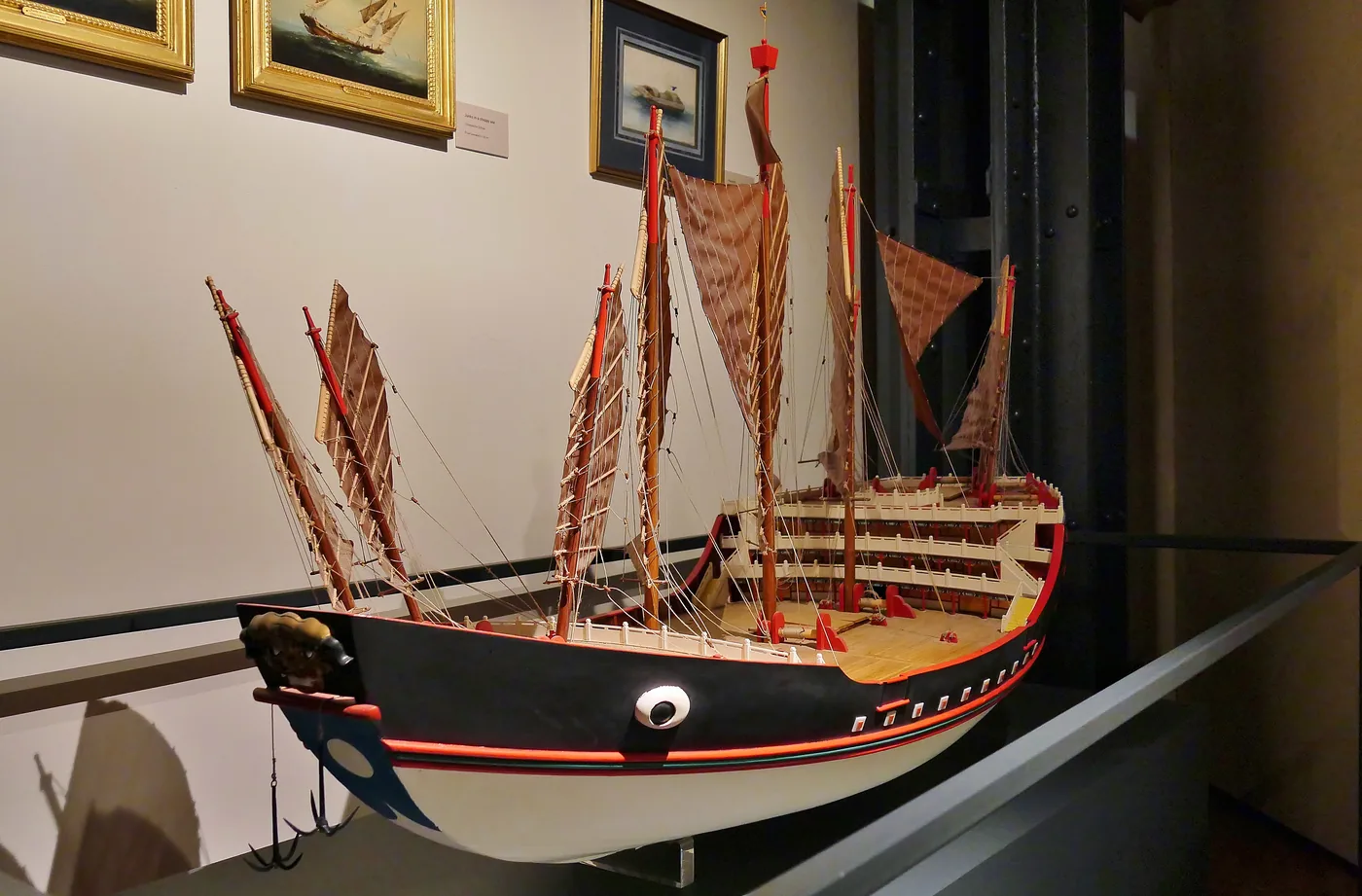
Zheng He was a Ming dynasty admiral who commanded the largest navy in the world in the early 1400s. Between 1405 and 1433 he led seven voyages across the Indian Ocean, with fleets of more than 300 ships and about 27,000 sailors. Columbus crossed the Atlantic nearly a century later with three ships and ninety men.
Zheng He was born Ma He in 1371, a Muslim boy from Yunnan, a landlocked province in southwest China. At ten he was captured by Ming soldiers, castrated, and taken into the imperial household. He became a trusted aide to the prince who would seize the throne as the Yongle Emperor, and the emperor appointed him to command the treasure fleet. His ships reached India, the Persian Gulf, and the coast of East Africa. Within a few years of his death in 1433, the Ming court banned oceangoing ships and let the fleet decay.
How Zheng He rose from captive to admiral
In 1381, Ming armies conquered Yunnan, the last province held by Mongol forces. Zheng He's father, a Muslim who had made the pilgrimage to Mecca, died in the fighting. The boy Ma He, about ten years old, was captured and castrated. He was sent to the household of Zhu Di, the Prince of Yan.
Ma He grew up in Zhu Di's household. By adulthood he reportedly stood about six and a half feet tall. He fought alongside Zhu Di as a soldier, and in 1399 Zhu Di launched a civil war against his nephew, the Jianwen Emperor. Ma He served as one of his officers. After Zhu Di took the throne in 1402 as the Yongle Emperor, he rewarded Ma He with the surname Zheng and gave him command of a new fleet.
The Yongle Emperor wanted to project Ming power across the Indian Ocean and bring foreign rulers into China's tribute system. Distant kings would acknowledge the emperor's supremacy and send gifts in return. The voyages were not meant to seize territory or set up trading posts, as European powers later did. They were displays of imperial strength. The emperor chose a man he had known since boyhood to lead them.
Where Zheng He's fleets sailed
Zheng He's first voyage set out in 1405 with 317 ships, including 62 treasure ships. The fleet also included cargo vessels, water carriers, troop ships, and warships. Over seven voyages, Zheng He's fleets visited more than thirty countries.
The ships sailed through Southeast Asia to Ceylon and Calicut on India's southwest coast. Later voyages pushed into the Persian Gulf, reaching Hormuz, and along the coast of Arabia as far as Aden. Zheng He's ships also sailed the East African coast, calling at Malindi and Mogadishu. Zheng He installed friendly rulers along the way, defeated a group of pirates, and captured a defiant king of Ceylon. He brought foreign envoys back to the Ming court to pay homage to the emperor.
On the fourth voyage, in 1414, the fleet brought an East African giraffe back from Bengal. The Ming court identified it as a qilin, a mythical creature that, according to Chinese tradition, appeared only during the reign of a just emperor. The Yongle Emperor, who had taken the throne from his nephew by force, had reason to welcome the symbolism.
How big were Zheng He's treasure ships?
Ming records describe the largest treasure ships as 44 zhang long, roughly 137 meters (450 feet). That would make them more than seven times the length of Columbus's Santa Maria, which was about 19 meters (62 feet). If the records are accurate, they were the largest wooden ships ever built.
Many historians doubt the figure. Ships that long would have been extremely difficult to build from wood, and the earliest source for the 44-zhang measurement comes from a novel published more than 150 years after the voyages. Skeptical scholars put the real length at 60 to 76 meters (about 200 to 250 feet). Even at the smaller estimate, Zheng He's treasure ships were far larger than most European vessels of the era.
Why did China stop Zheng He's voyages?
Zheng He died in 1433, most likely in Calicut, India, during the seventh voyage. He was about 62 years old. With him gone, the voyages lost their strongest champion at court.
Confucian officials who ran the Ming bureaucracy had long resented the costly voyages and the eunuch commanders behind them. They saw foreign trade as unnecessary: in the Confucian view, China already had everything it needed. The Yongle Emperor had overruled them, but most of his successors did not. By 1436, the court had banned the construction of oceangoing ships. A senior official, Liu Daxia, reportedly destroyed or hid the records of the voyages so that a future emperor could not restart them.
The Ming court also had a practical reason to turn away from the sea. Mongol armies on the northern border were a constant threat, and defending that frontier cost more than distant voyages could justify.
Within seven decades of Zheng He's death, Portuguese explorers like Vasco da Gama were sailing into the Indian Ocean. Historians still argue about whether China could have colonized the world before Europe if the fleet had survived. For a brief period in the early 1400s, the largest fleet in the world was Chinese. China chose to give it up.