
Why China kept getting conquered from the north
China tried walls, tribute, and war to stop 2,000 years of nomadic invasions. The nomads conquered and ruled it anyway, more than once.
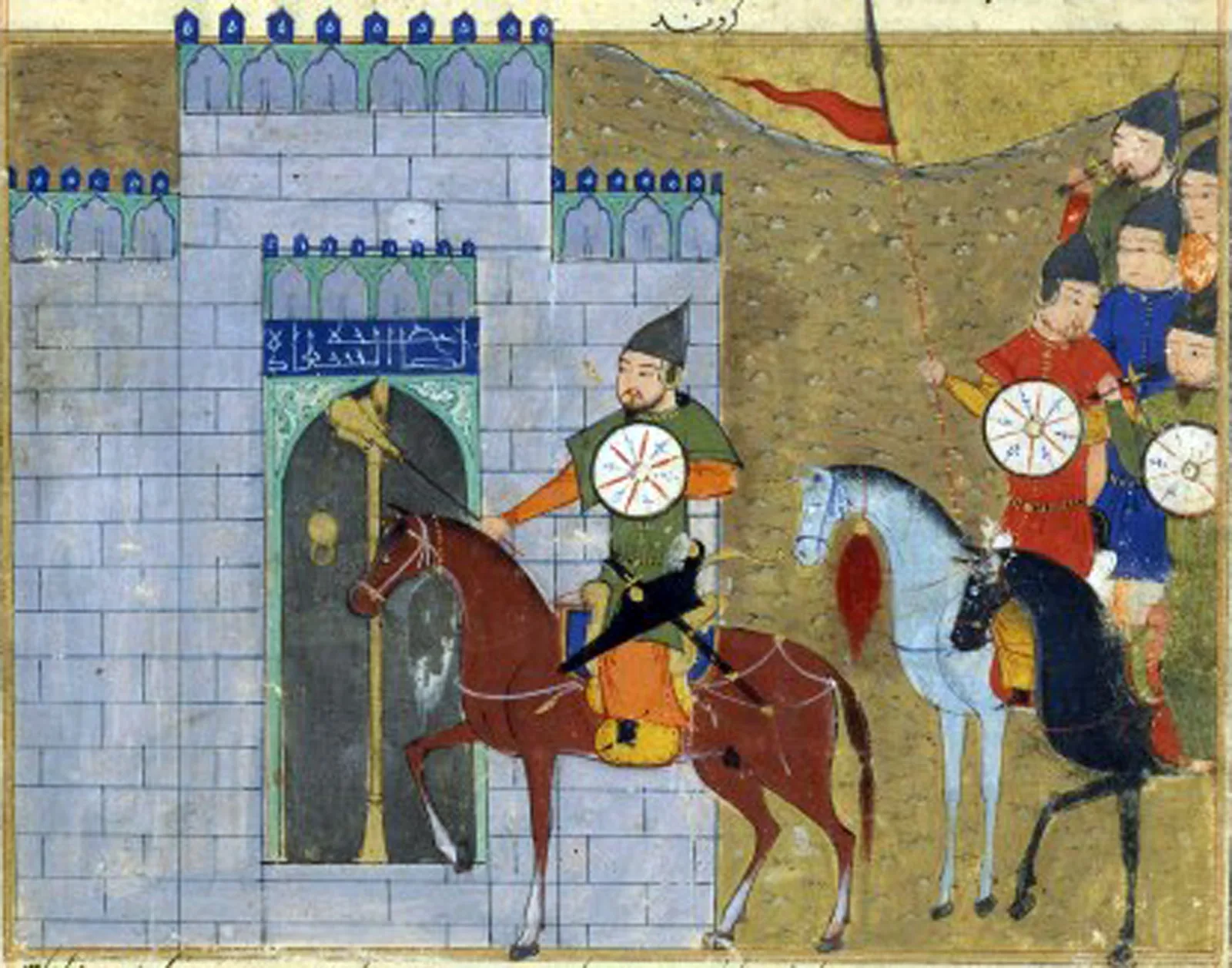
China was, for most of recorded history, the largest, wealthiest, and most technologically advanced civilization in Asia. It invented paper, gunpowder, the compass, and printing. Its population dwarfed Europe's. And yet nomads from the grasslands north of the Great Wall conquered it repeatedly. The Khitan took the north in the 10th century. The Jurchen took it again in the 12th. The Mongols conquered all of China in the 13th. The Manchus did the same in the 17th. Every time, China had more people, more money, and better technology, and every time it lost.
Where farmland meets grassland
China's northern frontier sits on one of the sharpest geographic divides on earth. To the south: the Yellow and Yangtze river valleys, with rice paddies, wheat fields, and dense farming populations that supported some of the largest cities in the ancient world. To the north: the eastern edge of the Eurasian Steppe, a belt of dry grassland where rainfall was too low for agriculture and people lived as nomadic herders.
The steppe side of this border produced mobile warriors on horseback who could cover 60 miles in a day. The settled side produced slow-moving infantry armies that depended on supply lines, granaries, and roads. This mismatch was the problem China could never permanently solve. A raiding party could ride in, strike a frontier town, and be gone before any army could respond. Pursuing the raiders into the steppe meant marching into open grassland with no cities to resupply from and no enemy willing to stand and fight.
The Xiongnu, a nomadic confederation that dominated the eastern steppe, raided northern China so persistently in the 3rd century BC that the first emperor, Qin Shi Huang, ordered existing border walls connected into a single defensive line. This was the earliest version of the Great Wall. It was not a monument. It was a desperate attempt to slow raids long enough for Chinese armies to assemble and respond.

Walls, silk, and princesses
Over the centuries, China tried three strategies against the nomads: walls, tribute, and war. All three worked for a while. None of them worked permanently.
The tribute system began under the early Han dynasty around 198 BC, after a disaster. Emperor Gaozu, founder of the Han, had marched north to confront the Xiongnu and found himself surrounded with his army at the Battle of Baideng. The siege lasted seven days. Gaozu escaped, reportedly by sending gifts to the wife of the Xiongnu leader Modu Chanyu and persuading her to convince her husband to open a gap in the encirclement. Gaozu was a former peasant who had fought his way to the throne during the collapse of the Qin dynasty. He was not used to losing. But after Baideng he came home convinced that fighting the Xiongnu directly was not the answer.
The Han began sending the Xiongnu regular shipments of silk, grain, rice wine, and imperial princesses as brides for the Xiongnu ruler, in a system known as heqin. In exchange, the Xiongnu agreed to stop raiding. The arrangement was expensive and humiliating. By the reign of Emperor Wen in the mid-2nd century BC, the annual payments included thousands of rolls of silk and tens of thousands of bushels of grain.
Emperor Wu of Han, who came to power in 141 BC, decided to end the tribute and fight instead. He spent decades building cavalry forces that could match the nomads' mobility, then launched a series of massive campaigns starting in 129 BC. His general Wei Qing drove the Xiongnu out of the Ordos Loop, a fertile bend of the Yellow River they had held for decades. Wei Qing's nephew Huo Qubing led lightning raids deep into Xiongnu territory, once marching over 600 miles beyond the frontier. When Emperor Wu offered him a mansion, Huo Qubing reportedly refused, saying the Xiongnu were not yet destroyed and he had no need for a home. He died at 23 or 24, the most celebrated military commander of his age.
Emperor Wu's campaigns pushed the Xiongnu back and eventually split the confederation in two. The southern Xiongnu submitted and settled inside China's borders. But the wars nearly bankrupted the Han treasury, and within a few centuries new nomadic groups filled the vacuum on the steppe. The threat did not end; it just changed names.
When the conquerors stayed
The wall failed repeatedly, and the failures followed a pattern. Each time, China was already weakened by internal rebellion, corruption, or factional fighting when the nomads broke through. The wall was a military problem only when the empire behind it was functioning. When the empire was fracturing, the wall was a line of stone with nobody reliable to defend it.
The Khitan, a semi-nomadic people from Manchuria, established the Liao dynasty in 907 and took control of a wide strip of northern China including modern Beijing. The Song dynasty, which held the rest of China, could not push them out and eventually signed the Treaty of Chanyuan in 1005. The terms required the Song to pay the Khitan 200,000 bolts of silk and 100,000 taels of silver a year. China's oldest strategy, paying for peace, was back.
The Jurchen, another Manchurian people, destroyed the Liao in 1125 and then turned on the Song. In 1127, Jurchen cavalry captured the Song capital of Kaifeng and seized both the reigning emperor and his father, the former emperor, along with most of the imperial court. The Song court fled south across the Yangtze River and rebuilt as the Southern Song, leaving the entire northern half of China under Jurchen rule for over a century.
Then came the Mongols. Genghis Khan began raiding the Jurchen Jin dynasty in 1211, and his successors spent the next 68 years conquering China piece by piece. His grandson Kublai Khan declared the Yuan dynasty in 1271 and destroyed the Southern Song by 1279. For the first time in history, all of China was ruled by a foreign conqueror from the steppe.
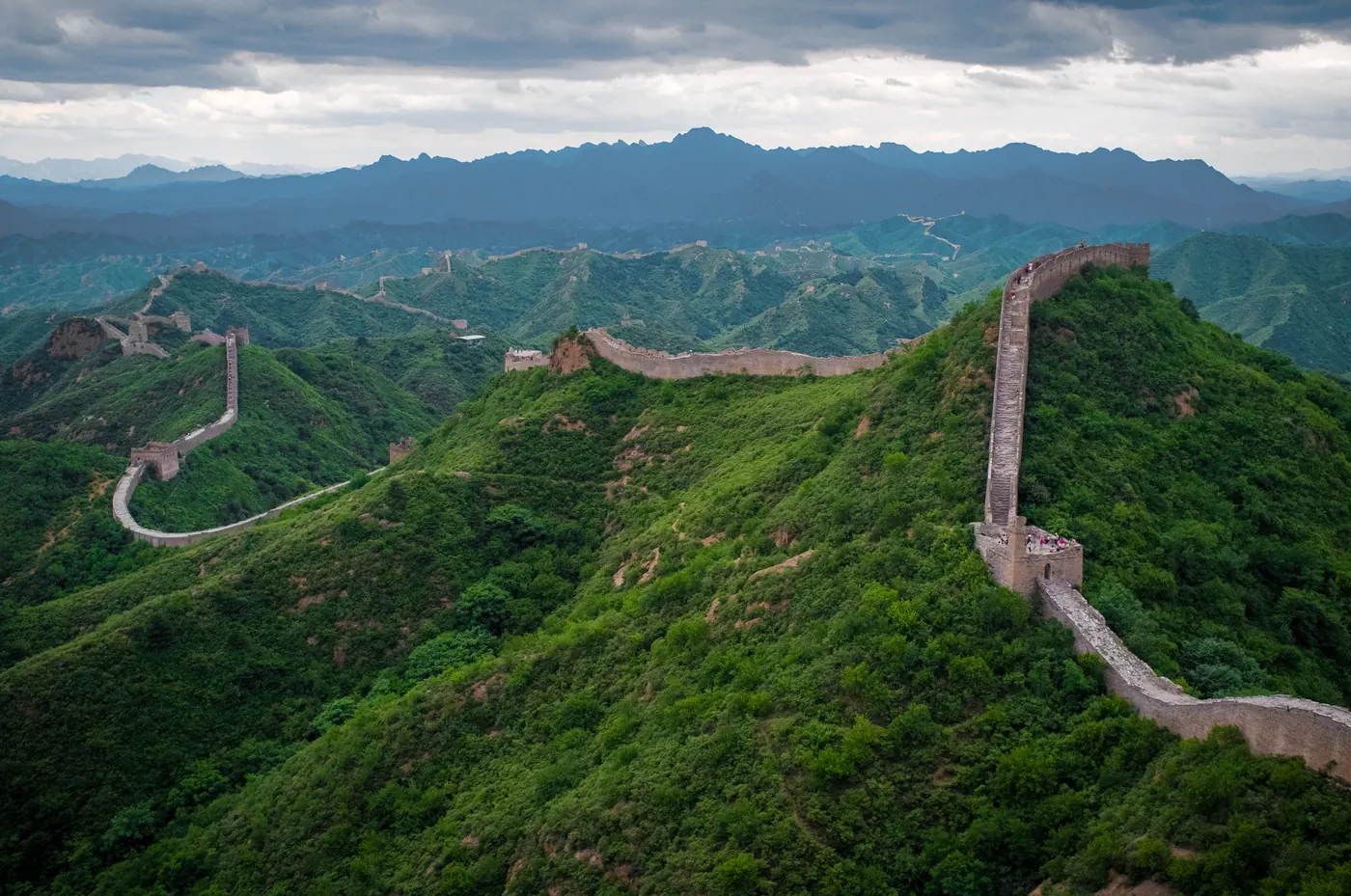
The last and longest-lasting conquest came in 1644. The Ming dynasty, which had overthrown the Mongol Yuan in 1368, spent two centuries rebuilding and extending the Great Wall into the massive stone-and-brick fortification that tourists visit today. It was the most ambitious version of the wall ever built, stretching roughly 5,500 miles with watchtowers, garrisons, and signal-fire stations along its length. It did not matter. When a rebel army led by Li Zicheng captured Beijing and the last Ming emperor hanged himself from a tree on Coal Hill behind the palace, a Ming general named Wu Sangui faced a choice. He was stationed at Shanhai Pass, the fortified gateway where the Great Wall meets the Bohai Sea. Behind him were the rebels who had just overthrown his dynasty. In front of him were the Manchus, a people descended from the Jurchen, who had been building their own state in Manchuria for decades and were waiting for exactly this kind of opening.
Wu Sangui opened the gates. The Manchu army marched through, routed Li Zicheng's forces on the plain west of the pass, and took Beijing within weeks. The Qing dynasty they founded lasted until 1912 and became the largest Chinese state in history.
How China absorbed its conquerors
The pattern that makes China's story different from any other repeatedly conquered civilization is what happened next. Every nomadic people that conquered China eventually became Chinese.
The Mongol Yuan dynasty lasted less than a century before a Chinese rebellion drove the Mongols back to the steppe. The Manchu Qing dynasty lasted 268 years and expanded China's borders further than any Han Chinese dynasty ever had, adding Tibet, Xinjiang, Mongolia, and Taiwan to the empire. But by the 19th century, most Manchus spoke Chinese, dressed in Chinese styles, and had intermarried with the Han population for generations. The conquerors had dissolved into the civilization they conquered.
This was not accidental. China's bureaucratic system, built on written examinations, detailed tax records, and a professional civil service, was simply more effective at governing a large agricultural population than anything the nomads brought with them. To collect taxes from 100 million farmers, you needed the Chinese system. To run it, you needed Chinese-trained administrators. Within a generation or two, the conquering elite was governing in Chinese, reading Chinese texts, and adopting Chinese customs because no alternative worked as well.
Why the conquests still shape the map
The borders of modern China are not the borders of the Han, the Tang, or the Ming. They are, almost exactly, the borders of the Manchu Qing dynasty, the last nomadic conquerors. Tibet, Xinjiang, Inner Mongolia, Manchuria, and Taiwan all entered what we now call "China" because a non-Han people from beyond the wall conquered both the Chinese heartland and the territories surrounding it.
When Beijing today insists that Tibet and Xinjiang have "always been part of China," it is claiming borders drawn by the very conquerors the Great Wall was built to stop. The wall itself stands as China's most recognized national symbol, a monument to the idea that Chinese civilization defended itself behind stone and brick for millennia. The history is more complicated. The wall slowed the nomads but never stopped them permanently. And the dynasties those nomads founded, especially the Qing, made China larger and more diverse than any wall-building dynasty ever managed. The empire's greatest expansion came not from behind the wall, but from the people who rode through it.
Test what you learned
5 questions on this article. About two minutes, no signup.