
The Mecca Agreement: why Saudi Arabia, Turkey, and Pakistan signed a defense pact
Inside the Mecca agreement, the mutual defense pact Saudi Arabia, Turkey, and Pakistan signed in August 2026, and whether it is as big as it looks.
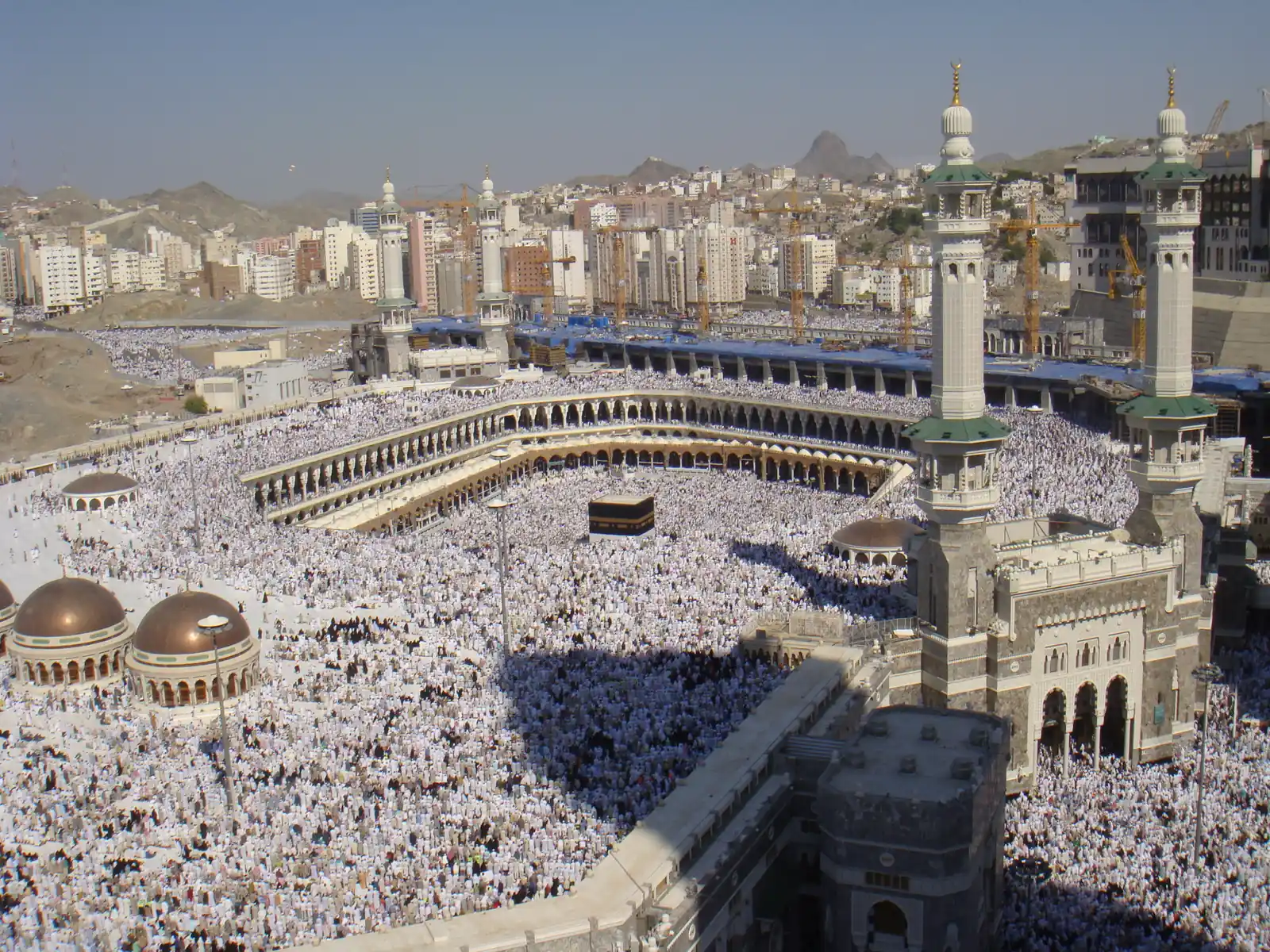
On August 7, 2026, three leaders gathered in Mecca, Islam's holiest city, and signed a promise to treat an attack on any one of their countries as an attack on all three. The signatures belonged to President Recep Tayyip Erdoğan of Turkey, Crown Prince Mohammed bin Salman of Saudi Arabia, and Prime Minister Shehbaz Sharif of Pakistan. Between them, they bound together a NATO member, the guardian of Islam's two holiest cities, and the only Muslim-majority country with nuclear weapons. Sharif spent the day before the ceremony performing the umrah pilgrimage in the Grand Mosque, a short drive from where he signed.
The agreement surprised nearly everyone, including the officials in Washington whose job is to see these things coming. And nobody can say yet, probably including the three men who signed it, whether this is the founding document of a new military alliance or an expensive act of symbolism. Both readings have real evidence behind them, and it is worth walking through what is actually known.
What the Mecca agreement actually says
The official name is the Mecca Joint Defence Agreement, and its core sentence reads: "any armed attack against any one of the three states shall be regarded as an attack against them all." Around that sentence, the three governments sketched the beginnings of an institution. According to Turkey's foreign minister, Hakan Fidan, the pact will have a committee of ministers, separate political and military committees, and a permanent secretariat, expected to sit in Saudi Arabia. The text covers cooperation on the defense industry, intelligence sharing, and counterterrorism. It names no adversary, declares itself purely defensive, and is open for other countries to join.
What the agreement does not contain matters just as much. There is no joint command, no shared army, and no automatic military response. The Turkish foreign minister called the defense clause "technically the same as NATO's Article 5," but he also said that if a member is attacked, consultations among the three would decide what actually happens. That alone is not unusual; NATO's treaty also lets each member choose its own response. The difference is that NATO has spent 75 years building the joint commands, war plans, and stationed forces that turn a promise on paper into a credible threat. The Mecca agreement has the promise, but so far none of the machinery behind it.
Why three countries signed it now
The short answer is that the Middle East has just been through twelve months of crisis, and American protection failed several tests in a row.
In September 2025, Israeli jets bombed Hamas negotiators in Doha, the capital of Qatar. Qatar hosts the largest American air base in the Middle East, and the base did not protect it. The lesson landed in every Gulf palace at once: if Doha could be hit, so could Riyadh. Eight days later, Saudi Arabia and Pakistan signed a bilateral mutual defense pact in Riyadh. Reuters, citing Pakistani sources, reported that it allowed for up to 80,000 Pakistani troops to deploy to the kingdom.
Then came 2026. In late February, the United States and Israel opened a war against Iran with some 900 strikes in the first twelve hours, and Iran's supreme leader, Ali Khamenei, was killed. Iran hit back at American bases and at its Arab neighbors, struck Saudi territory, and closed the Strait of Hormuz, the channel that carries a fifth of the world's oil. Pakistan suddenly mattered in the Gulf as more than a labor exporter: it brokered a short-lived ceasefire between Washington and Tehran in April, and by May it had fighter jets and air defense units stationed on Saudi soil.
Through all of it ran a growing doubt about the United States. President Trump has told allies to carry more of their own defense burden, and in July he tied a US-Saudi civil nuclear deal to a demand that Riyadh normalize relations with Israel. "The agreement reads, in effect, as a verdict on American reliability," wrote Muhammad Waqas Haider, an international relations researcher at Lancaster University. But he also pointed out that all three signatories keep deep American ties, from Saudi Arabia's F-35 purchase to Pakistan's status as a major non-NATO ally. His summary: "This is diversification, not divorce."
What each country brings to the pact
The three members fit together because each has what another lacks. Saudi Arabia has money and modern hardware but few soldiers: its defense budget is $63.9 billion, the largest in the Muslim world, yet it fields only 247,000 active troops. Pakistan is the mirror image. It has 660,000 active troops, a battle-tested army, and about 170 nuclear warheads, but its entire annual defense budget of $9.1 billion is less than what Saudi Arabia spends in two months. Saudi money has quietly kept Pakistan's economy afloat for decades, and some 13,000 Pakistani soldiers were already stationed in the kingdom on the day of the signing.
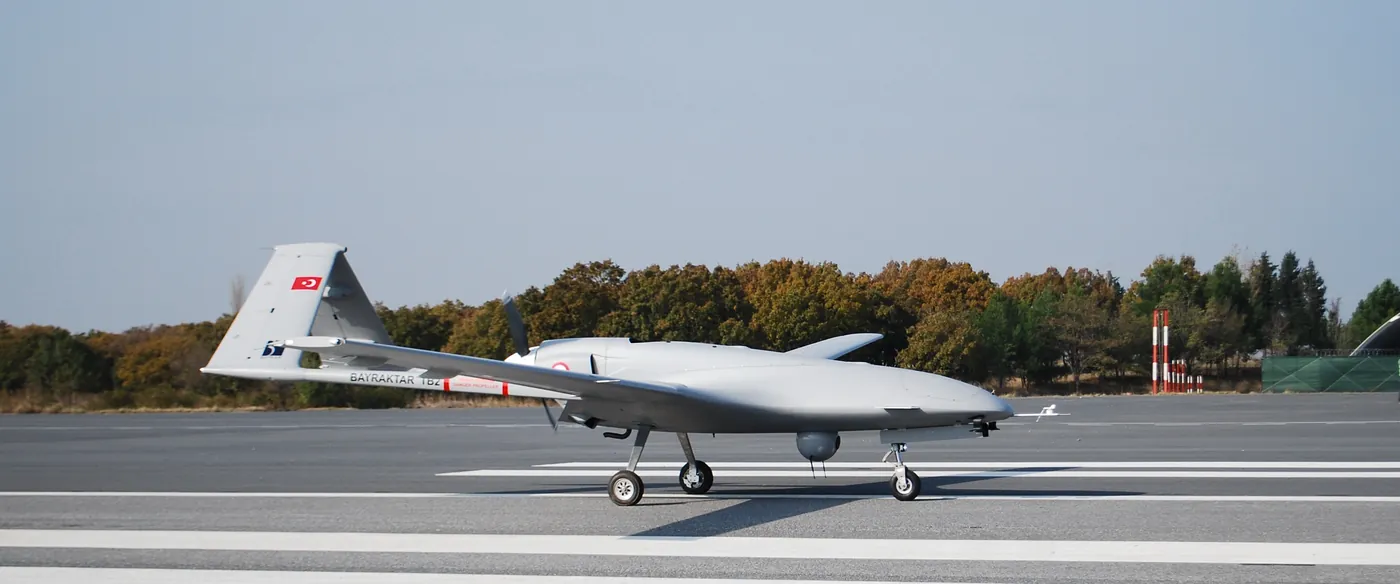
Turkey brings the second-largest army in NATO, 481,000 strong, and something neither partner has: a defense industry. Turkish companies exported a record $8.5 billion in arms in 2025, and Baykar, the drone maker run by Erdoğan's son-in-law Selçuk Bayraktar, has sold its Bayraktar TB2 to 36 countries. Saudi Arabia wants to build weapons at home instead of importing them, and Turkey wants Saudi capital and Saudi customers. Taken together, the pact covers about 380 million people, 1.4 million active troops, and $124 billion in yearly defense spending.
Is this a Muslim NATO?
Headline writers reached for the phrase within hours, and most experts pushed back within days. The skeptics' case rests on three points.
First, the pact failed its first test almost immediately. Barely 48 hours after the ceremony, the Houthis, Yemen's Iran-backed militia, struck a Saudi Aramco facility. Saudi Arabia did not invoke its new agreement, a silence Steven Cook of the Council on Foreign Relations was quick to point out.
Second, the three members fear three different enemies. Saudi Arabia's rival is Iran, Pakistan's is India, and Turkey worries mostly about its own neighborhood. "I don't think Turkey will be striking Iran if Iran hits Saudi Arabia tomorrow, and I just don't see Turkey hitting India if Pakistan is attacked," said H.A. Hellyer, a security scholar at the Royal United Services Institute in London. The partners also carry history with each other. When Saudi agents murdered the journalist Jamal Khashoggi in Istanbul in 2018, it was Erdoğan's government that leaked the evidence to the world, and Turkey sided with Qatar during the years Saudi Arabia blockaded it. The friendship now being formalized in Mecca is barely three years old.
Third, the biggest question is deliberately left open. Neither this pact nor the 2025 Saudi-Pakistani one mentions nuclear weapons, and Pakistani officials deny that any nuclear umbrella exists. "Nothing in the stated pact magically converts Pakistan's India-centric nuclear doctrine into a Middle East umbrella," wrote Rabia Akhtar, a Pakistani nuclear scholar at Harvard's Belfer Center. Yet a Saudi official said of the 2025 pact that it "encompasses all military means," and no government has clarified the point since. Many analysts suspect the vagueness is the product: Riyadh gains a nuclear question mark that Iranian and Israeli planners now have to think about, and Pakistan concedes nothing in writing.
Promises like Mecca's also have a poor track record in the region. The Arab League's 1950 joint defense treaty used nearly identical language and never functioned. Turkey and Pakistan themselves were both members of the Baghdad Pact of 1955, a defense alliance designed in London and Washington that dissolved without ever fighting anyone. The difference this time, supporters argue, is that the Mecca agreement was written in the region rather than for it.
Who is worried, and who wants to join
Abroad, the reactions split along predictable lines. President Trump praised the pact on Truth Social as a "BIG, BOLD, AND IMPORTANT FIRST STEP." Israel's government said nothing in public, but a senior Israeli official told the Ynet news site: "The agreement worries us. It is a pact aimed at Israel." Iran split in two: the foreign minister, Abbas Araghchi, welcomed it as a step toward Muslim unity, while a hardline member of parliament, Ebrahim Rezaei, warned that "a paper agreement with Türkiye and Pakistan will not bring them security." India said it was watching closely and expects Riyadh to keep its "interests and sensitivities" in mind, which is diplomatic language for a real worry: Pakistan now has wealthy friends.
The founders, meanwhile, are recruiting. Erdoğan has called Egypt a "natural partner" and said on August 15 that it could join. Karim Elgendy of Chatham House thinks "the names to watch first are Qatar and Kuwait." Every new member would make the pact heavier, and harder to steer.
For eighty years, security in the Middle East was something Washington arranged, resting on the bargain Franklin Roosevelt struck with Saudi Arabia's founder in 1945: American protection in exchange for reliable oil. The Mecca agreement does not end that era by itself, and it may never stop a single missile. What it ends is the assumption underneath. Nawaf Obaid of King's College London called the pact "the beginning of the post-American Middle East," by which he meant not a region without the United States, but one that no longer relies on America to organize its security. Alliances usually announce what their members will do. This one announces what they no longer believe.
Test what you learned
6 questions on this article. About two minutes, no signup.