
Why China's property crisis keeps getting worse
Chinese households hold 70 percent of their wealth in property. Prices have fallen for four straight years, and the largest developers have collapsed.
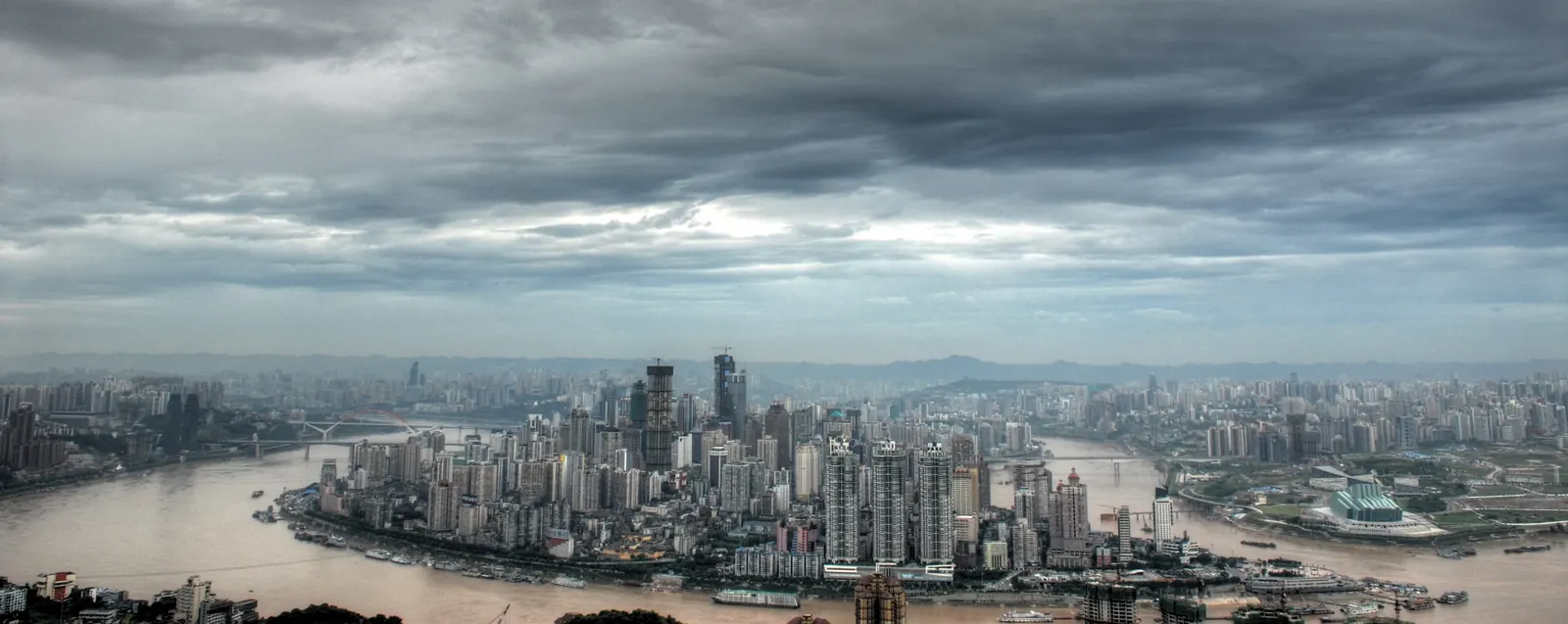
In 2017, Hui Ka Yan was the richest person in China. Forbes valued his fortune at $42.5 billion. He had started as a steel mill worker in Henan province and built China Evergrande Group into the country's second-largest property developer, with projects in more than 280 cities. He owned a $60 million superyacht, a London mansion valued at $227 million, and Guangzhou Evergrande, one of China's most popular football clubs. Between the company's listing in 2009 and the start of the crisis, he paid himself more than $7 billion in dividends. In January 2024, a Hong Kong court ordered Evergrande liquidated. Its debts exceeded $300 billion. In August 2026, Hui pleaded guilty to eight charges including financial fraud and was sentenced to life in prison.
His story is extreme, but the system that produced it is not. Understanding how China's property market was built, why it broke, and why the damage keeps spreading explains the largest economic problem China has faced since Deng Xiaoping opened the economy in 1978.
How the property model worked
China's property developers ran on a system that would be illegal in most Western countries. Buyers paid for apartments before they were built, sometimes years before construction finished. A family would take out a mortgage and begin making monthly payments on a home that was still a hole in the ground. The developer collected that money upfront.
Payments were supposed to go into escrow accounts and be released as construction hit milestones. In practice, developers routinely accessed the money early and used it not to finish the building the family had paid for, but to buy land for the next project. They would sell those future apartments to new buyers, take that money, and buy more land. As long as prices kept rising and new buyers kept coming, the cycle worked. For about twenty years, it did.
Local governments were the other half. In China, Beijing collects most of the country's tax revenue, but local governments handle most of the spending: schools, hospitals, roads, police. To close the gap, they sold land-use rights to developers. By 2021, revenue from land sales and land-related taxes made up about 38 percent of all local government income nationwide. In some smaller cities the share was much higher. Local officials had every reason to keep land prices rising, and every reason to look away when developers stretched the rules.
Chinese households poured savings into property for reasons that made sense at the time. Home prices in major cities had risen almost every year for two decades. Bank deposit rates were low, the stock market crashed repeatedly, and capital controls kept savings inside the country. For a middle-class family in Chengdu or Wuhan, buying a second apartment was not speculation. It was the safest investment available.
The boom these incentives created was unlike anything in modern history. Between 2011 and 2013 alone, China used more cement than the United States used in the entire twentieth century. Residential property became the single largest store of wealth in the country. Chinese households held roughly 70 percent of their assets in real estate, compared with about 35 percent in the United States. More than 80 percent of families owned their home, and more than 20 percent owned a second one.
Why the government's own rules triggered the crash
In August 2020, Beijing introduced what it called the "three red lines," rules that limited how much debt property developers could carry relative to their assets, equity, and cash. Xi Jinping had declared years earlier that "housing is for living in, not for speculation." The three red lines were supposed to cool the market gradually. Instead, they cut off the cycle of borrowing and preselling that developers needed to stay solvent.
Evergrande was the first to fall. The company had roughly $300 billion in total liabilities, about 2 percent of China's GDP, spread across more than 1,300 real estate projects. In September 2021, Evergrande missed payments on its offshore bonds, and construction stopped on hundreds of projects across the country. Families who had taken out mortgages found themselves paying for apartments that might never be finished. By the summer of 2022, mortgage boycotts had spread to more than 300 locations in over 100 cities, as buyers refused to keep paying for homes nobody was building. The boycotts put roughly $222 billion in home loans at risk.
Country Garden, which had sold more homes than any developer in China, defaulted in 2023. Dozens of smaller firms followed.
How the crisis spread beyond property
The damage did not stay in real estate. It spread into household spending, government budgets, and the broader economy, and each problem makes the others worse.
When home prices fall, Chinese households feel poorer, because most of their wealth is in their homes and they have few places to put money instead. Capital controls make it hard for ordinary citizens to invest abroad. The domestic stock market is volatile and widely distrusted. So when property values drop, people stop spending. Retail sales contracted 0.6 percent year-on-year in May 2026, the first outright decline since the COVID lockdowns. Car purchases fell 16 percent. Home appliance sales dropped nearly 16 percent. A central bank survey found that 61 percent of Chinese adults would rather save their money than spend or invest it.
Local governments lost their main source of flexible revenue. Land sale income fell from 8.7 trillion yuan in 2021 to 5.8 trillion yuan in 2023, and has kept falling. Cities that depended most heavily on property revenue now struggle to pay for basic services. Some have cut bus routes. Others have reduced the pay of civil servants.
The national result is deflation. Consumer prices have been flat or falling for most of the past two years. When prices fall, people delay purchases because they expect things to get cheaper. Businesses cut investment for the same reason. That reduces demand, which pushes prices down further. Japan fell into exactly this cycle after its own property bubble burst in 1990 and spent three decades trying to escape it.
Where China's property crisis stands in 2026
By late 2026, the market has been falling for more than four years. New home sales peaked at 1.79 billion square meters in 2021 and dropped below one billion in 2025. The country has an estimated 60 million unsold apartments, a supply that would take more than four years to clear at current sales rates. In real, inflation-adjusted terms, home prices have fallen below where they were in 2010, erasing more than a decade of gains. Roughly 100 million Chinese adults, about 10 percent of the adult population, are overdue on their debts.
Beijing has tried to stop the slide. It cut interest rates, loosened buying restrictions in major cities, and created a 300 billion yuan fund for local governments to purchase unsold homes. Prices in Shanghai, the country's most expensive market, have stabilized. But across most of China, prices are still falling.
The comparison to Japan is unavoidable, and Chinese leaders know it. Both countries built enormous property bubbles on cheap credit. Both saw household wealth concentrated in housing. Both faced a demographic turn: China's population peaked in 2022 and has started shrinking, just as Japan's working-age population peaked in 1995. Japan's stock market took 34 years to recover. China has advantages Japan lacked, including a much larger domestic market and a government with more direct control over its banks. But the structural problem is the same. When the largest store of household wealth loses value year after year, people stop spending, and an economy that has held together for four decades on the promise that each generation will live better than the last faces a test it has not taken before.
Test what you learned
5 questions on this article. About two minutes, no signup.