
How China avoided the Soviet Union's fate
The CCP spent a decade studying why the USSR fell. Their conclusions shaped Deng's reforms, China's rise, and how Xi Jinping runs the country today.
In early 1992, a few weeks after the Soviet Union dissolved without a war, Chinese Communist Party researchers began working on a question that would shape the country for the next three decades: why did a superpower with 30,000 nuclear warheads simply talk itself out of existence? Western analysts credited Ronald Reagan and the arms race. The CCP's answer was different, more specific, and far more useful to a party that intended to survive. They concluded that Mikhail Gorbachev had reformed in the wrong order. He opened up politics before he fixed the economy, and the honesty he unleashed destroyed the system before anything new could replace it. China would do the opposite.
The Party's autopsy
The study was not casual. Between 1993 and 2004, the CCP ran a formal internal analysis of the Soviet collapse, sponsored at the top by Zeng Qinghong, one of the most powerful men in the party. Researchers catalogued dozens of lessons across four categories: economic, political, social, and international. The political failures alone filled seventeen separate entries. The conclusion, summarized by the China scholar David Shambaugh, was blunt: the USSR died of political ossification, ideological rigidity, a dormant party organization, and an economy that had stopped growing.
Two findings stood above the rest. First, Gorbachev's glasnost, his policy of political openness, let people criticize the party before the economy gave them any reason to stay loyal to it. Once Soviet citizens could read the truth about the Gulag and the purges, the state's claim to legitimacy collapsed faster than any reform could outrun. Second, the Soviet military and security services slipped from party control during the August 1991 coup attempt. Generals refused to fire on crowds. The KGB did not arrest Boris Yeltsin when it had the chance. The CCP drew a direct lesson: the army must answer to the party, always. The People's Liberation Army swears loyalty to the Chinese Communist Party, not to the Chinese state, and that arrangement has never been loosened.
Why the Soviet economy could build missiles but not refrigerators
The Soviet Union was not a poor country. It built the first satellite, the first space station, and some of the most advanced fighter jets and nuclear submarines of the Cold War. It produced more steel than the United States for decades. The problem was not industrial capacity. It was what the industry was for.
A planned economy works when you know exactly what you need. The Soviet military wanted a specific number of tanks with specific specifications, and the factories built them. But a consumer economy requires millions of decisions about what ordinary people actually want to buy, and no central planner can make those decisions fast enough. Soviet factory managers had quotas set in Moscow. They had no customers. If a shoe factory's quota was measured in pairs, it produced millions of identical shoes in one size. If measured by weight, it made fewer, heavier shoes. The incentive was to meet the number, not to make something anyone wanted to wear.
By the 1980s the results were visible in every store. In September 1989, Boris Yeltsin, newly elected to the Soviet parliament, visited a Randalls supermarket in Houston, Texas. He walked the aisles staring at the produce, the meat counter, the rows of cereal. There were about 30,000 items in the store. Yeltsin told his companions that if Russian people could see this, there would be a revolution. The gap between what a market economy delivered to ordinary shoppers and what the Soviet system delivered had become impossible to explain away.
Innovation suffered for the same structural reason. In a market, a company that builds a better product wins customers and grows. In the Soviet system, a factory that invented a better design received no reward and risked disrupting its quota. The country that put the first human in space never built a competitive car or a television set that anyone outside the Soviet bloc chose to buy.
Deng's opposite bet
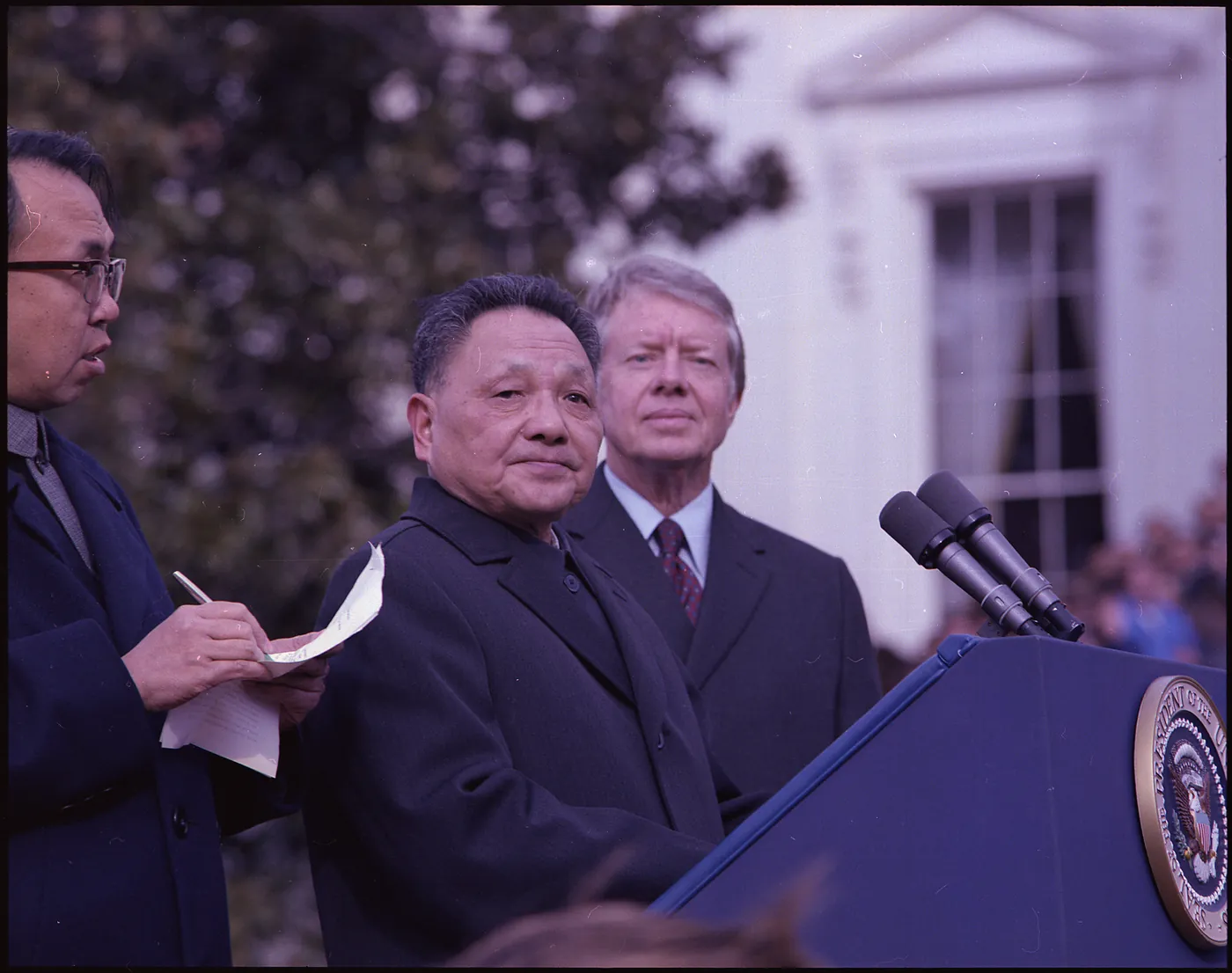
China's answer began before the Soviet Union fell. In December 1978, Deng Xiaoping launched what the party called "reform and opening up," a set of changes that amounted to letting capitalism in through a side door while keeping the political system locked from the inside.
The man behind it had been purged twice. During Mao's Cultural Revolution, Deng was stripped of all his posts and sent to work in a tractor factory in Jiangxi province. His eldest son, Deng Pufang, was thrown from a building by Red Guards and spent the rest of his life in a wheelchair. When Deng finally took power at 74, he was done with ideology. "It doesn't matter if a cat is black or white," he said, "so long as it catches mice." That sentence would have been heresy in Moscow. In Beijing, it became national policy.
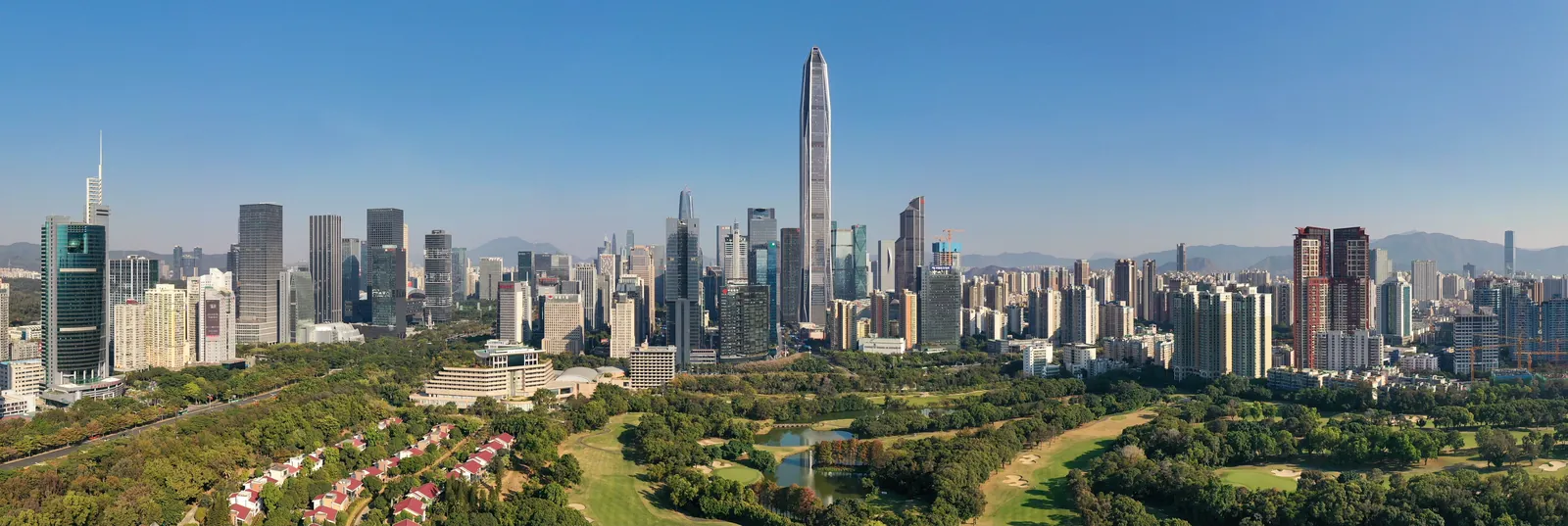
His boldest move was the Special Economic Zones. In 1980, the party designated four coastal areas where foreign companies could invest, hire workers, and operate under market rules. The most famous was Shenzhen, a fishing village of about 30,000 people across the border from Hong Kong. The zones were experiments with a safety valve: if capitalism caused unrest, Beijing could shut them down without disrupting the rest of the country. It did not need to. Shenzhen's economy grew at an average annual rate above 20 percent for four decades. By 2025, the former fishing village had 17.5 million people and a GDP of $557 billion, larger than the entire economies of Sweden or Poland.
The formula spread. State ownership stayed in heavy industry, banking, and energy. Everything else opened to private enterprise and foreign investment. China joined the World Trade Organization in 2001, which gave its manufacturers access to Western consumers and locked in reforms that domestic politics alone might not have sustained. The party kept control of the courts, the army, the press, and the power to destroy any private company that crossed it. The economy, it let compete.
The numbers tell the story in one direction. When Deng took power, China's GDP was about $150 billion and nearly 90 percent of the population lived in extreme poverty. By 2010, China had overtaken Japan as the world's second-largest economy. By 2026, its GDP exceeds $19 trillion and the extreme poverty rate is under 1 percent. Private firms now handle 57 percent of China's goods trade.
Why China innovates and the Soviet Union could not
The results show in companies the Soviet system could never have produced. Huawei, now one of the largest telecommunications companies on Earth, was founded in 1987 by Ren Zhengfei, a former military engineer, with about $5,000 in startup capital. BYD, now the world's largest electric vehicle maker by sales, started in 1995 making batteries in a Shenzhen factory. Neither company was part of a state plan. Both grew because they made products that customers chose to buy, first in China and then worldwide.
This does not mean China runs a free market. The state subsidizes industries it considers strategic, blocks foreign competitors when it wants to, and uses the party's discipline commission to remove anyone who forgets who is in charge. When Jack Ma criticized China's financial regulators in October 2020, the party canceled Ant Group's $34 billion stock listing within days and fined Alibaba $2.8 billion the following spring. Ma disappeared from public life for more than a year. No courtroom was involved.
The system is not capitalism and not communism. It is a hybrid built on the lesson the party drew from Moscow: markets create wealth, wealth keeps people loyal, but the party never lets go of the controls.
The test China has not passed
The CCP studied every Soviet failure it could find. There is one it may be repeating. After Mao died in 1976, Deng built a set of norms meant to prevent a second Mao: collective leadership, mandatory retirement ages, and a ten-year limit on the top job. The rules were never written into the party's constitution. They were habits, and the habits held for about thirty years.
Xi Jinping took them apart. In 2018, the National People's Congress voted to remove the presidential term limit, 2,958 to 2. Xi filled the Politburo Standing Committee with his own allies and used the anti-corruption campaign to eliminate rivals. He is 73 years old, holding a third term as General Secretary, and has named no successor. The system Deng built to prevent exactly this situation no longer exists.
The Soviet Union's final crisis was a leadership crisis. The system produced a string of dying old men, then one reformer who broke it. China's party has studied that failure in clinical detail. Whether it has learned enough to solve the same problem when Xi Jinping is no longer there is the largest unanswered question in Chinese politics, and the party's own research offers no answer.
Test what you learned
5 questions on this article. About two minutes, no signup.