
Why Korean reunification will probably never happen
Both Koreas officially wanted reunification for decades. In 2024, Kim Jong-un dropped the pretense. Most young South Koreans had already stopped caring.
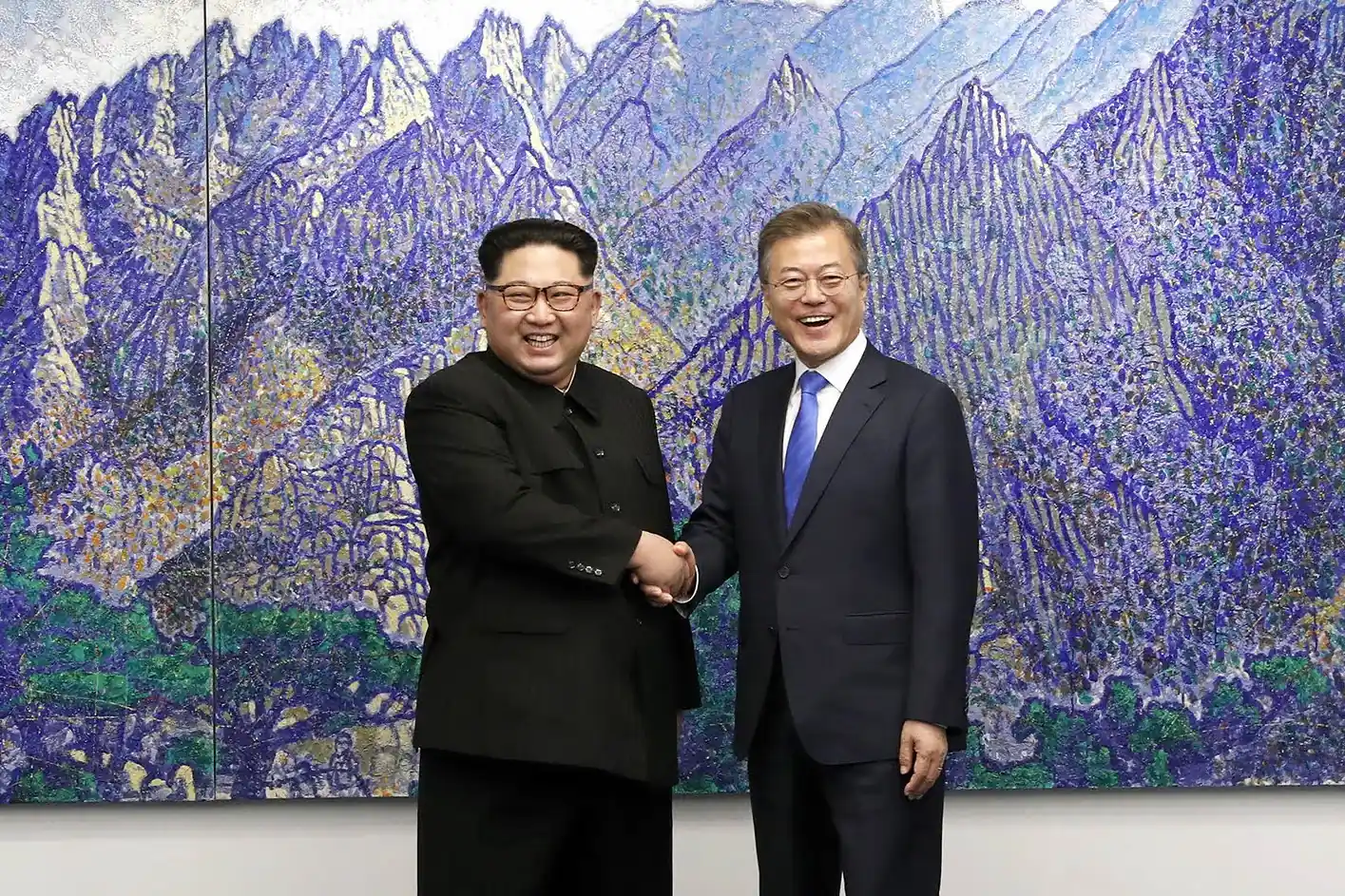
In January 2024, workers in Pyongyang demolished a 100-foot concrete monument that had straddled the highway leading south toward the demilitarized zone since 2001. The Arch of Reunification depicted two Korean women in traditional dress holding a map of the entire peninsula. Kim Jong-un called it an eyesore. A few days earlier, at a session of North Korea's parliament, he had formally abandoned the goal that every North Korean leader since his grandfather had at least pretended to pursue: reunifying the two Koreas into one country. South Korea, Kim declared, was not a brother nation. It was a hostile enemy state.
The announcement was not the surprise it looked like. North Korea had been building nuclear weapons, not bridges, for thirty years. What made January 2024 notable was that it came at a moment when the other side had largely stopped wanting reunification too.
How one country became two
Korea was a single country for over a thousand years before 1945. When Japan surrendered at the end of World War II, the United States and the Soviet Union split the peninsula at the 38th parallel as a temporary arrangement, the same way they divided Germany. The North got a Soviet-backed communist government under Kim Il-sung. The South got an American-backed government under Syngman Rhee. In 1950, Kim Il-sung invaded the South, the United States intervened, China intervened on the other side, and after three years of fighting that killed roughly three million people, the front line ended almost exactly where it started. The armistice signed in July 1953 was a ceasefire, not a peace treaty. Technically, the two Koreas are still at war.
For the next seven decades, both governments kept reunification as an official goal, reinforced in the South by millions of families separated by the border who could not call, write, or visit each other. But the two countries developed in such opposite directions that "reunification" started to describe something closer to merging Sweden with Afghanistan than to anything that happened in Germany.
When it seemed possible
The closest the two Koreas came to real engagement was between 1998 and 2008, under South Korea's Sunshine Policy. President Kim Dae-jung bet that trade and aid could slowly open North Korea the way West Germany's Ostpolitik had opened East Germany. In 2000 he flew to Pyongyang and shook Kim Jong-il's hand, the first meeting between leaders of the two Koreas. He won the Nobel Peace Prize for it.
The Sunshine Policy produced a joint industrial park at Kaesong, family reunions where elderly Koreans met siblings they had not seen in fifty years, and a tourist resort at Mount Kumgang. But it did not produce openness. North Korea tested its first nuclear weapon in 2006, and the conservative South Korean government that took power in 2008 shut most of the projects down.
In April 2018, South Korean President Moon Jae-in and Kim Jong-un met at Panmunjom, the truce village on the border. Kim stepped across the military demarcation line into the South, the first North Korean leader to do so. They planted a tree together and signed a declaration promising to pursue a peace treaty. Within two years the diplomatic track was dead. The inter-Korean liaison office at Kaesong was blown up, on Kim's orders, in June 2020.
The gap that makes Germany look easy
When East and West Germany reunified in 1990, the income gap per person was roughly 3:1. Closing that gap cost an estimated €2 trillion over twenty-five years and required a special solidarity tax on all German workers.
The Korean gap is in a different category. South Korea's economy produces roughly $2 trillion a year. North Korea's is estimated at $28 to $40 billion. The per capita income ratio is about 40:1, compared to Germany's 3:1.
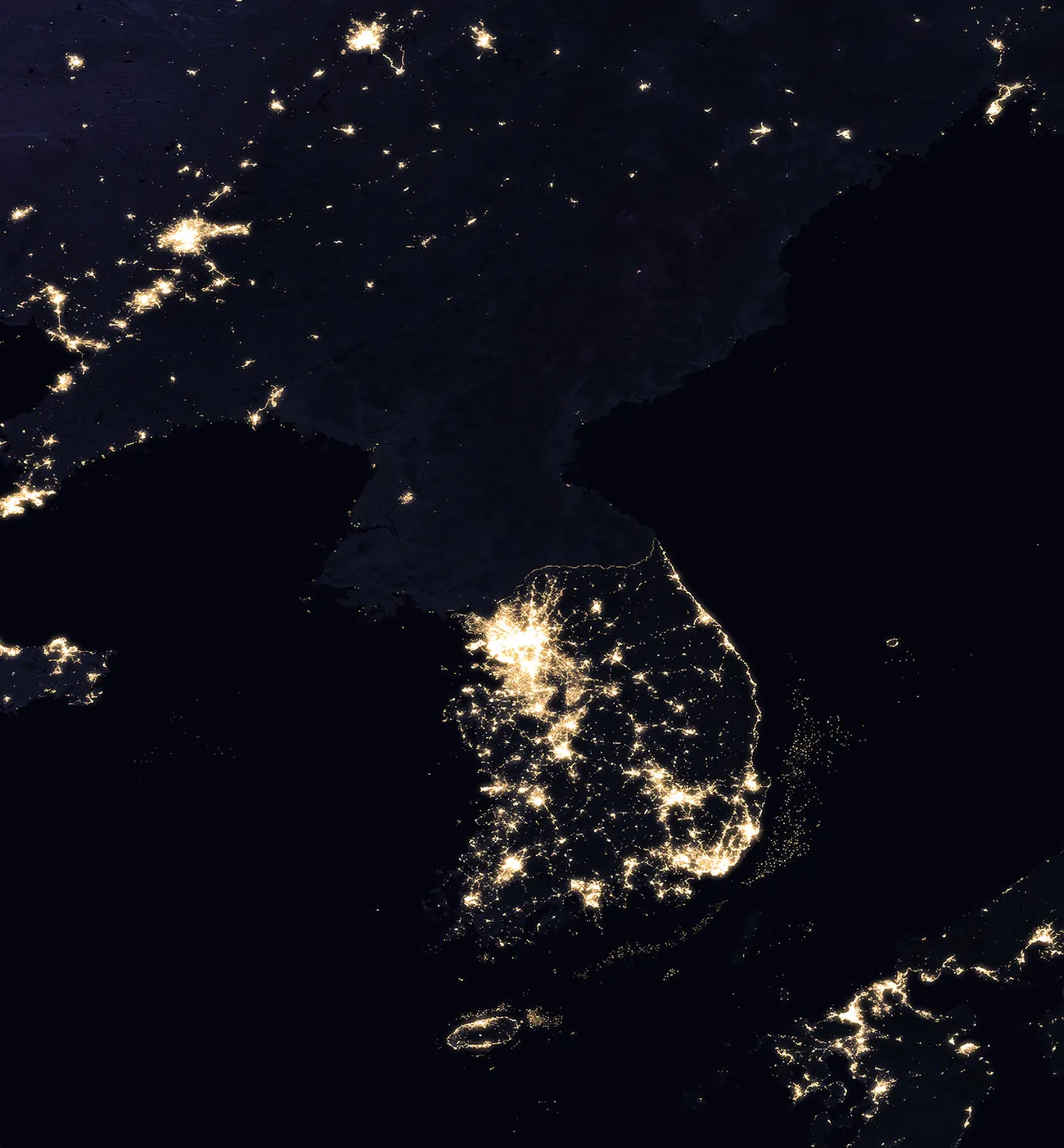
Estimates of what Korean reunification would cost range from $500 billion to over $5 trillion. South Korea's Presidential Council for Future and Vision once estimated the bill at $2.1 trillion, enough to push the national debt from 38 percent of GDP to 135 percent. And the gap is not just economic. North Koreans are, on average, several centimeters shorter than South Koreans because of decades of chronic malnutrition.
The generation that stopped wanting it
For decades, the desire to reunify was one of the few things nearly all South Koreans agreed on. The older generation remembered the war, knew relatives across the border, and treated reunification as unfinished family business.
That consensus has collapsed. A 2025 survey by the Korea Institute for National Unification found that a majority of South Koreans now consider reunification unnecessary, the first time support had fallen below 50 percent. Among those under 30, roughly 60 percent said reunification was not needed. Only about 22 percent of South Koreans in their twenties called it necessary.
The shift is generational. Young South Koreans have no memory of the war, no relatives in the North they have ever met, and no emotional connection to a country they know mainly through missile tests and defector memoirs. They grew up in one of the richest societies on Earth. When pollsters ask young South Koreans what they think of when they hear "North Korea," the most common association is not "one nation." It is "threat."
The economic argument reinforces the emotional shift. South Korean twentysomethings already face some of the highest housing costs and lowest birth rates in the world. Subsidizing 26 million North Koreans for a generation is not an abstract patriotic duty. It is a tax bill.
Why nobody at the table wants it
Even if South Korean opinion reversed tomorrow, the conditions around the peninsula make reunification nearly impossible.
China does not want it. A unified Korea allied with the United States would put American military bases on China's border, the outcome Beijing has spent seventy years preventing.
The Kim dynasty does not want it. Reunification on South Korean terms means the end of the Kim family. North Korea's nuclear arsenal, funded by Chinese trade, crypto theft, and Russian arms deals, exists precisely to make sure the regime survives.
The United States does not push for it either. The status quo has served Washington's interests for seventy years. And Kim himself closed the last symbolic door: he rewrote the constitution, abolished the agencies that handled relations with Seoul, tore down the monuments, and sent roughly 12,000 soldiers to fight alongside Russian forces in Ukraine. He is not building toward reunion. He is building a permanent, nuclear-armed, separate state.
What this means in 2026
The Korean Peninsula has been divided for eighty-one years. One half became a global technology and cultural power. The other became an isolated nuclear state whose citizens cannot leave and whose leader demolished the last symbol of shared nationhood.
Reunification is not coming because none of the people who would need to make it happen want it: not Kim Jong-un, not Beijing, not the young South Koreans who would pay for it, and not Washington. The Korean War never officially ended, and the two countries it created have been growing apart every year since. Kim Jong-un said so out loud in January 2024. He was the last one to admit it.
Test what you learned
5 questions on this article. About two minutes, no signup.