
Abraham Lincoln
Abraham Lincoln, the 16th U.S. president, led the country through the Civil War and abolished slavery.
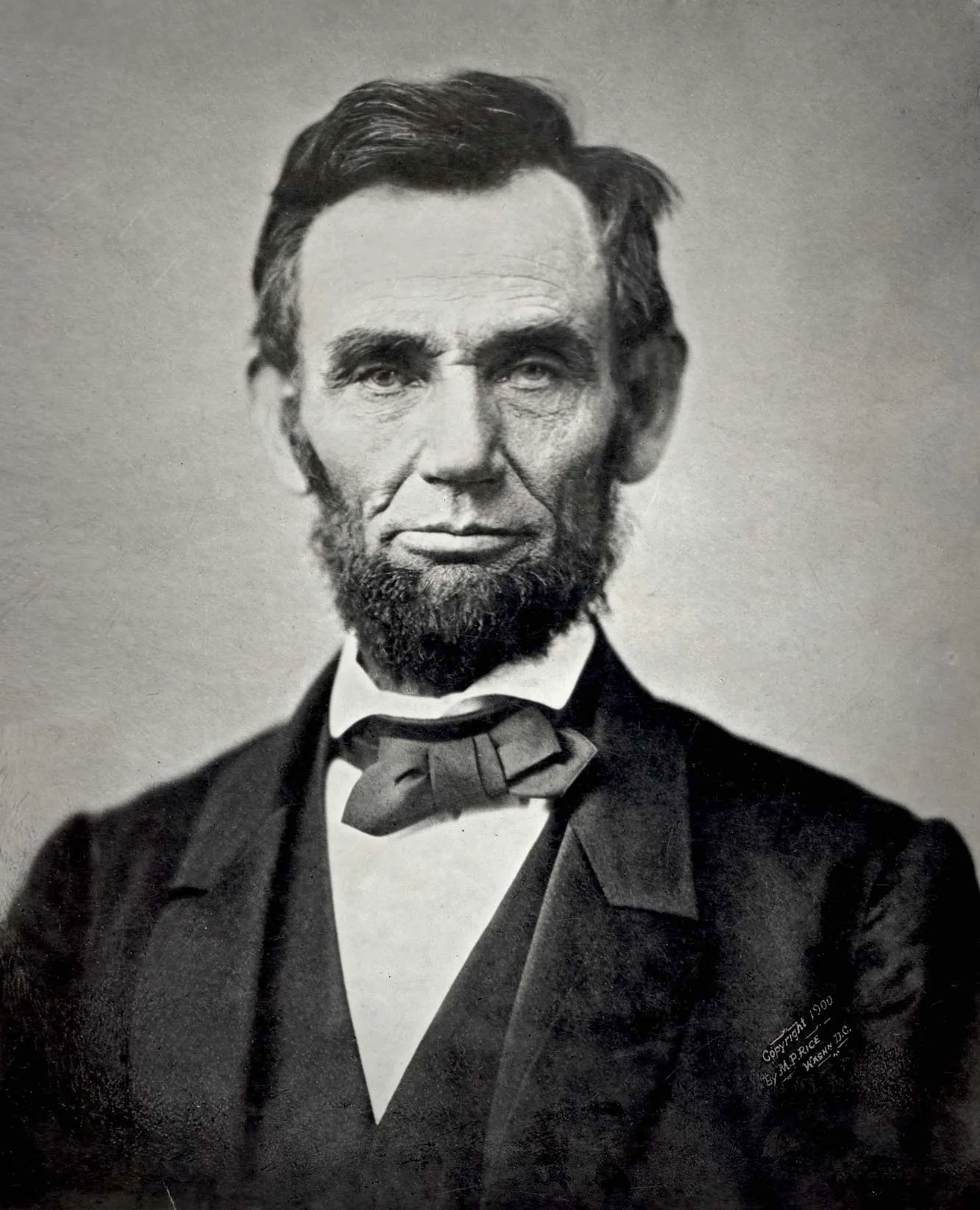
Abraham Lincoln was the 16th president of the United States. He led the country through the Civil War, the deadliest war in American history, and abolished slavery. Lincoln was born in a one-room log cabin in Kentucky in 1809 and had almost no formal education. He studied law on his own from borrowed books, became a trial lawyer in Illinois, and won the presidency in 1860. The war killed at least 620,000 American soldiers, and recent estimates put the number closer to 750,000. Lincoln was assassinated five days after the main Confederate army surrendered, no American president had been assassinated before him.
How Lincoln became president
Lincoln was born on February 12, 1809, near Hodgenville, Kentucky. His family moved to Indiana when he was seven, and his mother died two years later. He grew up doing farm labor on the frontier. At six feet four inches, he was unusually tall, and he was strong enough to earn a reputation as one of the best wrestlers in Illinois. He was inducted into the National Wrestling Hall of Fame in 1992.
Lincoln settled in New Salem, Illinois, in 1831 and began studying law on his own. He passed the bar in 1836, moved to Springfield, and built a successful practice as a trial lawyer. He married Mary Todd in 1842, and they had four sons, though only the eldest, Robert, survived to old age.
Lincoln served in the Illinois state legislature and then one term in the U.S. Congress. The question of slavery pulled him back into national politics. In 1858 he ran for the U.S. Senate against Stephen Douglas. Over seven debates, Lincoln argued that slavery was wrong and that the country should stop it from spreading, even if it could not yet abolish it. He lost the race, but the debates made him a national figure.
In 1860 Lincoln won the Republican nomination and the general election on a platform opposing the expansion of slavery. He did not carry a single Southern state. Before he took office, seven slave states broke away from the Union before Lincoln could take office.
How the Civil War became a fight to end slavery
When Lincoln took office in March 1861, he said the Constitution gave him no authority to end slavery in the states that had it. His initial goal was to hold the Union together, not to end slavery. He filled his cabinet with political rivals who had wanted the presidency themselves, a choice designed to bring the strongest leaders into his government.
As the war continued and the death toll mounted, Lincoln shifted. On January 1, 1863, the Emancipation Proclamation took effect, declaring all enslaved people in Confederate territory free. Lincoln framed it as a military measure, intended to weaken the Southern war effort and allow Black men to enlist in the Union army. About 180,000 Black soldiers served by the end of the war.
In November 1863 Lincoln gave the Gettysburg Address at the dedication of a military cemetery in Pennsylvania. The speech was about ten sentences long. He described the war as a test of whether a government "of the people, by the people, for the people" could endure.
Lincoln won reelection in 1864, defeating former Union general George McClellan with 55 percent of the popular vote and 212 electoral votes to McClellan's 21. He knew the Emancipation Proclamation rested on his wartime powers and could be overturned once the war ended. To make abolition permanent, he pushed the Thirteenth Amendment through Congress. The House of Representatives passed it on January 31, 1865. On April 9, Confederate general Robert E. Lee surrendered to Ulysses S. Grant at Appomattox Court House in Virginia.
How did Abraham Lincoln die?
Five days after Lee's surrender, on the evening of April 14, 1865, Lincoln went to Ford's Theatre in Washington to see a comedy called Our American Cousin. John Wilkes Booth, an actor and Confederate sympathizer, slipped into the presidential box and fired a single bullet into Lincoln's head from behind. Lincoln died the next morning, April 15, 1865. He was 56 years old. No sitting president had ever been murdered before.
Booth's decision had hardened just days earlier. On April 11, Lincoln gave a speech from the White House in which he publicly suggested extending voting rights to some Black men, particularly those who had served as soldiers. Booth was in the crowd. He reportedly said, "That is the last speech he will ever make." Three days later, he carried out the assassination.
Abraham Lincoln's legacy
Lincoln died just as the war was ending, before the difficult political fights over Reconstruction that followed. The nation mourned him, and he has been regarded as one of the greatest American presidents ever since.
The work Lincoln began remained unfinished for a long time. The Thirteenth Amendment abolished slavery, but the system of racial segregation known as Jim Crow denied Black Americans voting rights and equal treatment under law across the South for nearly a century. The civil rights movement of the 1950s and 1960s finally dismantled that legal framework. Lincoln's insistence that the nation was founded on the principle of equality shaped the movement and remains central to American political life.